
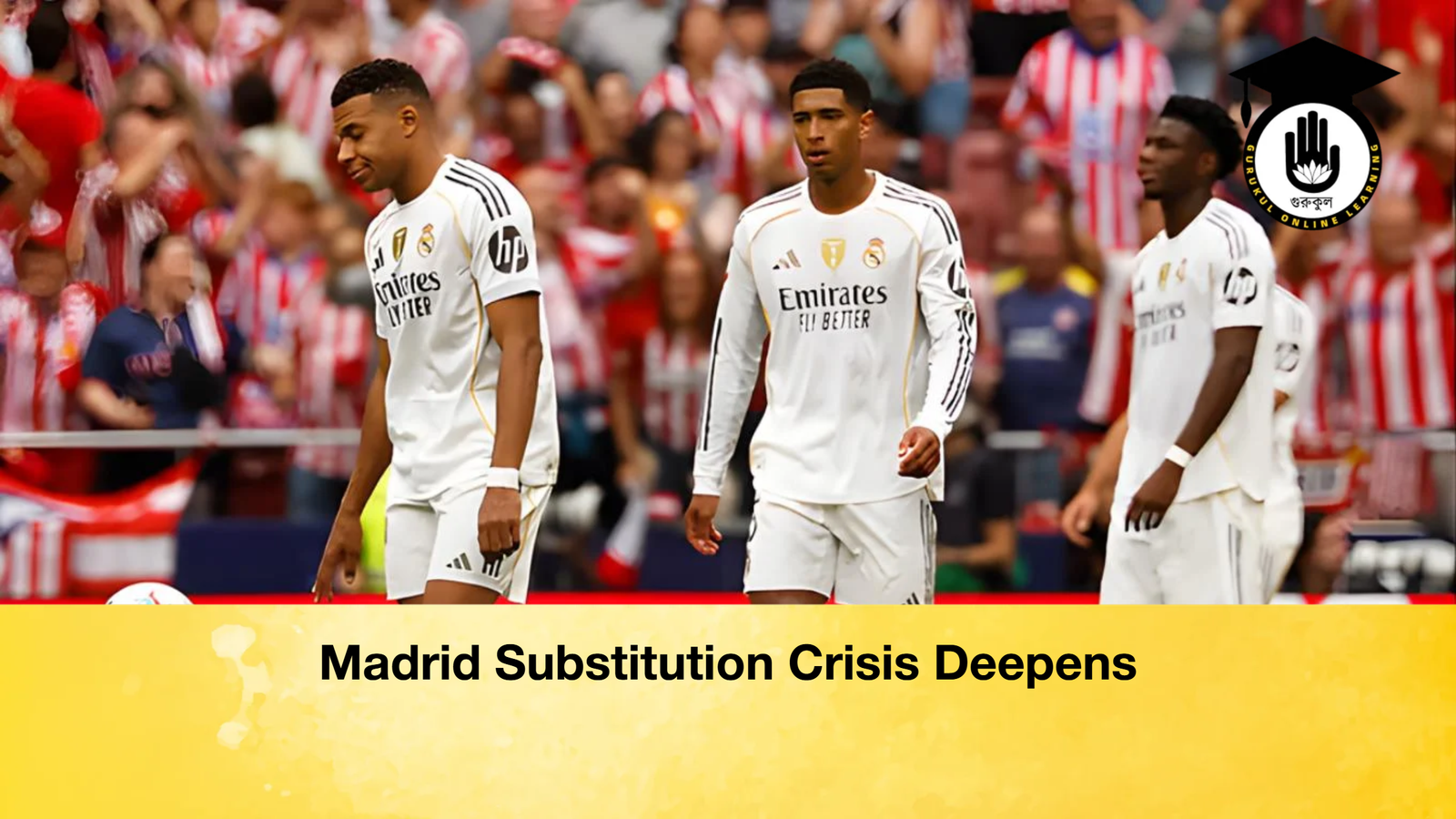
Madrid Substitution Crisis Deepens

The Spanish giants Real Madrid are currently navigating a notable tactical setback, with their once-reliable “Plan B” – the impact of substitute players – showing a marked decline. In previous seasons, Madrid’s strength often lay not only in their star-studded starting XI but also in their ability to decisively alter matches through intelligent in-game changes. That edge, however, appears to have weakened significantly in the current campaign.
During the 2023–24 season, Madrid’s success was underpinned by a well-structured rotation system and clearly defined substitution patterns. Players such as Joselu, Andriy Lunin, Nacho Fernandez, and veteran midfielder Luka Modric frequently influenced matches from the bench. Their introductions were not improvised but carefully pre-planned, tailored to specific game states and opposition weaknesses. This structured approach proved instrumental in securing strong performances across both La Liga and the UEFA Champions League.
However, analysts suggest that this system has since unravelled. The current season has exposed a noticeable drop in the effectiveness of substitutions, with Madrid struggling to replicate the same level of tactical precision. This issue was particularly evident in their recent encounter against RCD Mallorca, where changes made to the attacking line failed to generate momentum or significantly alter the rhythm of the game. Even high-impact players such as Vinicius Junior were unable to deliver a decisive breakthrough after tactical reshuffles.
Experts argue that the problem extends beyond individual form and points towards a broader issue of tactical uncertainty. Previously, substitutions formed part of a meticulously designed strategic framework; now, they appear more reactive and less coherent. As a result, opposition teams are finding it easier to anticipate Madrid’s adjustments, often neutralising their second-half threats with relative ease.
Another contributing factor is the lack of cohesive understanding between established starters and rotational players. With integration still incomplete, substitutes frequently struggle to adapt quickly to match intensity, disrupting the team’s overall rhythm and balance during critical phases of play.
The contrast between the 2023–24 campaign and the current season is illustrated below:
| Aspect | 2023–24 Season | Current Season |
|---|---|---|
| Impact of substitutes | Regularly match-defining | Significantly reduced |
| Tactical planning | Structured and pre-defined | Irregular and unclear |
| Key impact players | Joselu, Lunin, Nacho, Modric | Lack of consistent alternatives |
| Ability to change games | Frequently decisive | Limited and unpredictable |
| Squad depth utilisation | Highly effective rotation system | Noticeable inconsistency |
Overall, the situation suggests that Real Madrid are in need of a strategic recalibration. Beyond strengthening the starting XI, there is an evident requirement to restore clarity, structure, and purpose to their substitution strategy. Without such adjustments, the club risks facing increasingly difficult challenges as the season progresses, particularly in tightly contested fixtures where bench impact often proves decisive.