
At the semi-final stage of the UEFA Champions League, matches are frequently decided by a single defining moment. Extensive pre-match analysis typically focuses on tactical structures, squad balance, historical records and statistical trends. However, despite such scrutiny, outcomes often hinge on one decisive action produced by an individual. It is through such moments that matches are settled and significant chapters are added to the competition’s history.
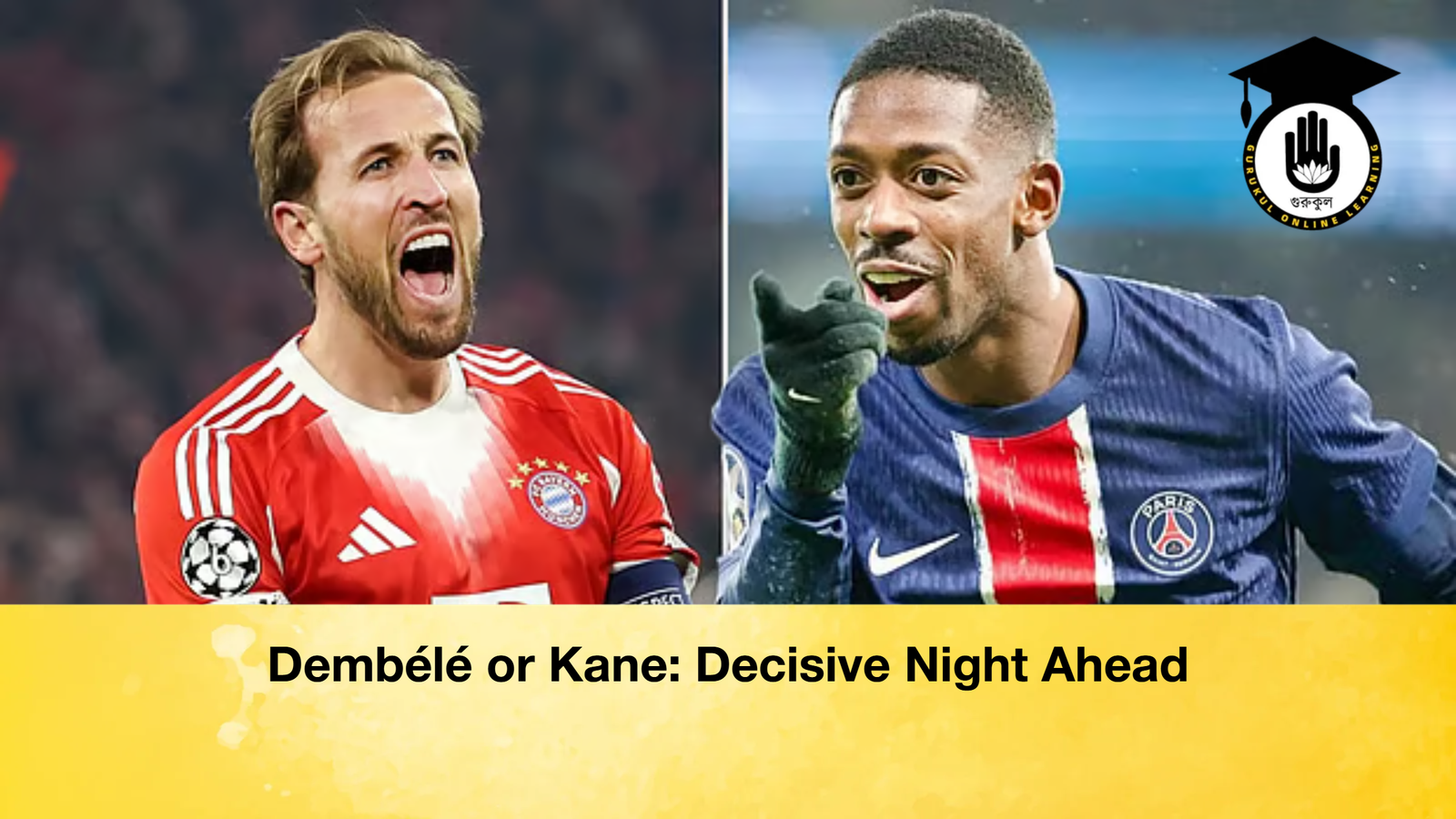
Paris Saint-Germain’s meeting with Bayern Munich in Paris presents a similar scenario. Supporters of both sides will anticipate that one decisive contribution could determine progression to the final. While both teams possess numerous high-profile players capable of influencing the contest, particular attention centres on Ousmane Dembélé and Harry Kane. Their performances are expected to play a central role in shaping the outcome.
Dembélé was instrumental in PSG securing their first Champions League title last season, a campaign that also culminated in him winning the Ballon d’Or. In contrast, the current season has presented challenges for the French forward. Due to injury, he missed 19 matches, a disruption that affected PSG’s consistency at various stages. Notably, his absence contributed to the club’s inability to maintain complete dominance in Ligue 1. Nevertheless, Dembélé has returned to form at a critical juncture. His two goals in the second leg against Liverpool at Anfield underline his renewed influence, offering a clear indication of the threat he poses to Bayern Munich.
Kane, meanwhile, has demonstrated exceptional consistency throughout the season. His goal-scoring efficiency remains a defining feature of his performances. With a conversion rate of 31 per cent, he has established himself as one of Europe’s most effective finishers. Across 45 matches, he has recorded 53 goals and six assists, placing him among the leading contenders in the European Golden Shoe race. Unlike many forwards, Kane relies less on dribbling—averaging fewer than one attempt per match—and instead focuses on positioning and finishing, particularly within the penalty area.
Beyond his role as a finisher, Kane has also functioned as a deep-lying playmaker. By dropping into midfield zones, he facilitates attacking movements and creates space for wide players. His ability to draw opposing defenders, especially centre-backs, out of position contributes to the creation of gaps in defensive lines. According to analysis from the football statistics platform Opta, when Kane operates actively between midfield and attack, his teammates’ scoring probability increases by approximately 35 to 40 per cent. Furthermore, if he registers more than 15 touches in half-spaces, opposing defensive structures are significantly more likely to be disrupted.
Dembélé offers a contrasting profile. His game is driven by individual skill and rapid decision-making. Although he records relatively few touches inside the penalty area, each involvement carries a substantial attacking threat. His dribble success rate stands at approximately 60 per cent, illustrating his effectiveness in advancing past defenders. Rather than waiting for structured build-up play, Dembélé often attempts to alter the course of an attack through direct individual action.
Despite missing 19 matches due to injury, Dembélé remains PSG’s leading contributor in terms of expected threat, highlighting his importance in progressing the ball into dangerous areas. Analysts note that when he is forced to drop deeper to receive possession, his effectiveness inside the penalty area diminishes considerably. Consequently, Bayern Munich’s tactical priority is expected to involve limiting his involvement in the final third.
The following table summarises key performance indicators for both players:
| Metric | Ousmane Dembélé | Harry Kane |
|---|---|---|
| Matches missed (injury) | 19 | Not applicable |
| Matches played (season) | Limited data | 45 |
| Goals | Limited data | 53 |
| Assists | Limited data | 6 |
| Shot conversion rate | Limited data | 31% |
| Dribble success rate | ~60% | <1 dribble per match |
| Tactical role | Direct attacker | Finisher & playmaker |
| Attacking impact | Highest expected threat | Goals & chance creation |
Overall, the attacking balance and effectiveness of both teams are closely tied to the performances of these two players. Dembélé remains a key figure under Luis Enrique despite injury setbacks, while Kane’s influence extends across both scoring and creative responsibilities. The outcome of this semi-final may ultimately depend on which of the two exerts greater impact on the match.