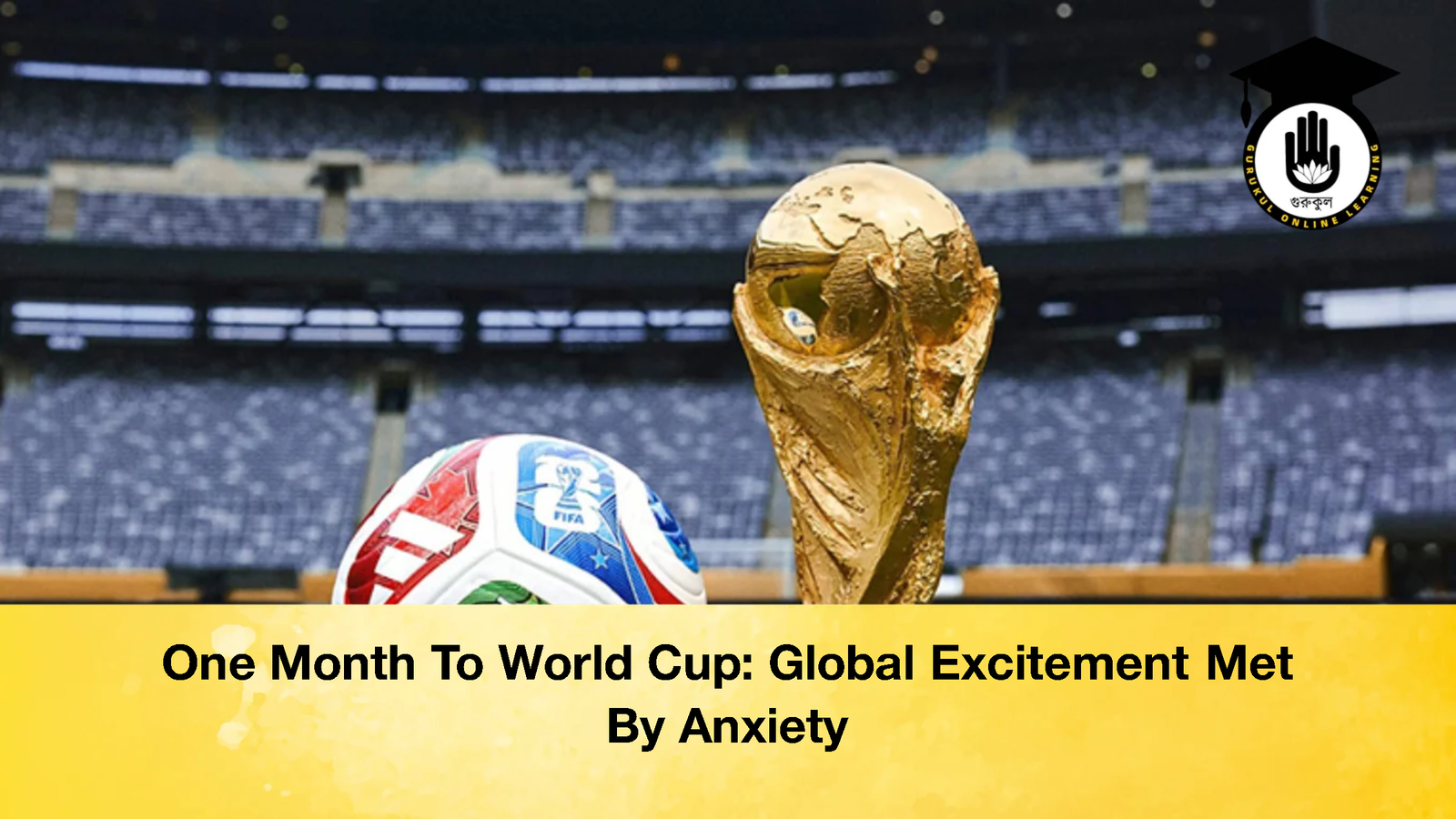

The final thirty-day countdown to the 2026 FIFA World Cup officially commences this Monday, yet the traditional atmosphere of sporting anticipation is increasingly shadowed by profound geopolitical and economic concerns. While the expansion to a record 48 nations promises a festival of football across the United States, Canada, and Mexico, the lead-up has been marred by record-breaking ticket prices, diplomatic tensions, and the broader implications of the ongoing conflict involving Iran. This tournament marks the first instance of a World Cup being hosted across three nations, featuring a marathon six-week schedule.
Tournament Logistics and Historical Venues
The competition is set to begin on 11 June at the historic Estadio Azteca in Mexico City—the venue that hosted the finals in 1970 and 1986. It will culminate on 19 July at the MetLife Stadium in East Rutherford, New Jersey, which boasts a capacity of 82,500. A total of 104 matches will be played, with 78 of those fixtures taking place within the United States.
Despite the grand scale, critics argue that a “World Cup hangover” has set in before a ball has even been kicked. The intersection of hyper-commercialism and global instability has led to a fragmented buildup. FIFA President Gianni Infantino, however, has consistently dismissed these anxieties as mere “negative press.” Speaking at a business summit in Beverly Hills this week, Infantino remarked, “To be honest, it is very difficult to find anything negative about this World Cup.”
The Controversy of Ticket Pricing
The most significant point of contention remains the “extortionate” cost of attendance. FIFA anticipates generating roughly $13 billion in total revenue from this cycle, a figure bolstered by a pricing structure that has alienated traditional supporters. Football Supporters Europe (FSE) has condemned the pricing as a “betrayal” of the common fan.
A stark comparison illustrates the inflation: the most expensive ticket for the 2022 final in Qatar was approximately $1,600. For the 2026 edition, the highest-tier hospitality and premium tickets have reached a staggering $32,970. Infantino defended these figures by citing the unique nature of the American economy, stating, “We have to look at the reality of the market. We are in a market that possesses the most advanced entertainment industry in the world.”
While FIFA claims to have received over 500 million ticket applications—a massive leap from the combined 50 million for the 2018 and 2022 tournaments—many tickets for high-profile matches, including the United States versus Paraguay opener in Los Angeles on 12 June, remain available on secondary markets. Even United States President Donald Trump expressed astonishment at the costs, telling the New York Post, “I didn’t know that number. I would certainly want to be there, but frankly, I wouldn’t pay that either.”
Geopolitical Tensions and the Iranian Conflict
The sporting narrative is further complicated by the military conflict involving Iran. Following US-led military strikes against Iranian interests in February, the World Bank has warned of severe global economic shocks and potential famine in the Middle East. This situation creates a historic anomaly: it is the first time a host nation has been in active military conflict with a participating nation immediately prior to the tournament.
Requests from the Iranian football authorities to relocate their matches to Mexico were rejected by FIFA. Consequently, Iran is scheduled to play all three of its group-stage matches on American soil. At the FIFA Congress in Vancouver on 30 April, Infantino insisted, “Of course Iran will participate in the 2026 FIFA World Cup, and of course they will play in the United States.”
Sporting Prospects and Debutants
Once the focus shifts to the pitch, the tournament will feature several heavyweights. Defending champions Argentina, led by Lionel Messi, remain among the favourites alongside European champions Spain, 2018 winners France, and an England side seeking its first major trophy since 1966.
The expansion has also opened doors for smaller nations. This World Cup will welcome debutants such as Curaçao—which becomes the smallest nation by population ever to qualify—and Cape Verde. FIFA remains hopeful that once the opening whistle sounds, the drama of the sport will transcend the political and economic controversies currently defining the buildup.