
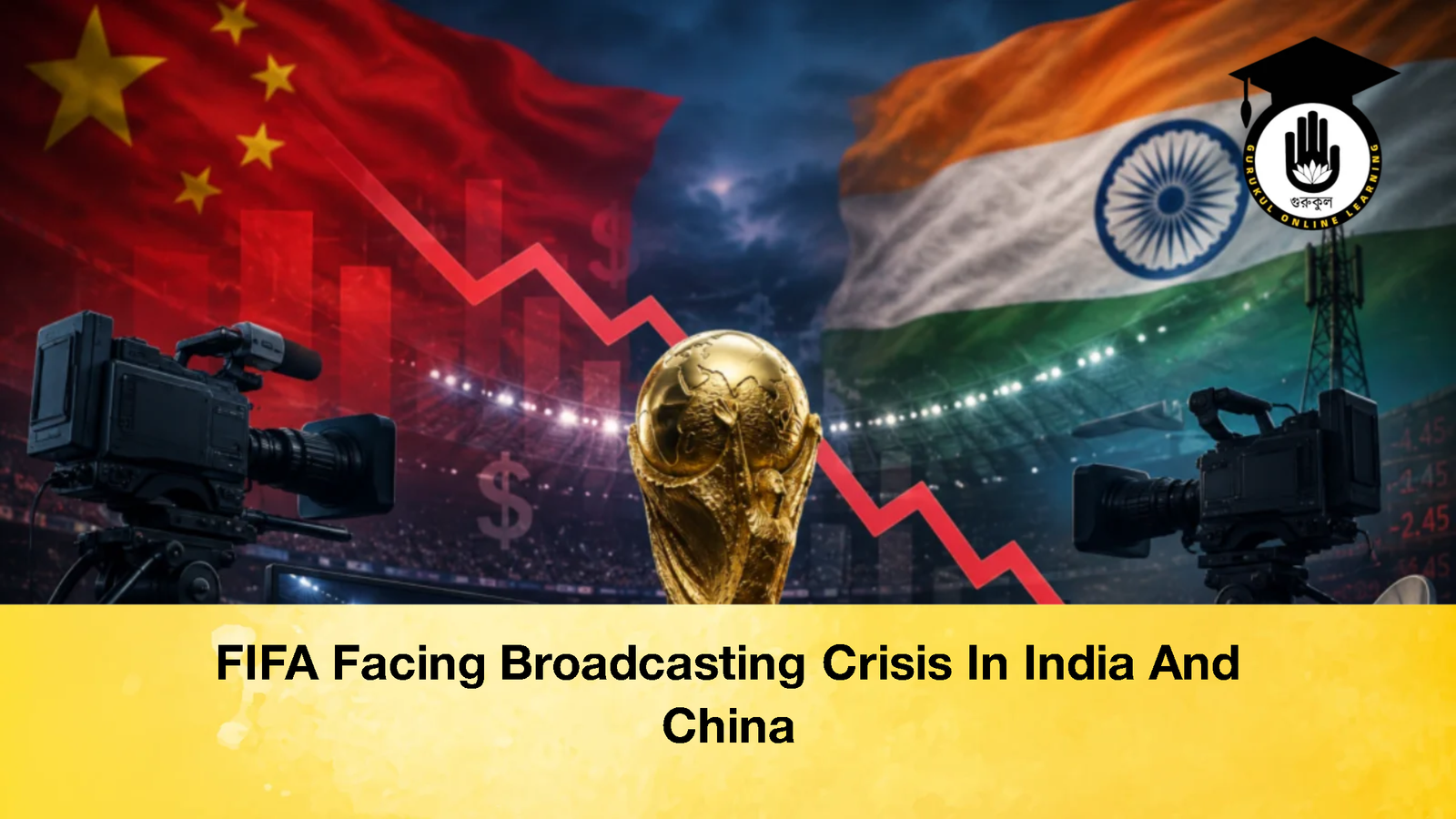

With only one month remaining before the commencement of the 2026 FIFA World Cup, football’s global governing body, FIFA, is navigating a significant commercial crisis regarding broadcasting rights in India and China. When FIFA elected to expand the tournament from 32 to 48 teams, a primary objective was to facilitate the commercial engagement of the world’s most populous nations. This strategy was designed to capture the expansive markets of territories with a combined population of 2.7 billion, prioritising these vast audiences over smaller footballing nations such as Cape Verde or Curaçao. However, as reported by The Guardian, no broadcasting agreements have yet been finalised in these two critical Asian markets.
The Financial Standoff Within The Indian Market
The 2026 tournament, set to feature a record 104 matches, initially led FIFA to demand substantial sums for broadcasting rights. In India, the original asking price was reportedly $100 million. As the start date approaches, this valuation has plummeted to approximately $35 million. Despite this significant reduction, negotiations remain stalled. India’s dominant media entity, ‘JioStar’, has reportedly offered a maximum of $20 million, creating a $15 million deficit that remains unresolved.
This sharp decline in market value is particularly noteworthy when compared to previous tournament cycles. For the 2014 and 2018 World Cups, Sony invested approximately $90 million in broadcasting rights. Even for the 2022 Qatar World Cup, Viacom18 paid an estimated $62.2 million. The current offer from JioStar represents only a fraction of previous investments, signalling a contraction in what was once perceived as a burgeoning football market.
Shaji Prabhakaran, a member of the Asian Football Confederation (AFC) Executive Committee, suggested that time zone differences are not the primary cause of this deadlock. He noted that Indian audiences routinely consume UEFA Champions League matches during midnight hours. Instead, he identified market monopolisation and an over-reliance on cricket as core issues. Furthermore, the depreciation of the Indian Rupee against the US Dollar has compounded the problem; the exchange rate has shifted from 54 Rupees to the Dollar in 2013 to approximately 95 Rupees in the current period.
Critical Challenges Within The Chinese Market
The situation in China is equally concerning for FIFA President Gianni Infantino. China accounted for 17.7% of the global linear television reach during the 2022 World Cup, making it a vital revenue stream. Beijing Daily reports that while FIFA initially sought between $250 million and $300 million, the state broadcaster, CCTV, has reserved a budget of only $60 million to $80 million.
Several factors contribute to this discrepancy. With Beijing being 12 hours ahead of New York time, advertisers are hesitant to invest in matches that will air during off-peak hours. Additionally, the consistent lack of success from the Chinese men’s national football team has diminished public enthusiasm for the tournament.
Long-term Strategic Implications For FIFA
The deadlock presents a severe strategic dilemma. If India and China secure broadcasting rights at a heavily discounted rate at the eleventh hour, it sets a precedent that other nations may exploit in future cycles. Shaji Prabhakaran warned that failing to protect the valuation of the product could have long-term negative consequences for FIFA’s global revenue model.
Nevertheless, excluding one-third of the global population from the World Cup broadcast is not a sustainable option for a governing body committed to globalising the sport. FIFA now faces a critical two-week window to reach a compromise with broadcasters in Beijing and Delhi to ensure the tournament remains accessible to nearly 3 billion potential viewers. The outcome of these negotiations will likely determine the financial trajectory of football broadcasting in the region for the next decade.