
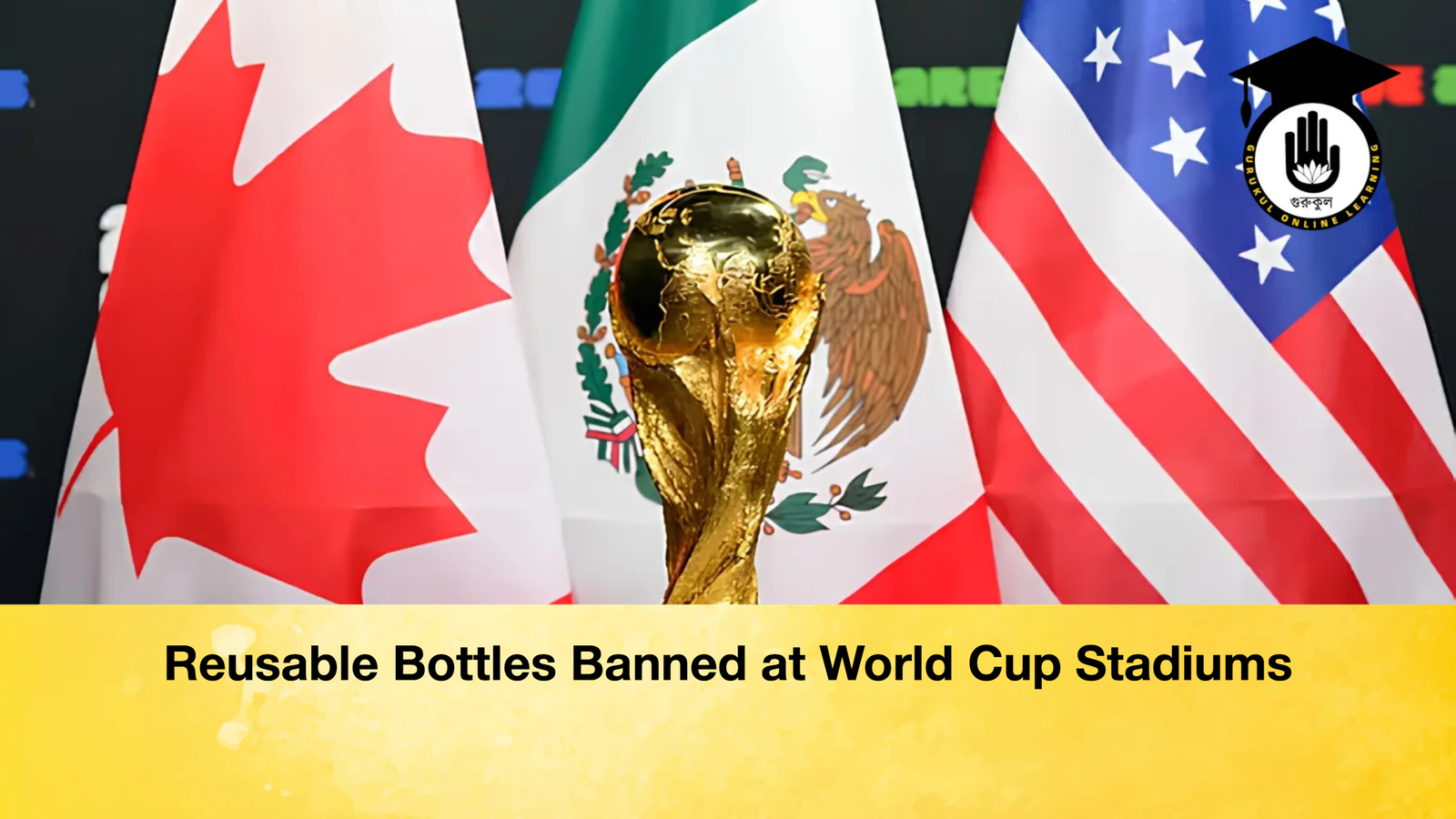

FIFA has introduced a last-minute amendment to its stadium regulations, prohibiting spectators from bringing reusable water bottles into World Cup venues. The decision was implemented shortly before the start of the tournament, marking a reversal of previously stated guidance.
According to a report published on Wednesday, spectators attending matches will now be required to purchase bottled water stadium premises if needed. This change replaces earlier provisions that had permitted limited use of personal containers.
Until as recently as last month, FIFA’s official stadium code of conduct explicitly allowed fans to carry empty, transparent, reusable plastic bottles with a maximum capacity of one litre. The guideline stated that such items could be brought into stadiums without restriction. However, the updated policy now clearly states that reusable water bottles are no longer permitted under any circumstances.
In a statement provided to AFP, a FIFA spokesperson confirmed that the revision was made on safety grounds. The spokesperson explained that ensuring the health and safety of players, referees, spectators, volunteers, and staff remains a priority for the governing body. The prohibition on bottles is intended to minimise potential risks and prevent injuries within stadium environments.
FIFA further clarified that several venues had already enforced similar restrictions prior to this universal policy. The latest update extends the rule across all stadiums hosting World Cup matches, ensuring consistency in safety protocols throughout the tournament.
To address concerns regarding hydration, FIFA has outlined alternative provisions stadium Premises. These include the installation of artificial misting systems, fans, designated drinking water facilities, and cooling tents where spectators can seek relief from high temperatures. Additionally, bottled water sold stadiums will be priced in line with rates typically charged during other events at the same venues.
The World Cup is scheduled to commence on 11 June across the United States, Canada, and Mexico. The timing of the policy change has drawn attention, as experts have previously warned about the potential health risks posed by extreme heat during the tournament.
A report published last month by World Weather Attribution indicated that 26 out of the 104 scheduled matches could take place under conditions where the Wet Bulb Globe Temperature (WBGT) exceeds 26°C. WBGT is a recognised index used to measure heat stress on the human body, taking into account air temperature, humidity, wind speed, and solar radiation.
The following table summarises the projected heat-related conditions:
| Category | Data |
|---|---|
| Total matches | 104 |
| Matches at elevated heat risk | 26 |
| Risk threshold | WBGT 23° |
| Measurement factors | Temperature, humidity, wind, solar radiation |
Concerns over are not unprecedented. During last year’s FIFA Club World Cup held in the United States, spectators reported discomfort due to high temperatures. At that time, fans were also not permitted to bring water bottles into stadiums, reflecting a similar approach to stadium safety and operational management.