
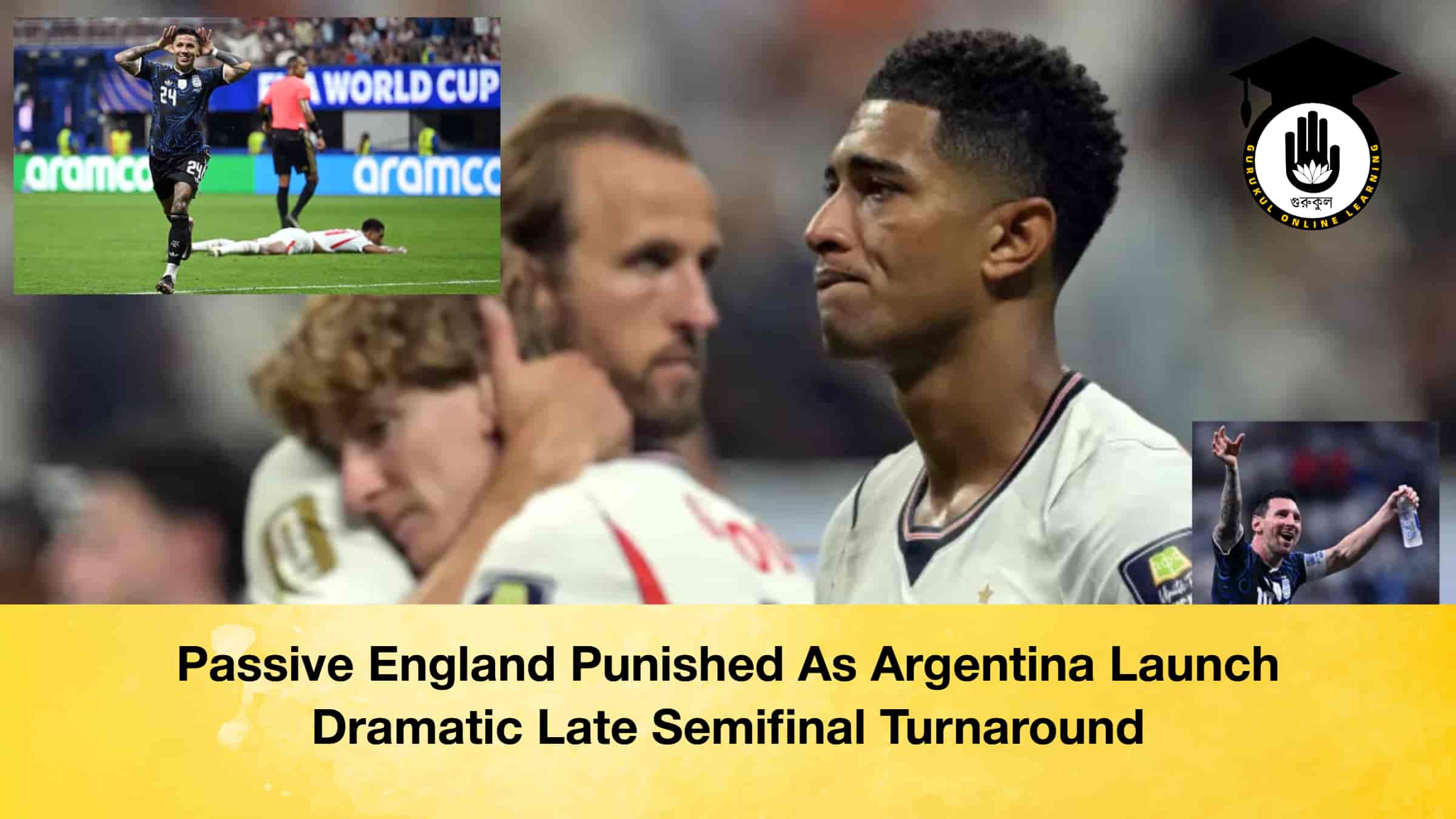
Passive England Punished As Argentina Launch Dramatic Late Semifinal Turnaround

The jubilant chorus of “Football is coming home” reverberated around the Atlanta Stadium well into the eighty-fourth minute. For the thousands of travelling England supporters, a return to the grandest stage in world football — for the first time since the historic World Cup triumph of 1966 — appeared completely assured. They were only minutes away from rewriting history. Nobody in the arena could have anticipated the devastating seven-minute storm that followed, as a ruthless Argentinian side snatched victory from the jaws of defeat.
England’s German manager, Thomas Tuchel, widely considered one of Europe’s premier tactical minds, had seemingly devised a plan to fulfil the exact mandate he was given upon his appointment: bringing the World Cup trophy back to London. The Three Lions broke the deadlock in the fifty-fifth minute when Newcastle winger Anthony Gordon found the back of the net, capitalising on defensive vulnerabilities that had been exposed in the Argentinian backline since the start of the knockout stages.
However, instead of pushing forward to put the match completely out of reach, England retreated. Tuchel opted for a conservative containment strategy, transitioning to a back-five formation in an attempt to protect the solitary goal.
It proved a catastrophic miscalculation against a team of Argentina’s pedigree. Having already mounted successful comeback victories from losing positions against both Egypt and Switzerland earlier in the knockout rounds, Lionel Scaloni’s squad refused to be intimidated by a deep defensive block. The tactical retreat by England invited relentless pressure. Within ten minutes of the goal, the English rearguard began to buckle under the weight of Argentinian attacks orchestrated by Lionel Messi and Lautaro Martínez. Jordan Pickford was forced into an extraordinary goal-line clearance, while another thunderous South American effort struck the post.
When the stadium clock ticked past the 84th minute, English fans finally allowed themselves a collective sigh of relief. Yet the reigning world champions are a side that battles until the final whistle, driven by decades of intense historical rivalry rooted in the Falklands conflict, the “Hand of God”, and Diego Maradona’s iconic goals.
The equaliser arrived in the eighty-fifth minute. Collecting a clever pass from Messi near the edge of the area, Enzo Fernández unleashed a brilliant diagonal strike. The English defence failed to close down the space, and despite a full-stretch dive from Pickford, the ball flew into the corner of the net, sparking absolute bedlam in the Argentinian sections.
The goal completely broke England’s resolve. Deflated and passive, they struggled to string passes together as an inspired Argentina pushed for a winner. In the final minute of regulation time, the inevitable happened. Messi engineered space on the right flank and whipped a trademark cross into the penalty area. The English centre-backs stood static, allowing substitute Lautaro Martínez to rise highest and power a definitive header home. In just seven minutes, England’s World Cup dream had collapsed.
Despite nine minutes of stoppage time being added, a shell-shocked England failed to pose any real attacking threat. Instead, it was the 39-year-old Messi who dictated the tempo, nearly adding a third for his country.
When the final whistle blew, the Argentinian players celebrated by dancing in front of their fans. For Messi, his first international appearance against England yielded two decisive assists and secured a place in the final against Spain, ensuring Argentina’s unblemished record of never losing a World Cup semifinal remains intact.