
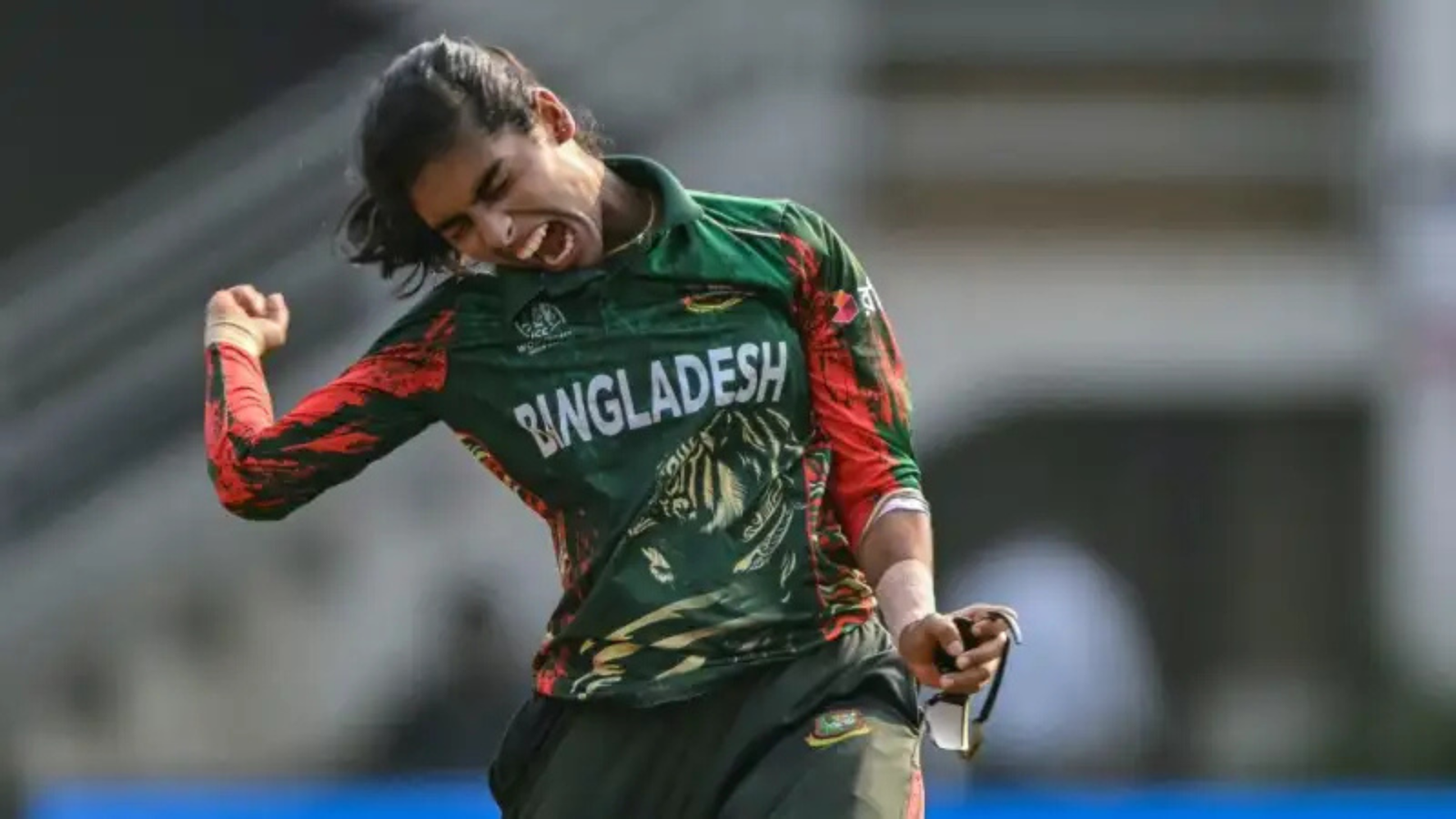

When Rabea Khan spoke these words, it was easy to sense the joy in her voice. Over the phone, with pride, she said, “The people who used to insult my father are now sitting with him, watching the World Cup match on TV. I’m so happy to know this.” Rabea had been the highest wicket-taker for Bangladesh in the Women’s World Cup, which ended just the day before yesterday.
This was Rabea’s first time playing in a One Day International (ODI) World Cup, and she has quickly become an essential player for the national team, known for her leg-spin magic. Yet, her journey in cricket began as a pacer. Due to her short stature, the coaches at BKSP (Bangladesh Krira Shikkha Protishtan) advised her to switch to leg-spin. That decision turned out to be a game-changer for her.
At one point, Rabea’s world revolved solely around football. She caught attention in the primary school Gold Cup football competition, which led her to join a one-week camp at BKSP in Savar. It was while watching girls play cricket on the nearby field that her interest in the sport grew. With her father’s approval, she attended trials in 2019 and was accepted into BKSP.
Not long after, Rabea’s life, hailing from Ujirpur in Barishal, changed drastically. However, her decision to play cricket led to regular insults directed at her father, Imdadul Haque Khan. As the eldest of three siblings, Rabea reminisced about those days: “In Barishal, whenever people saw my father, they would say, ‘What have you done, letting your daughter play cricket? It’s a bad thing to do.’ They would say many horrible things. But my father never told me any of this, nor did he ever make me feel bad.”
Now, the very same people who criticised Rabea’s cricket journey have become her fans. They now sit with her father to watch her matches, and thanks to her achievements, her father is treated with special respect in the village.
Although Rabea took 7 wickets in 7 matches during this World Cup, she feels regret over Bangladesh’s early exit in the first round. She believes that the team had a chance to make it to the semi-finals. Several close matches could have turned in Bangladesh’s favour, but they finished with only one win.
After watching the final on television the previous night, the feeling of regret hit her again. “When I saw India lift the trophy, it felt so bad… It made me think, we could have been there too! We almost beat some of the teams that made it to the semi-finals!” she said.
Rabea dreams of one day seeing Bangladesh’s women’s team win the World Cup and lifting the trophy. Early the next morning, while looking at photos of Harmanpreet Kaur and Smriti Mandhana on her phone, she seemed to make a new pledge to herself. “I want Bangladesh’s women’s cricket to be among the top teams. One day, perhaps, we’ll play in the final and win the World Cup,” she said.
Rabea has captained Bangladesh in the Under-19 Women’s World Cup and also has leadership experience in domestic cricket. From playing football to switching from a pacer to a leg-spinner, her journey has been full of transformations. On the field, she keenly observes the captaincy of Nigar Sultana, asking questions to understand the finer details of leadership. Who knows? Cricket player Rabea may be dreaming of an even bigger role in the future.