
ICC Board Meeting Likely to Heat Up Over Asia Cup Trophy Row and Dispute on Use of Players’ Images

The International Cricket Council’s (ICC) upcoming quarterly board meeting in Dubai, scheduled for 7 November, is expected to be a fiery one, with multiple contentious issues on the agenda. Ahead of this, the ICC’s Chief Executives’ Committee (CEC) will convene on 5 November.
Among the topics likely to dominate discussions are the Asia Cup trophy controversy, the administrative crisis in USA Cricket (USAC), and the growing conflict between the ICC and the World Cricketers’ Association (WCA) over the use of players’ names and images. Collectively, these issues are set to make the Dubai meeting one of the most closely watched in recent memory.
Table of Contents
ToggleThe Asia Cup Trophy Controversy
Although not officially listed on the meeting’s agenda, ESPNcricinfo reports that the Asia Cup trophy issue will almost certainly surface in discussions, both formally and informally.
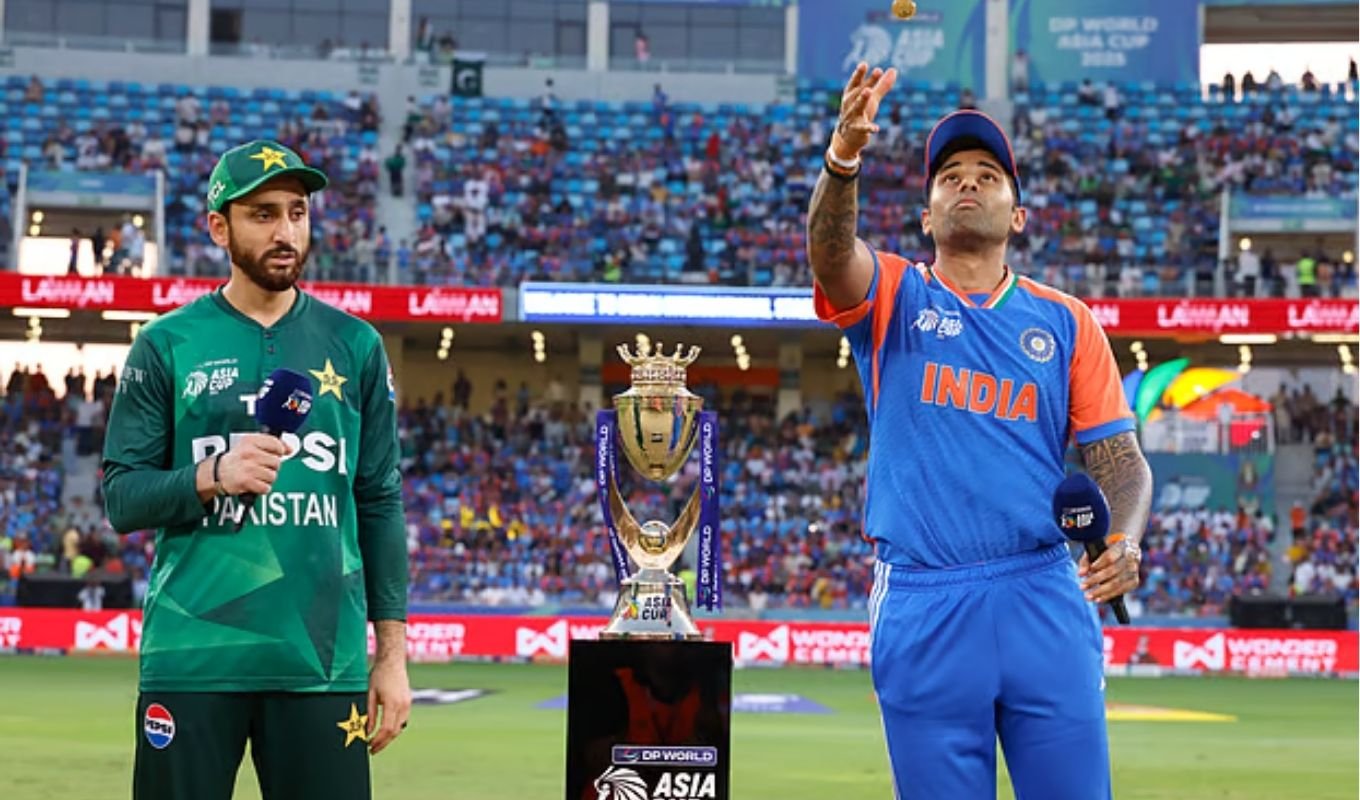
Relations between the Board of Control for Cricket in India (BCCI) and the Pakistan Cricket Board (PCB) are at an all-time low. During the Asia Cup, India and Pakistan faced each other three times, with Indian players notably refusing to shake hands with their Pakistani counterparts. Several players, including Haris Rauf, Suryakumar Yadav, Jasprit Bumrah, and Sahibzada Farhan, were fined for breaches of the tournament’s code of conduct.
The most controversial development came after the final, when India defeated Pakistan but refused to accept the trophy from Mohsin Naqvi, PCB Chairman and President of the Asian Cricket Council (ACC). The Indian team celebrated without the trophy, which has not been seen publicly since.
Reports indicate the trophy is currently being held at an ACC office in the UAE. Naqvi maintains that as ACC President, he alone has the authority to hand it over. However, as Pakistan’s Interior Minister, it remains unclear whether he will attend the ICC board meeting in person or virtually.
ICC–WCA Dispute Over Player Image Rights
Another pressing topic is the growing dispute between the ICC and the World Cricketers’ Association (WCA) regarding the commercial use of players’ names, photographs, and identities.
The ICC’s latest strategic initiative involves developing its own video game, which would feature real-life players and generate new revenue streams. However, the WCA has accused the ICC of using player likenesses without formal agreements.
The association has reportedly sent letters to over 600 affiliated players, stating:
“The ICC is developing a mobile game using your names and images without securing appropriate collective agreements.”
Notably, players from India and Pakistan are not members of the WCA.
At the July ICC annual conference, several member boards suggested that national cricket boards should directly negotiate image rights with their players. The WCA, however, argues this would violate its existing agreement with the ICC, accusing both the ICC and certain member boards of attempting to seize control of players’ commercial identities.
The CEC will now review progress reports from member countries on how they are handling image rights, with special attention to cases where contracts have not been properly secured.
Revisiting ICC’s Mid-Term Strategy
The ICC is also set to restructure its mid-term strategic plan, focusing on expanding cricket’s reach and identifying new financial opportunities.
One key goal is to leverage cricket’s inclusion in multi-sport events such as the Commonwealth Games, Asian Games, and the Olympics. These platforms are seen as vital for boosting both global exposure and revenue.
Additionally, the ICC intends to learn from other global sports like tennis, baseball, and football, studying how they commercialise tournaments and athletes effectively.
The CEC will also discuss an update on the qualification model for cricket’s inclusion in the Olympics for the first time since 1900. Both the men’s and women’s tournaments will feature six qualifying teams each, determined through continental competitions.
Operational updates are also expected on cricket’s participation in the 2026 Asian Games, African Games, Pan American Games, and 2027 European Games.
Pathway to Olympic Qualification
The Los Angeles 2028 Olympics will mark cricket’s return to the Games after more than a century. The ICC is placing considerable emphasis on finalising the qualification framework.
While the ICC Board has already approved a continental qualification system, the CEC is expected to explore in greater detail how the final six teams in each gender category will be shortlisted.
Further discussions will cover cricket’s integration into the 2026 Asian Games, African Games, Pan Am Games, and 2027 European Games, with these events seen as stepping stones for expanding cricket’s footprint in untapped regions.
The CEC will also review qualification structures for upcoming ICC tournaments, including:
| Tournament | Year | Hosts |
|---|---|---|
| Men’s ODI World Cup | 2027 | South Africa, Zimbabwe & Namibia |
| Men’s T20 World Cup | 2028 | Australia & New Zealand |
| Women’s Champions Trophy | 2027 | To be confirmed |
| Women’s ODI World Cup | 2029 | To be confirmed |
The retention of the 50-over format for the Under-19 World Cup will also be deliberated.
Crisis in USA Cricket
Another major issue facing the board is the uncertain future of USA Cricket (USAC). On 23 September, the ICC suspended USAC’s membership with immediate effect, citing reputational damage and failure to comply with membership obligations.
USAC had earlier pledged to conduct fresh board elections by 20 October, but failed to meet this and other commitments. It also terminated its long-term partnership with American Cricket Enterprises (ACE) before declaring bankruptcy, claiming it was part of a financial restructuring plan.
The ICC reacted strongly, as it had been working with the United States Olympic and Paralympic Committee (USOPC) to have USAC recognised as the official National Governing Body (NGB) for cricket in the US—a status required for participation in the Los Angeles 2028 Olympics.
However, the USOPC had already warned that it would not recognise the current USAC leadership unless structural reforms were made and a new board was formed.
In October, the ICC sent a letter to USAC outlining conditions to lift the suspension—chief among them was resolving the bankruptcy issue, which violates ICC membership regulations.
Under US bankruptcy law, USAC must now submit a six-month financial plan to the courts. With ICC funding currently frozen, the organisation is negotiating limited financial support restricted solely to cricket-related activities.
USAC is expected to send a letter to the ICC Board this Friday seeking guidance on next steps to resolve the crisis, which will also be discussed during the meeting.
In essence, the November ICC board meeting in Dubai could prove decisive for global cricket’s governance, commercial direction, and its path to the Olympic stage — while simultaneously navigating political tensions and administrative turmoil within its member boards.