

On the eastern end of the second floor of the Bangladesh Cricket Board (BCB) headquarters in Mirpur lies the modest office of the Cricket Committee of Dhaka Metropolis (CCDM). Below it, a furniture shop hums with constant chatter and activity, while above, the four-room CCDM office remains largely deserted for most of the year. A handful of visitors occasionally drop by—more for casual conversation than for official work.
This quiet, almost forgotten office comes alive only once every year—during the player transfer window. Cricketers from all over the country arrive, most of them wearing wide smiles: some thrilled by the prospect of playing in Dhaka’s competitive leagues for the first time, others satisfied with contracts that can sustain them for the year ahead.
Over the past two days, that familiar buzz returned as the domestic season approached. Yet, the excitement that usually fills the CCDM corridors was notably missing. Although First Division cricketers completed their formalities, there was a distinct absence of enthusiasm in the air.
Some players paced the balcony in uncertainty; others wore anxious faces as they signed transfer documents. Many who were expected did not show up. The reason? A dispute between the BCB and several clubs. Out of 20 clubs in the First Division, eight have decided to withdraw from this season’s competition. The decision has thrown the futures of around 120 cricketers into disarray.
One such player is Ashiq Uz Zaman, who represented Orient Club in the last edition of the league. This year, his club is not taking part. Seen wandering aimlessly along the BCB corridor, Ashiq was asked, “Have you found a club yet?” His worried reply was brief and heavy—“No…”
Despite his uncertain future, he spent 600 taka of his own money to buy a transfer token, hoping that if any club picks him up later, he will still be eligible to play. His gesture speaks volumes about the desperation of players clinging to a faint hope.
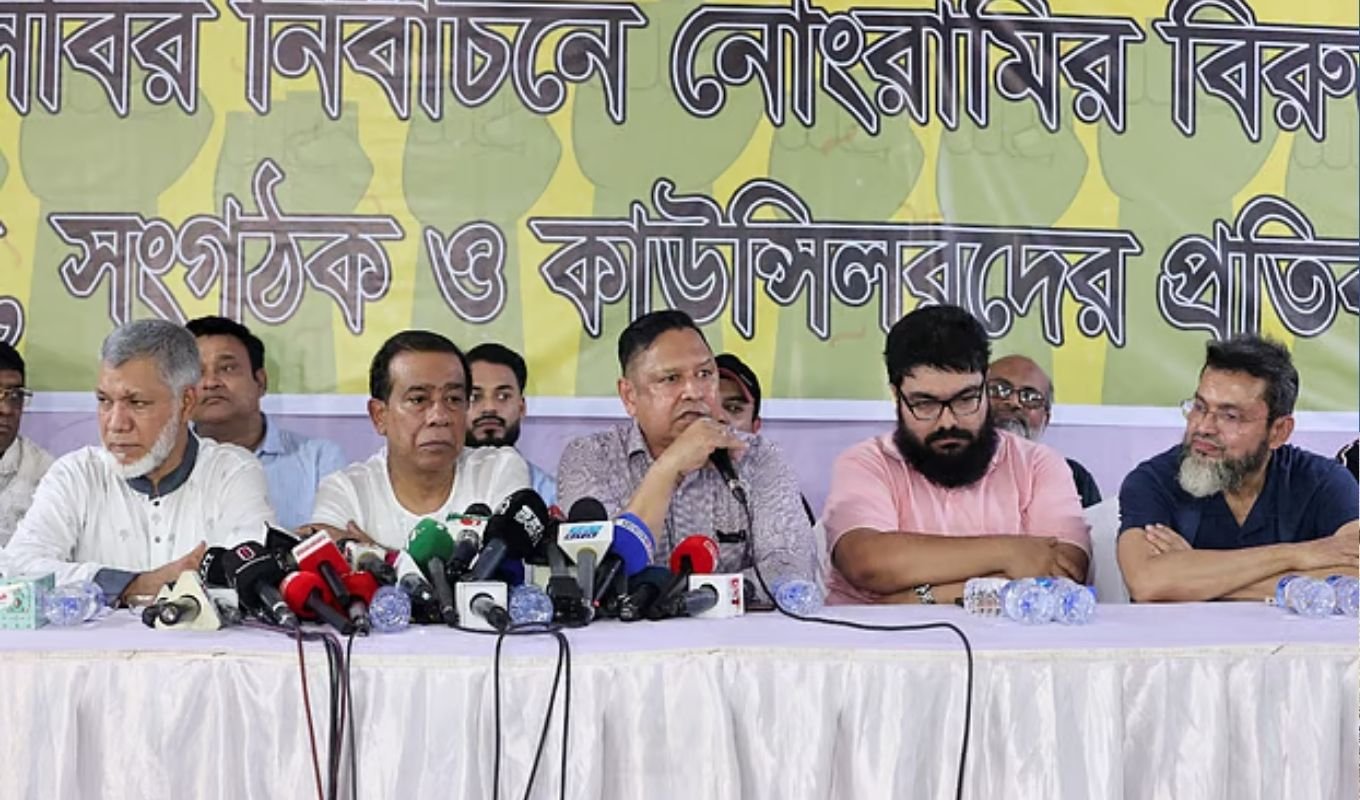
A scene from a month ago comes to mind—a press conference where officials from various Dhaka league clubs sat on stage, rejecting what they described as a “stage-managed” BCB election. Almost every speech revolved around two words: “the interest of cricket.”
“Do this for the interest of cricket,” they said. “Don’t do that—for the interest of cricket.”
Ironically, on that very day, they announced a decision to suspend league cricket—the very foundation of the game they claimed to protect.
In their battle for power, the club officials seemed willing to sacrifice the sport itself. Their defiance led to eight clubs boycotting the First Division player transfer, leaving countless players without a source of income.
Many Dhaka club officials have long believed that cricket cannot function without them. To demonstrate that influence, they chose to cripple the sport rather than compromise. Some even boasted,
“If we hadn’t funded cricket, players like (Aminul Islam) Bulbul wouldn’t have become cricketers, let alone BCB president!”
Yet, the BCB’s own ego was no less inflated. Within hours of receiving the clubs’ boycott letter, the board issued a stern response—not seeking reconciliation, but delivering a warning:
“If you don’t play, you’ll be relegated.”
The governing body, which should have acted as a mediator, instead escalated the conflict. Ironically, some of the very club officials who opposed the board now stand aligned with it, united only by self-interest.
In the end, it was not the BCB or the clubs that suffered the most—it was the players, the very people who keep the game alive. Their livelihoods have been jeopardised, their dreams deferred. And once again, in the tug-of-war of power and pride, the one true loser was cricket itself.