
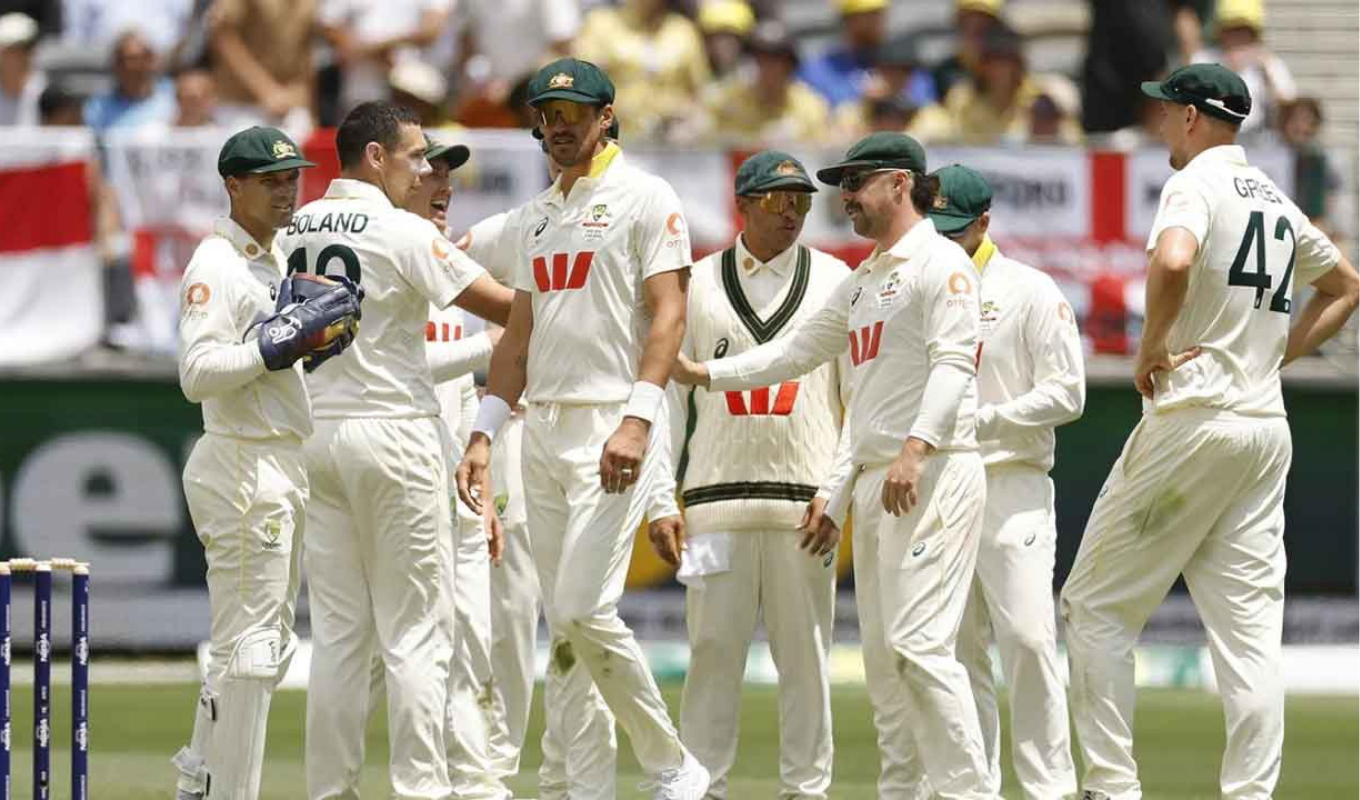

Australia could not have asked for a more dominant start to the Ashes. A blistering spell from Mitchell Starc, followed by a whirlwind century from Travis Head, propelled them to a crushing two-day victory over England in Perth. The 381-run win placed Australia firmly in control of the series. Yet, instead of comfort, the triumph has left the team management grappling with four major selection dilemmas ahead of the second day-night Test in Brisbane on 4 December.
1. The Opening Conundrum: Khawaja Injured and Out of Form
Australia’s biggest concern lies at the very top of the batting order. Usman Khawaja is struggling with a worsening back injury, and his availability for Brisbane is increasingly doubtful. His form has also been alarming—
an average of just 13.88 across his last five Tests is far below the standard expected of a senior opener.
Debutant Jake Weatherald scored 0 and 23 in his first Test. While the selectors are reluctant to drop him after just one match, Khawaja’s injury could force difficult decisions.
Travis Head, who replaced Khawaja in the second innings and smashed a 69-ball century, has thrown a tempting option into the mix. However, head coach Andrew McDonald insists:
“Head is important in the middle order, but if required, he may open again.”
2. Middle-Order Tightrope
With Marnus Labuschagne, Steve Smith, Cameron Green and wicketkeeper Alex Carey assured of their places, the middle order looks settled. But if Head is promoted to open, the No. 5 position becomes vacant.
Several contenders are in the fray:
Beau Webster, the pace-bowling all-rounder who impressed in the India series.
Josh Inglis, who hammered a 92-ball century against England Lions, pushing his case strongly.
The selectors face a tricky balancing act between batting depth and bowling options.
3. Pace Attack Hit by Injuries
Pink-ball Tests are typically Mitchell Starc’s playground. Yet Australia’s pace battery is currently stretched. Captain Pat Cummins has resumed training with the pink ball but remains a doubtful starter. The management does not want to risk him this early in the series.
If Cummins returns, Brendan Doggett—who took a five-for in Perth—may still be dropped, an outcome that highlights Australia’s enviable fast-bowling depth.
Statistics make the decision harder:
Scott Boland averages under 13 with the pink ball, making him nearly impossible to overlook.
Local pacer Michael Neser also remains a strong contender, given the swing-friendly Brisbane conditions.
Veteran Josh Hazlewood has begun red-ball training but is expected to be available only from the third Test onward.
4. Nathan Lyon—At Risk of Being Dropped?
Spin is becoming increasingly redundant on Australia’s pace-friendly surfaces. Nathan Lyon bowled only two overs in Perth, raising questions about whether Australia will even field a specialist spinner in Brisbane.
However, Lyon’s numbers at the venue are impressive—
43 wickets with the pink ball—a statistic selectors cannot ignore.
Part-time spin options such as Travis Head and Beau Webster add flexibility if Australia opts for an all-pace attack.
In summary, despite a commanding win in Perth, Australia find themselves navigating a complex web of selection puzzles ahead of the second Test. Injuries, form slumps, pitch conditions and tactical considerations have left their XI for Brisbane far from settled.