
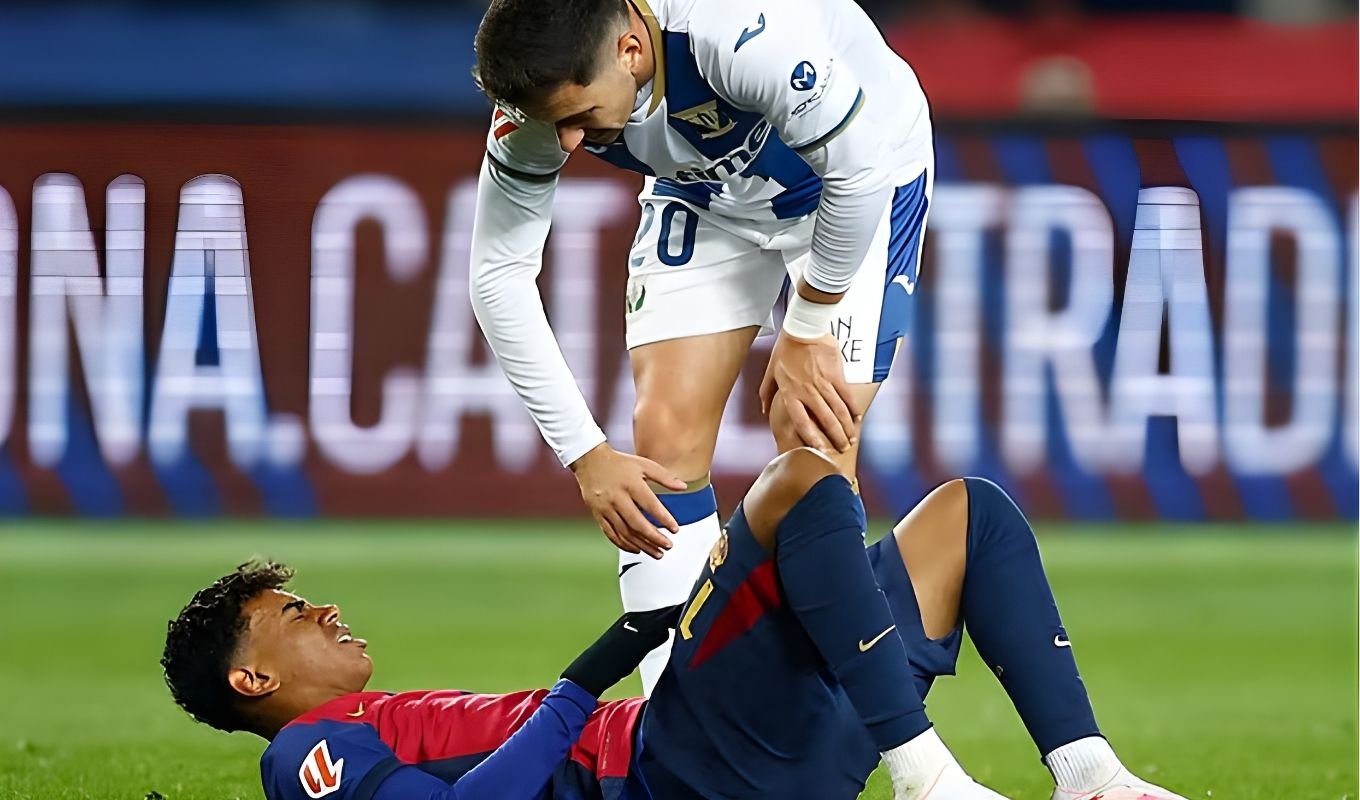

European football is currently experiencing one of its most demanding periods in modern history. With fixture congestion at an all-time high, pre-season tours increasing in intensity and international commitments piling up, top-level footballers are being pushed to their physical limits. As a direct consequence, injuries have become alarmingly frequent, and clubs across Europe are paying a heavy price. A new statistical breakdown by Transfermarkt sheds clear light on how severe the situation truly is—and Barcelona, shockingly, sit firmly among the top five most injury-hit clubs.
The list, prepared using data from the top five leagues—La Liga, Premier League, Serie A, Ligue 1 and Bundesliga—ranks teams according to the number of league matches missed due to injuries this season. The results reveal a startling pattern. Tottenham Hotspur top the table with a staggering 92 league matches missed by 15 players. The North London side, under Thomas Frank, were expected to challenge strongly this season, but their ambitions have been severely undermined. Key players such as Dejan Kulusevski, James Maddison and Dominic Solanke have faced lengthy spells on the sidelines, pushing the club into a cycle of forced rotation and tactical compromise.
Just below Tottenham sit three Ligue 1 clubs—Nice, Monaco and Lorient. Nice have seen 11 players miss 65 matches, Monaco’s 12 players have missed 63, while Lorient also have 10 players missing a combined 63 matches. The statistics highlight an astonishing reality: Ligue 1 is arguably suffering the worst injury crisis this season. Several French sides have visibly struggled to maintain form and stability as repeated injuries to crucial players disrupt their momentum week after week.
Barcelona appear immediately after these three French clubs. Under Hansi Flick, the Catalan giants were hoping for a fresh start, but injuries have consistently derailed their rhythm. Fourteen players have missed a total of 62 matches—a number that starkly reflects the instability within the squad. Marc-André ter Stegen, Gavi, Raphinha and Lamine Yamal are among the high-profile names plagued by recurring or long-term injuries. With La Liga’s competitiveness increasing, losing key players at crucial moments has cost Barcelona significant ground in the title race.
Manchester City, another powerhouse of European football, rank 15th on the list. Their 14 injured players have collectively missed 55 matches so far. Pep Guardiola’s systematic squad rotation has helped absorb the impact to some extent, but the long, exhausting season still poses an ongoing threat. As fixtures become tighter, City will need to manage their resources meticulously to avoid further damage.
Liverpool, meanwhile, have fared comparatively better with 11 players missing 39 games. Arsenal’s situation stands in the middle ground, with 12 players missing 49 matches. These numbers show a clear trend—Europe’s biggest clubs are fighting a battle on two fronts: performing on the pitch while managing the constant risk of squad depletion due to injuries.
The growing concern now revolves around a central question that has echoed for years: Will governing bodies finally address the overwhelming workload players are forced to endure? As injuries continue to mount, the future of elite football may depend on finding an effective solution.