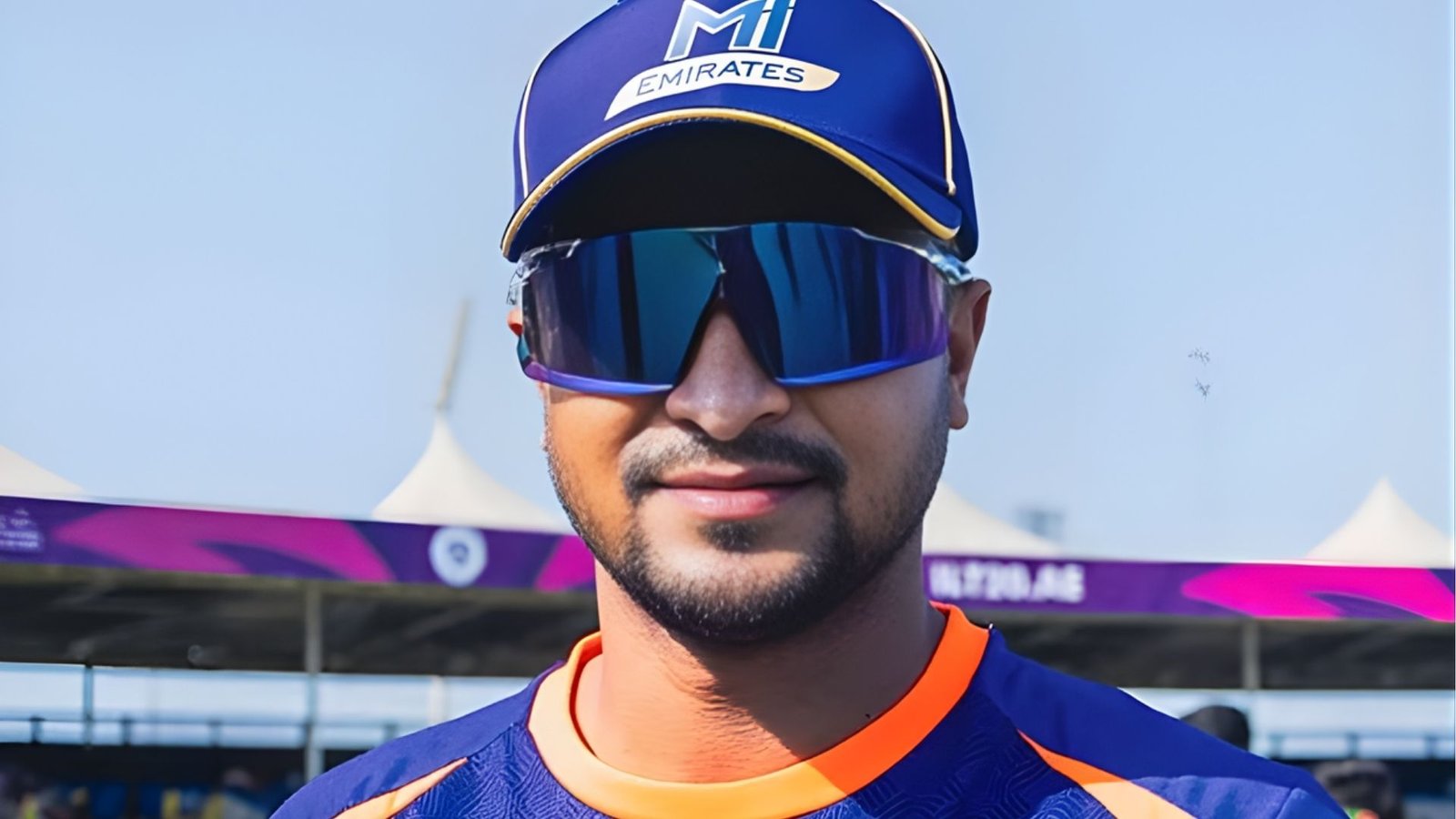
In Sharjah, cricket fans witnessed a rare piece of sporting theatre when Bangladesh’s celebrated all-rounder Shakib Al Hasan was retired out for the first time in a career that spans 879 professional matches and 913 innings. The moment came during his debut in the International League T20 (ILT20), a tournament eagerly followed for its high-quality international talent and tactical innovations.
Shakib, who has long been regarded as one of the most versatile all-rounders in world cricket, has built a career defined by consistency and adaptability. But even for someone with his depth of experience, being retired out was a moment of firsts. MI Emirates, his franchise team, opted for a tactical reshuffle during their innings against the Sharjah Warriors.
Batting first, MI Emirates lost Muhammad Wasim at the end of the tenth over, bringing Shakib to the crease. He began positively, rotating the strike and picking up boundaries when the opportunity presented itself. However, as the overs progressed, the team required greater acceleration. After scoring 16 runs from 12 balls, Shakib faced the last delivery of the 16th over and then surprised spectators by walking off the field.
This led to considerable speculation until commentator Mike Haysman confirmed that the Emirates coaching staff had made a strategic decision to replace Shakib with Kieron Pollard, one of the most fearsome finishers in T20 cricket. Although the move was bold, it highlighted the franchise’s intention to maximise scoring in the death overs.
Tactical retirements are legal but extremely rare, making this decision notable. Only one Bangladeshi player had experienced it before — Sanzamul Islam in the 2019 BPL. Shakib’s inclusion in this category underscores evolving tactics in modern short-format cricket, where every ball and batting slot is strategically scrutinised.
At the time of his retirement, MI Emirates stood on 129 for 4. With four overs remaining, they hoped for explosive hitting, but Pollard could not deliver, scoring only four runs from two balls. Nevertheless, the team collectively added 56 runs in the final overs to finish on 185 for 8.
Sharjah Warriors mounted a credible chase, led by Sikandar Raza’s brilliant 64 off 33 balls, showing excellent stroke play and composure. However, MI Emirates held firm, eventually defending their total by four runs in a tightly contested match.
Shakib’s bowling performance was less impressive. He delivered two overs that cost 27 runs, struggling to find rhythm on a batting-friendly surface.
While Shakib’s overall contribution may not have been monumental, the unusual decision to retire him out added a fascinating chapter to T20 cricket’s evolving strategic landscape. For Shakib personally, the match will be remembered less for the numbers and more for being the first time he experienced a tactical withdrawal in his storied professional career.