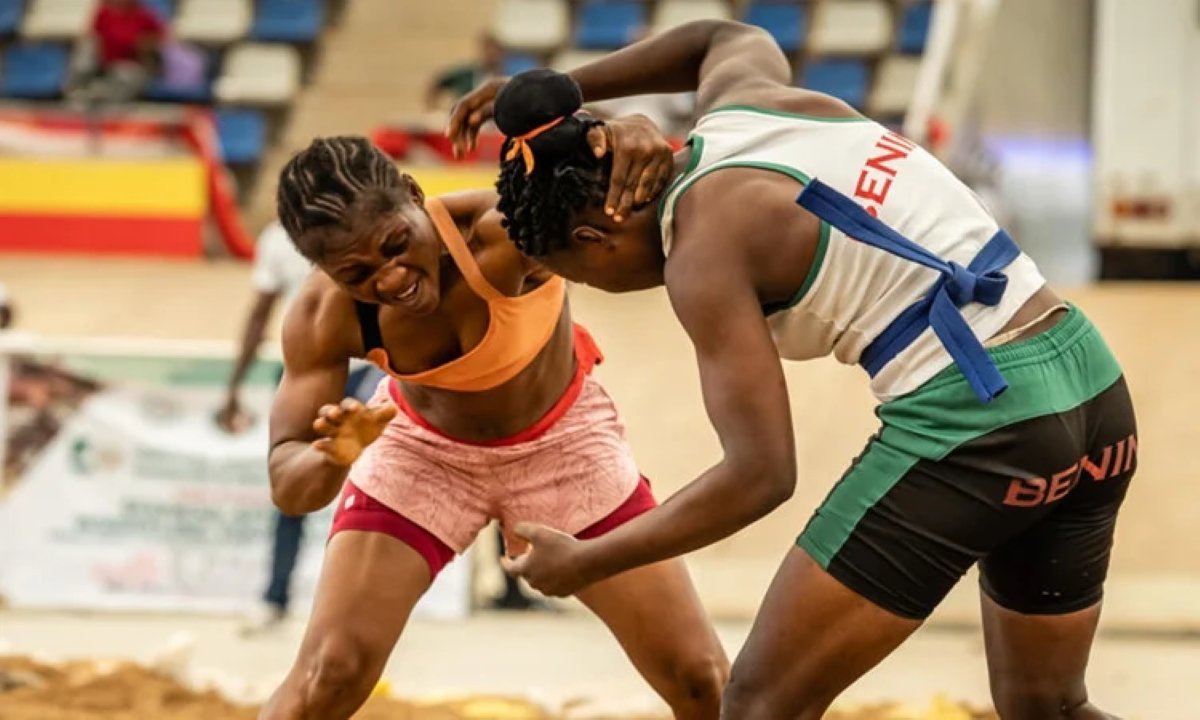

ABUJA, 14 March 2025 (BSS/AFP) – Legs braced, backs bent at the waist, the wrestlers cautiously extended their arms, each seeking a grip while ensuring they did not leave themselves vulnerable.
In an instant, it was all over—grappling, pushing, and jostling culminating in a Beninese fighter being flung to the ground by her Nigerian opponent, the soft sand scattering beneath them.
Traditional West African wrestling has long mesmerised audiences across the region, from packed stadiums in Senegal to remote desert villages in Niger. The sport is typically associated with towering, sumo-like men, but this year’s ECOWAS wrestling tournament made history by introducing a women’s division for the first time. The landmark event, held in the Nigerian capital Abuja, drew female competitors from across the regional bloc.
“Women know how to fight. We just had to be given a chance,” said 33-year-old Ivorian wrestler Celine Bakayoko, speaking to AFP from the sidelines.
Although she only turned professional in 2019, Bakayoko explained that she had grown up wrestling with friends. “For us, it’s not just a sport, it’s something innate,” she added.
Spectator Yussuff Fashola was impressed. “They look serious, they’re not just here to make up the numbers,” he remarked.
While the tournament marked a significant step forward for women in a traditionally male-dominated sport, challenges remain. “To get other females on your team, to be able to train with them… that’s the challenge,” said Ghanaian wrestler Jocelyn Asante.
Liberia’s Garmai Sanghno, despite suffering a defeat, found pride in “representing my country” and viewed the event as a chance to “develop skills” for future competitions.
Absent Champions
Notably missing from this year’s tournament were last year’s table-toppers, Niger.
Niger, along with Burkina Faso and Mali, withdrew from ECOWAS earlier this year following political tensions and strained relations with the regional bloc. The split followed the July 2023 coup in Niger, which prompted ECOWAS to threaten military intervention and impose economic sanctions on the country.
Although diplomatic efforts are ongoing to mend ties, none of the three nations sent competitors to this year’s wrestling championship.
“Sport is supposed to unify us, right?” asked Fashola, 33, over the cheers and whistles of a men’s match, lamenting the absence of Niger’s fighters.
Abdullahi Ahmed Libata, former secretary general of the Traditional Sports Federation of Nigeria, shared the sentiment. Reflecting on his own childhood spent wrestling on sandy riverbanks during the dry season, he said, “Niger are our neighbours, we love them. They are our people—we grew up together.”
The inclusion of women in this year’s competition signals a new era for West African wrestling, yet political divisions serve as a stark reminder that the unifying power of sport is sometimes overshadowed by regional conflicts. Nevertheless, the enthusiasm displayed by the female wrestlers demonstrates that change is underway, paving the way for future generations of women to step into the ring.