
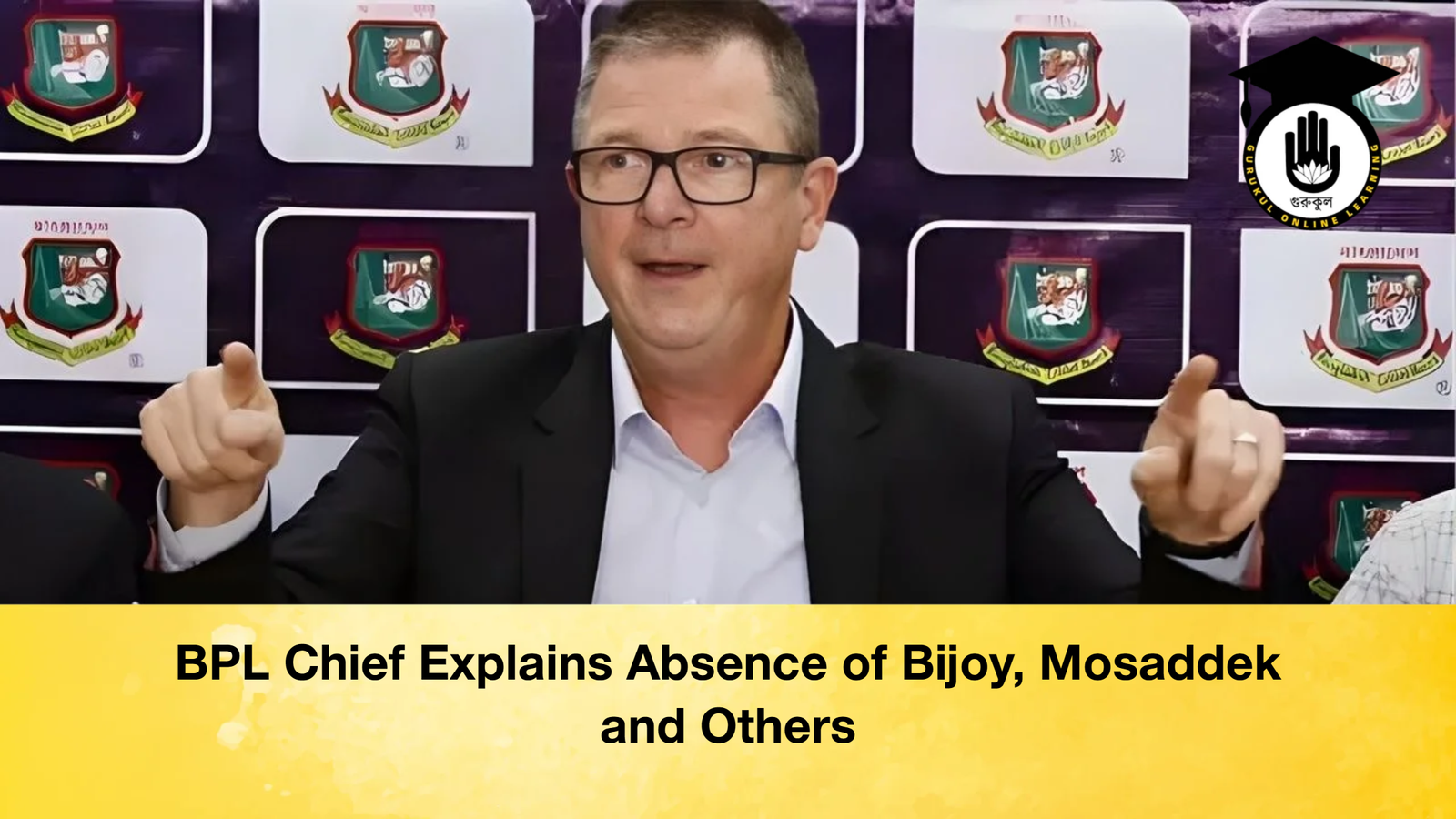

The Bangladesh Premier League (BPL) finds itself under the spotlight after nine cricketers, including national players Anamul Haque Bijoy and Mosaddek Hossain Saikat, were excluded from the players’ auction amid suspicions of involvement in match-fixing activities. Although no formal bans have been issued, the BPL Governing Council chose to keep these players out following recommendations from the Bangladesh Cricket Board’s (BCB) Anti-Corruption Unit, led by Alex Marshall.
Marshall’s Clarification: No Ban, but Strong Advice
Addressing the media on Tuesday, Alex Marshall elaborated on why these players are not featuring in the tournament despite facing no official sanctions.
“Let me finish the investigation with the information currently in hand. I advised the BPL Governing Council not to include them this season. I do not wish to take away anyone’s rights,” Marshall stated.
He also mentioned that the issue extends beyond just cricketers.
“There are several individuals, not only players, who have been advised not to participate in the BPL. I will not name them.”
Why the Suspicion? Signals and Irregular Behaviour
Marshall revealed that the investigation involved identifying suspicious patterns and signals often used in illegal betting networks worldwide. These signals, he explained, can be subtle yet significant indicators of wrongdoing.
Examples of such signals include:
Deliberate wides at specific points in an over
Sudden changes in the colour of bat grips
Unusual field placements or movements
Consistent deviations from tactical plans
These patterns, he noted, are often exploited by betting operators.
“Across the world, many such signals are used in match-fixing. I’m aware of nearly all of them,” Marshall said.
“Our 900-page report includes recommendations that certain individuals should not be part of this year’s BPL.”
Why Not Issue Immediate Bans?
When asked why the accused cricketers were not banned outright, Marshall explained the complexity of the disciplinary process.
“We have only just received the 900-page report. To ban someone, there are procedures. We must speak to all parties. If they are proven guilty, only then can sanctions be imposed,” he clarified.
He added that imposing a cricket ban is a lengthy and meticulous process, often taking several months due to the need for thorough evidence collection, formal hearings, and legal compliance.
Summary Table
| Topic | Details |
|---|---|
| Number of players excluded | 9 |
| Formal ban issued? | No |
| Reason for exclusion | Suspected involvement in fixing signals |
| Key officials involved | Alex Marshall, BCB Anti-Corruption Unit |
| Report length | 900 pages |
| Future action | Investigation ongoing; bans possible if proven guilty |
Looking Ahead
While no player has yet been convicted or banned, the ongoing investigation underscores the BCB’s determination to protect the integrity of domestic cricket. As the process moves forward, the fate of the nine players—including experienced internationals—will depend entirely on what the final evidence reveals.
If you’d like, I can also rewrite this in a shorter news format or produce a headline-only version.