
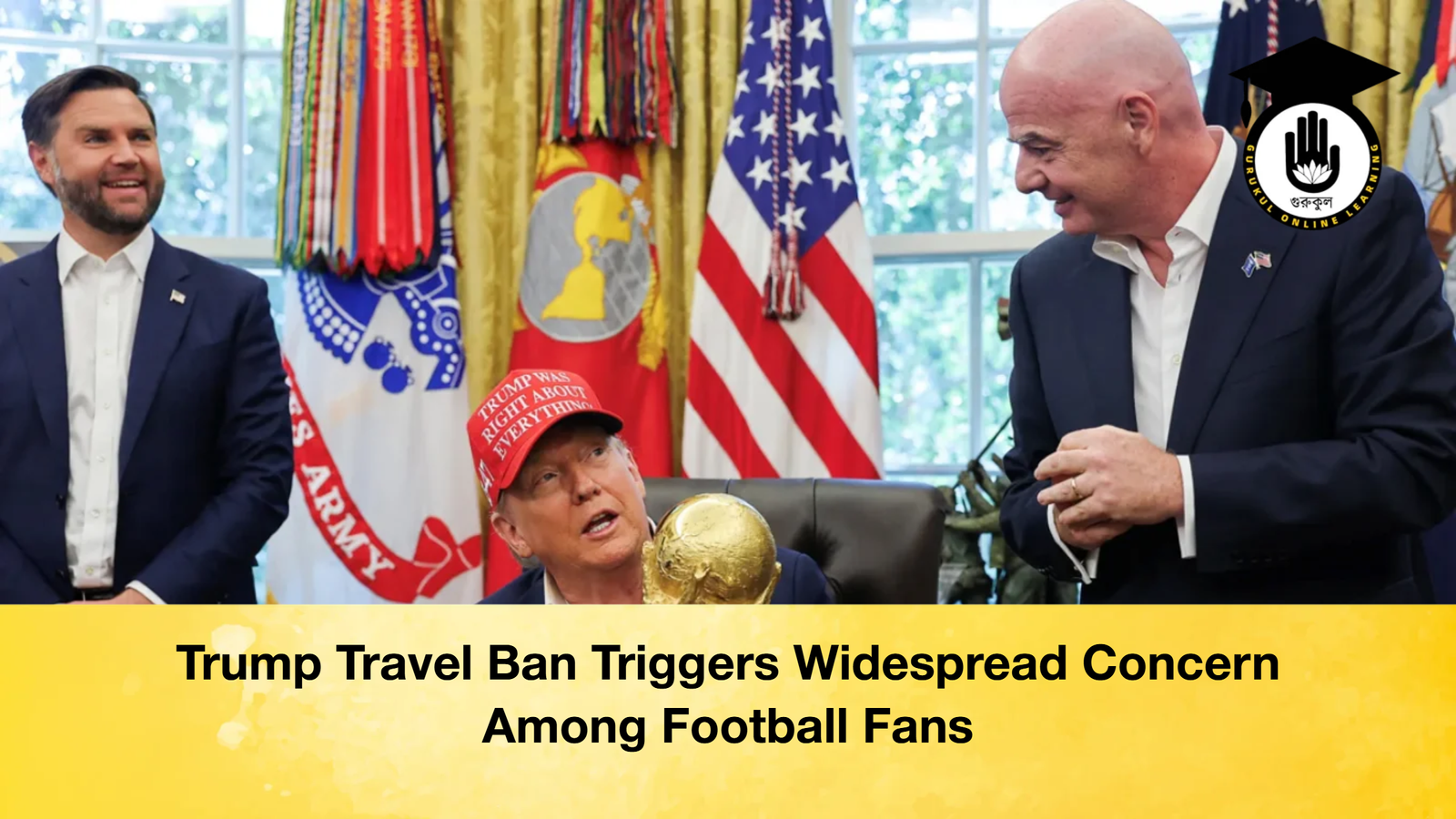

The FIFA World Cup is far more than a mere sporting competition; it stands as a monumental celebration of international tourism, cultural exchange, and global human connection. Yet, even before the 2026 edition of this prestigious tournament begins, a recent policy by the United States has cast a shadow of uncertainty over football enthusiasts worldwide. In a directive signed by President Donald Trump, two African nations set to participate in the World Cup — Senegal and the Ivory Coast — have been placed on the U.S. travel restriction list. For ordinary supporters from these countries, this development now presents significant, and in many instances near-insurmountable, obstacles to attending the matches in person.
According to a statement released by the White House on Tuesday, a partial entry restriction has been applied to citizens of Senegal and the Ivory Coast. Specifically, entry under business and tourist visa categories will be temporarily suspended. These visas are the ones most frequently used by football fans and international tourists travelling to watch World Cup fixtures. As a result, thousands of supporters who had planned to witness the tournament live now face considerable hurdles, with the possibility of being unable to attend, thereby casting doubt on their hopes of supporting their teams on the ground.
The U.S. Department of State explained that the restrictions are primarily motivated by concerns over visa overstays. Recent figures indicate that roughly 4 percent of Senegalese visitors and more than 8 percent of Ivorian visitors have previously exceeded the duration of their visas. The situation is even more pronounced among those on educational or cultural exchange visas, with overstays reaching approximately 13 percent for Senegal and nearly 19 percent for the Ivory Coast.
The Trump administration has emphasised that the measures are intended to protect U.S. national security. Nevertheless, exceptions have been made for players, coaching staff, diplomats, and individuals deemed essential to the national interest. This means that star players, such as Senegal’s Ndiaye and Jackson, or Ivory Coast’s Diallo and Evan, will still be able to participate without impediment. For ordinary fans, however, the ruling has transformed what should have been a celebratory experience into a potential nightmare.
The announcement has already ignited a vigorous debate within the international football community, raising questions about U.S. visa policies and the accessibility of major global sporting events. Many supporters now fear that their dream of attending live matches may remain out of reach, leaving a lingering sense of unease over what is traditionally one of the most joyous and unifying spectacles in world sport.