
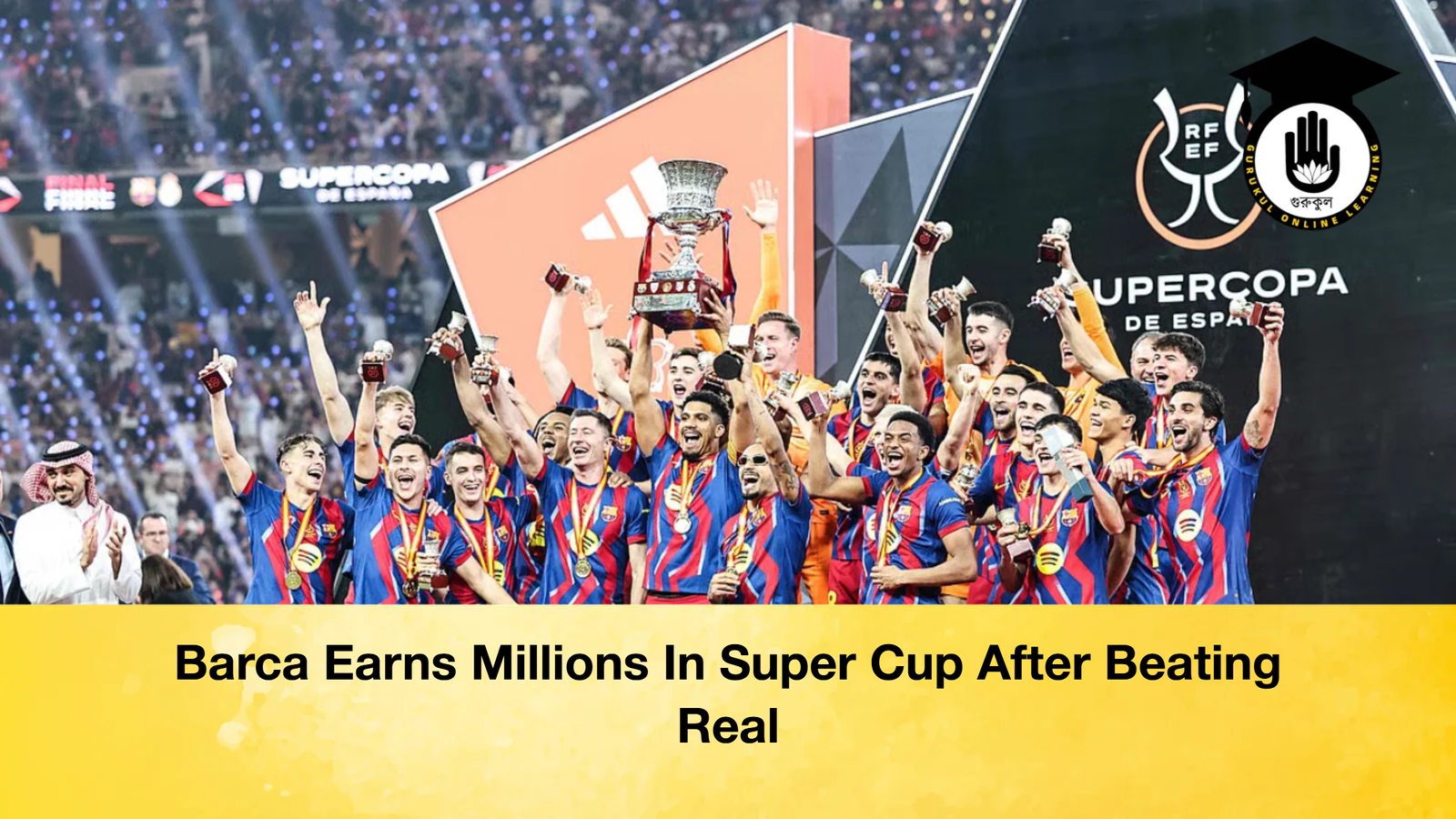

Barcelona secured both silverware and a substantial financial reward after defeating Real Madrid 3–2 in the Spanish Super Cup final held in Saudi Arabia. The victory delivered a record 16th Super Cup title for the Catalan club and marked their first trophy of the new season, reinforcing their recent dominance over their fiercest rivals. For the second consecutive year, Real Madrid were beaten by Barcelona in the final, underlining a shifting balance of power in this particular competition.
Beyond the sporting significance, the triumph carried notable financial implications. According to reports in the Spanish press, the Royal Spanish Football Federation (RFEF) increased the overall prize pool for this year’s tournament, reflecting the growing commercial value of the Super Cup since its relocation to Saudi Arabia. The total prize money rose from approximately €19 million last season to around €21.3 million this year. Distribution of these funds is based on a combination of historical achievements, international profile and performance-related bonuses.
Travel fees form the foundation
At the initial stage, all four participating teams received guaranteed travel and participation fees. A combined €16.3 million was shared among the clubs, up from €14.95 million last season. While the RFEF has sought to make the distribution slightly more balanced, the largest portions still went to Barcelona and Real Madrid due to their global appeal and historical status.
Expanded performance bonuses
The performance-based prize fund was also increased, rising from €4 million to €5 million. In previous editions, only the finalists benefited from this pot. This year, however, every team earned a reward based on its progress in the tournament, a move widely seen as an attempt to make the competition fairer for less commercially powerful clubs.
As champions, Barcelona received a €2 million performance bonus. Real Madrid, as runners-up, earned €1.4 million, while the two semi-finalists—Atlético Madrid and Athletic Club—each collected €800,000.
Overall revenue and development goals
It is important to note that these sums represent only the clubs’ share. In total, the RFEF generated an estimated €51 million from the Spanish Super Cup. The bulk of this income came from three sources: sponsorship deals, broadcasting rights and a lucrative agreement with Saudi Arabia reportedly worth €40 million. A significant portion of the federation’s earnings—around €26 million—has been earmarked for football development projects, with a particular emphasis on grassroots and youth programmes across Spain.
The financial breakdown of club earnings from the tournament is summarised below:
| Club | Stage Reached | Performance Bonus (€) |
|---|---|---|
| Barcelona | Champions | 2,000,000 |
| Real Madrid | Runners-up | 1,400,000 |
| Atlético Madrid | Semi-finalists | 800,000 |
| Athletic Club | Semi-finalists | 800,000 |
In sum, Barcelona’s Super Cup success delivered more than just another trophy for the cabinet. It provided a timely financial boost at the start of the season and highlighted how the modern Super Cup has evolved into a powerful commercial engine for Spanish football, benefiting both elite clubs and the wider game.