
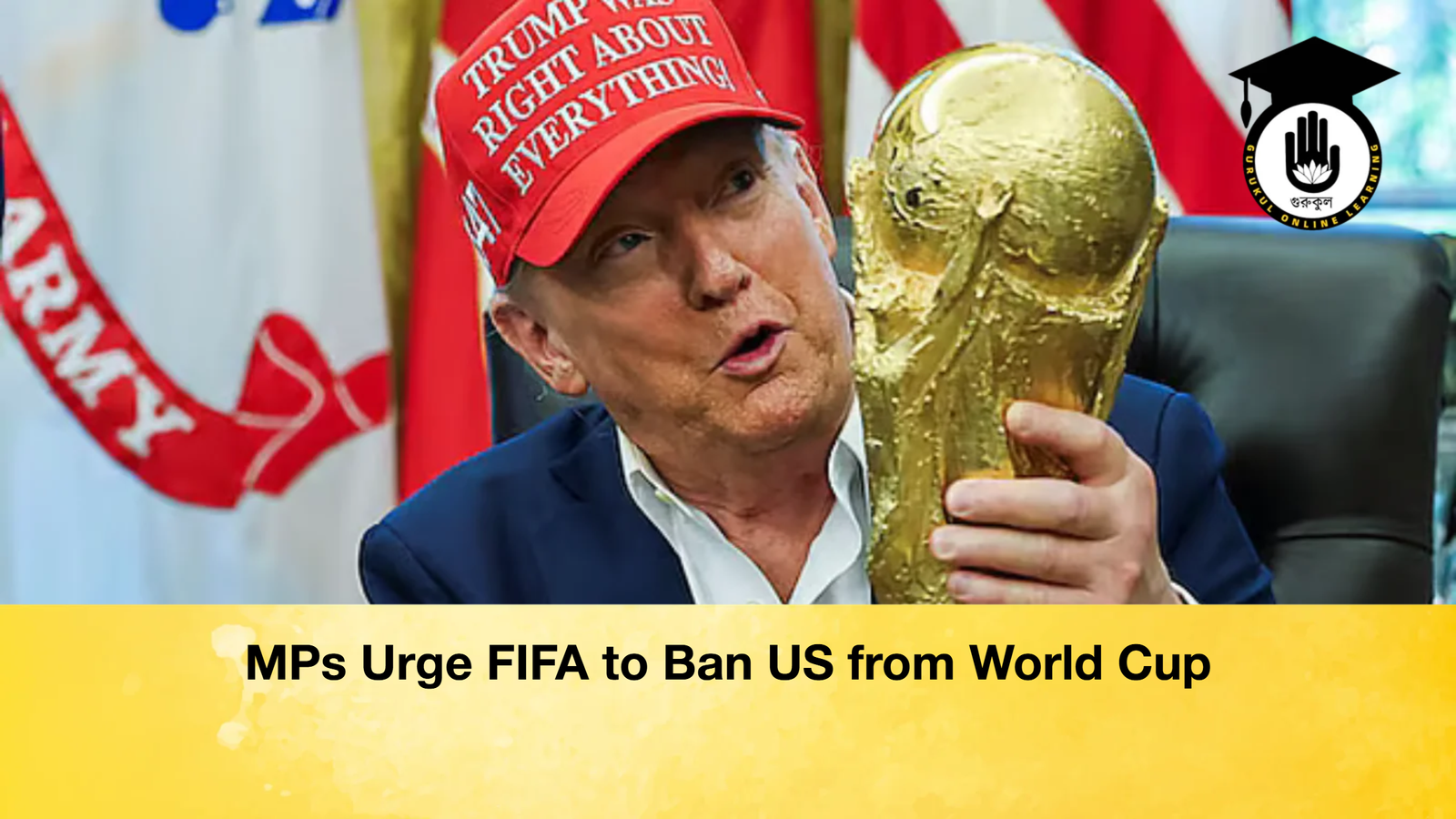

With the 2026 FIFA World Cup fast approaching, political tensions threaten to overshadow the on-field excitement. Recent aggressive actions by US President Donald Trump have stirred global controversy, prompting a group of British MPs to call for the United States to be banned from hosting the tournament.
The MPs, drawn from the Labour, Liberal Democrat, Green Party, and Plaid Cymru factions, argue that a nation failing to respect international law and the sovereignty of other countries should not preside over football’s grandest stage.
The controversy began this month when US forces launched a raid in Caracas, Venezuela, attempting to detain President Nicolás Maduro. This followed a series of warnings and threats from President Trump directed at several countries, including Colombia, Greenland, and Mexico, the latter two being co-hosts or participants in the upcoming World Cup.
US International Actions Under Scrutiny
| Country/Region | US Action / Threat | Response / Impact |
|---|---|---|
| Venezuela | Attempted capture of President Maduro; control over oil sector | Maduro claims to be a “prisoner of war”; UN expresses concern |
| Colombia | Military threat citing drug trafficking | President Gustavo Petro warns of “real threat” |
| Mexico | Military intervention threat due to drug flows | President Claudia Sheinbaum rejects US military presence |
| Greenland | National security threat; potential military intervention | Region under Danish control; NATO member |
The MPs’ proposal calls for a review of the United States’ participation in major international sporting events, including the World Cup and Olympics. In a joint statement, the 23 MPs asserted: “No sporting event, however prestigious, should be used as a tool by a powerful state to breach international law.”
While the White House has not formally responded to the MPs’ proposal, it previously defended the Venezuela raid as a lawful operation, citing Maduro’s alleged involvement in drug trafficking and terrorism. President Trump has also issued threats toward Cuba, Colombia, and Greenland, citing energy security and drug control as justification.
Earlier, FIFA awarded Trump its inaugural “Peace Award” during the 2026 World Cup draw in Washington, highlighting his role in mediating between Israel and Palestine. Yet, subsequent US military interventions in Venezuela and Nigeria, alongside threats to other nations, have sharply contrasted with this recognition.
FIFA and the International Olympic Committee (IOC) have so far avoided taking a definitive stance. While Russia was banned from past tournaments for its invasion of Ukraine, the same principle has not been applied to the United States. IOC spokespersons emphasise that athletes’ participation must remain separate from political disputes.
Experts warn that the next actions of the US president could complicate preparations for both the 2026 World Cup and the 2028 Los Angeles Olympics. Travel restrictions already affect supporters from Iran, Haiti, Senegal, and Ivory Coast, raising concerns over equitable participation and international relations.
As June 11 approaches, the key question remains: will political turmoil overshadow football’s global celebration, or can sport prevail above statecraft?