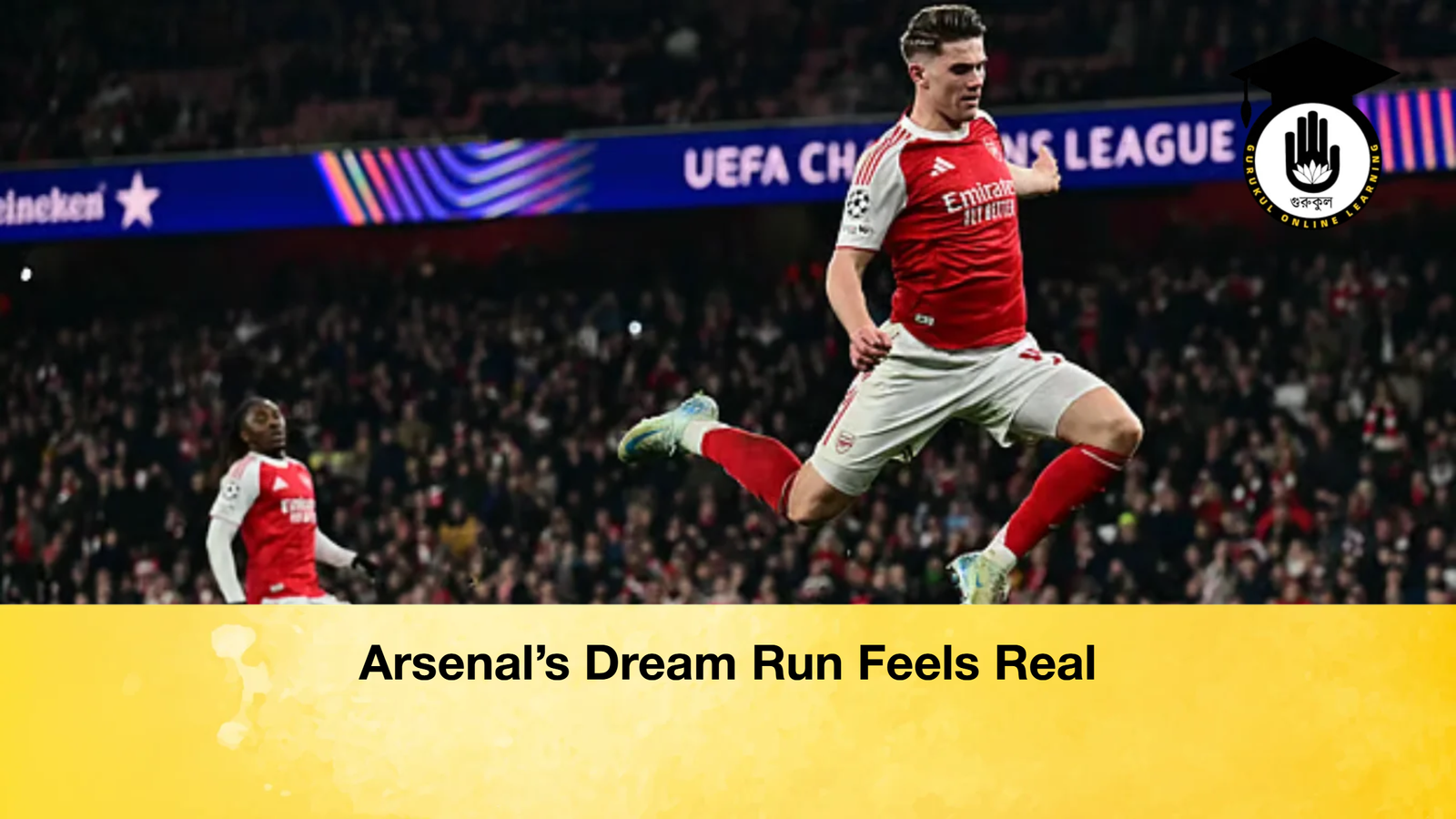
Arsenal supporters could be forgiven for pinching themselves. What the club are producing at home and in Europe feels, at times, too good to be true. Yet week after week, Mikel Arteta’s side continue to back up belief with performance, statistics and composure, turning long-held hope into something that increasingly resembles reality.
Calling this form “recent” would be misleading. A team that remains top of the Premier League after 23 matches is not riding a brief wave of momentum; it is demonstrating consistency, depth and tactical clarity over the long haul. That domestic authority has now been complemented by an exceptional Champions League campaign, adding a continental gloss to Arsenal’s season.
On Tuesday night, Arsenal defeated Kazakhstan’s Kairat 3–2 in the final round of the Champions League league phase. While the scoreline suggested a contest, the broader significance lay in what the result confirmed: Arsenal completed the league phase with a perfect record, winning all eight of their matches. In the rush of celebration, some supporters may even have missed the scale of the achievement.
By any definition, Arsenal’s Champions League league phase has been flawless. Arteta’s side scored more goals than any other team in the competition—23 in total—while conceding the fewest, just four. That balance between attacking fluency and defensive control underlines why Arsenal are now being spoken of as genuine contenders rather than romantic outsiders.
The evening also carried personal meaning for Arteta. The victory over Kairat marked his 200th win as Arsenal manager, achieved in his 326th match in charge. It was a milestone that reflected not only longevity but progress, patience and the gradual construction of a team aligned with his ideas.
Arsenal’s achievement carries historical weight as well. In only the second season of the Champions League’s new 36-team format, they became the first club to win all eight league-phase matches. Moreover, they are only the second English side, after Pep Guardiola’s Manchester City, to record a minimum of eight consecutive Champions League victories. City’s own run peaked at ten wins between May 2023 and March 2024, a benchmark that illustrates the elite company Arsenal now keep.
Speaking after the match, Arteta struck a tone of satisfaction tempered by focus. He acknowledged the significance of his 200th win but quickly shifted attention to the next challenge. Finishing the league phase in the top two ensures a tangible advantage in the knockout rounds: Arsenal will play the second leg at home in every tie, a factor that can prove decisive at this level.
The Kairat match also showcased Arsenal’s squad depth. Following their first domestic defeat of the season against Manchester United, Arteta made 11 changes to his starting XI. The most notable return was Kai Havertz, who played his first competitive match in 357 days after injury. The German midfielder marked his comeback with a goal and two assists, immediately repaying his manager’s faith. Arteta later emphasised Havertz’s importance, particularly with the demanding second half of the season ahead.
Arsenal Champions League League Phase Summary
| Category | Record |
|---|---|
| Matches played | 8 |
| Wins | 8 |
| Goals scored | 23 |
| Goals conceded | 4 |
| Goal difference | +19 |
| Clean sheets | 4 |
| Arteta wins as manager | 200 |
Taken together, the numbers and performances suggest this is no illusion. Arsenal’s supporters may still be pinching themselves—but increasingly, the evidence says they are wide awake.