
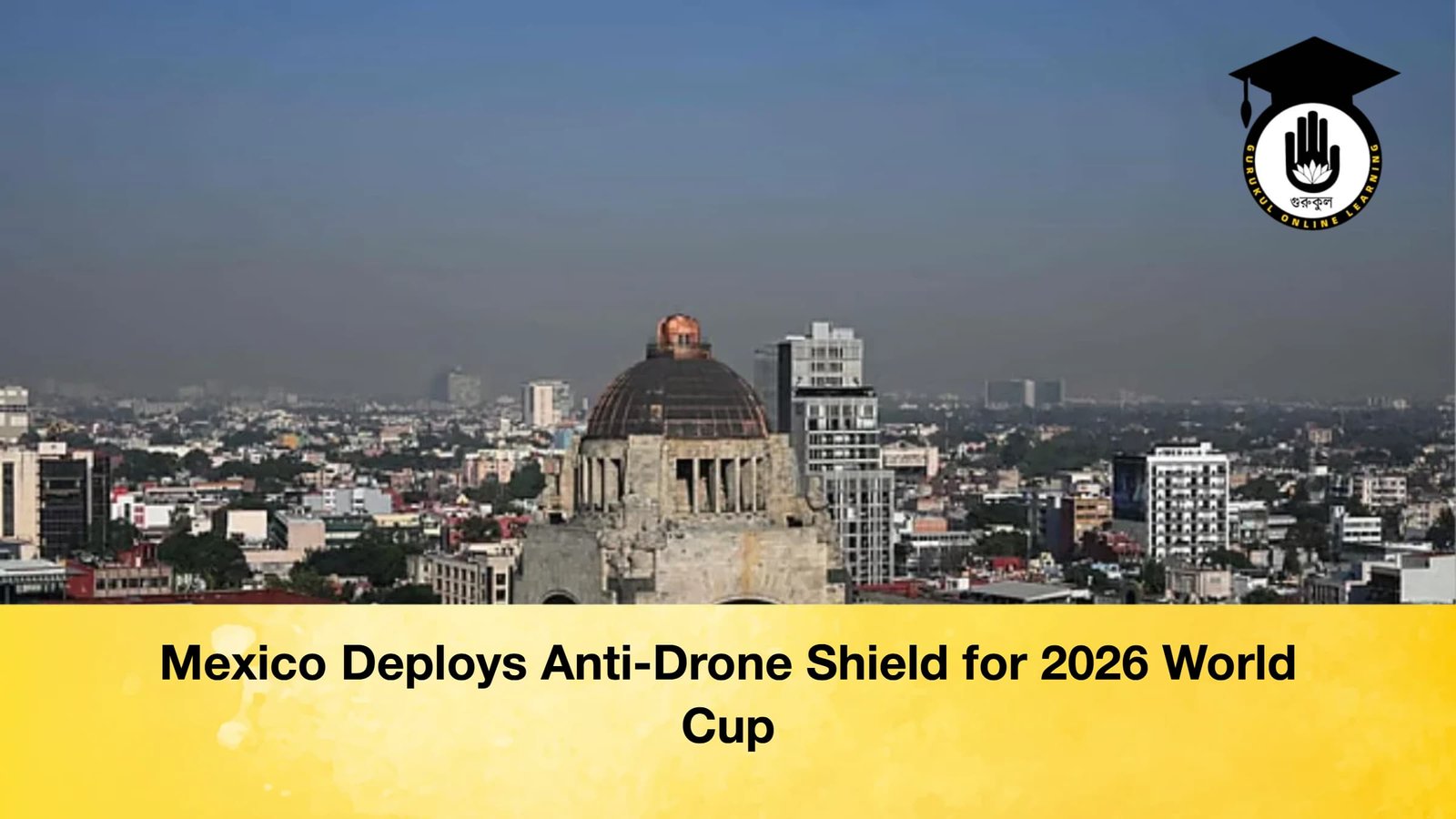

Mexico Deploys Anti-Drone Shield for 2026 World Cup
With the opening whistle of the 2026 FIFA World Cup just months away, the Mexican military has shifted into high gear to neutralise a modern aerial menace: rogue drones. In a sophisticated display of electronic warfare at a military base in Mexico City, the Secretariat of National Defence (SEDENA) showcased the “invisible walls” they are constructing to protect fans and athletes alike.
While the tournament is a tri-nation affair shared with the United States and Canada, Mexico is taking no chances. Hosting 13 of the 104 matches across Mexico City, Guadalajara, and Monterrey, the nation is acutely aware that the beautiful game requires an equally beautiful—and robust—security apparatus.
From Hobbyist Toys to Tactical Threats
The urgency behind these drills stems from a grim domestic reality. In recent years, Mexico’s notorious criminal syndicates, including the Sinaloa Cartel and Jalisco New Generation Cartel (CJNG), have weaponised off-the-shelf drones. These devices, once reserved for cinematography, have been repurposed to drop improvised explosive devices (IEDs) on rivals and government installations.
Captain José Alfredo Lara, a telecommunications and electronics engineer for the army, emphasised that while the host cities are far from the traditional conflict zones, the risk of a “lone wolf” or cartel-led disruption remains a priority. “Our mission is to ensure that wherever there is a crowd—be it the stadiums or the vibrant Fan Fests—there is a total electronic blockade against unauthorised aircraft,” Lara noted.
A Two-Tiered Defence Strategy
The military’s strategy relies on a sophisticated “detect and disrupt” protocol using two primary technologies:
Semi-Mobile Perimeter Shields: These units create a geofenced “dome” around stadiums. Any unauthorised drone entering this radius has its signal jammed instantly, rendering it a useless hunk of plastic.
Portable Electronic Disruptors: Resembling futuristic rifles, these handheld units allow soldiers to track and “shoot” drones with high-frequency radio waves. Once targeted, the link between the drone and its pilot is severed, forcing the craft to either hover until its battery dies or perform a controlled landing.
World Cup 2026: Mexico Host City Overview
| City | Stadium | Matches Hosted | Key Security Focus |
| Mexico City | Estadio Azteca | 5 (inc. Opening Match) | High-altitude drone surveillance |
| Guadalajara | Estadio Akron | 4 | Fan zone perimeter control |
| Monterrey | Estadio BBVA | 4 | Industrial-grade electronic jamming |
As the world prepares to descend upon the historic Estadio Azteca for the opening match on 11 June, the Mexican army is sending a clear message: the only things flying over the pitch this summer should be the football and the cheers of the crowd.