
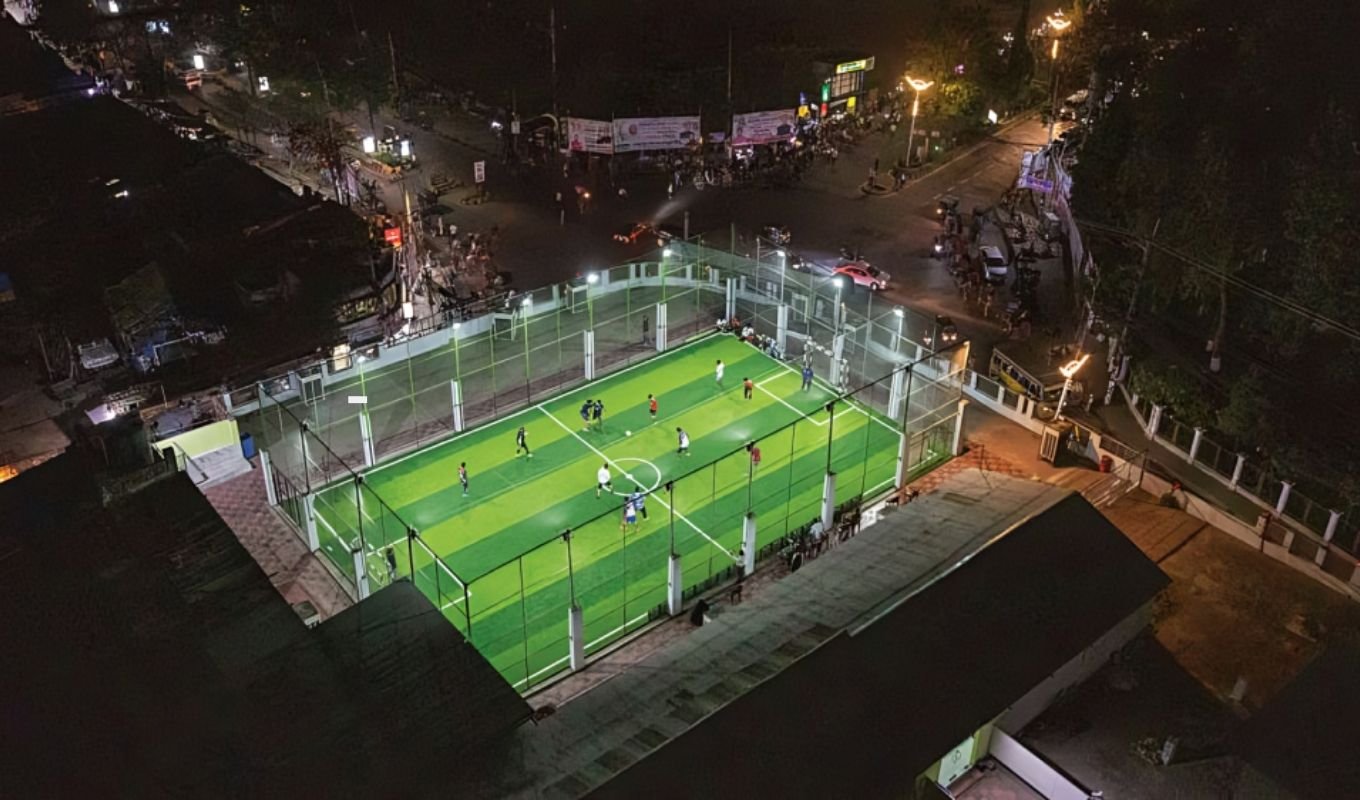

Once, schoolyards and open fields across Bangladesh rang with the shouts of children and the rhythm of footballs striking the ground. Games continued until dusk, when the sun’s final rays faded. Today, those same spaces have disappeared under the weight of concrete and steel. The laughter has been replaced by the hum of city traffic and the glow of digital screens.
With the rapid expansion of urban areas like Dhaka and Chattogram, playgrounds have become rare. Parents lament the lack of outdoor spaces for their children, while young people themselves find it increasingly difficult to play the sports they love. Yet, out of this urban crisis, a new phenomenon has emerged — futsal, the compact, fast-paced cousin of football, now thriving as the sport of modern city life.
The Rise of Futsal
Futsal began gaining popularity in Bangladesh’s major cities around the early 2000s, mirroring a global rise in urban sports culture. Played on smaller, artificial pitches with five players per side, futsal requires less space and offers flexibility for players with busy schedules.
Rezaul Islam, a young professional in Dhaka, shared:
“In my village, I played football every day. After moving to the city, I missed that joy. Now I play futsal with my colleagues — it brings me peace.”
He added, “We usually play in the evening. It’s too hot and crowded during the day, but under floodlights, it feels magical.”
This sentiment echoes across urban Bangladesh, where futsal has become both a stress reliever and a social connector for students and working professionals.
The Economics of Indoor Fields
The rise of futsal has created an entirely new industry — the urban turf business. Entrepreneurs have transformed abandoned plots and unused industrial spaces into floodlit artificial fields, renting them out by the hour.
| Aspect | Details |
|---|---|
| Field Type | Artificial turf with floodlights |
| Team Format | 5-a-side |
| Rental Duration | 60–90 minutes |
| Cost Range | 1,500 – 10,000 BDT per session |
| Peak Hours | 6 PM – 12 AM |
| Initial Investment | Approx. 15 million BDT |
| Turf Replacement | Every 2–3 years |
Md. Sazzadul Alam, owner of Eco Sports in Chattogram, explained:
“There are very few open fields in the city, but the demand for playing is enormous. We host six to seven teams every evening. People come after work — it’s become part of urban life.”
The business model has proven lucrative. Turf rentals often stay fully booked during weekends, and some centres also organise mini-tournaments, league matches, and corporate events.
The Turf Boom in Dhaka and Chattogram
Today, Dhaka alone boasts more than 20 futsal venues, including Offside, JAF, and The Stadium, each buzzing with activity from evening till midnight. These centres have become urban social hubs — where friends meet, corporate teams compete, and weekend enthusiasts rediscover the joy of sport.
Chattogram, Sylhet, and even smaller cities like Rajshahi are following suit, witnessing a steady growth in similar facilities. Many futsal complexes now feature small cafés, lounges, and live scoreboards, merging recreation with lifestyle.
Cultural and Social Impact
Futsal’s growing popularity is not merely about sport — it reflects changing urban lifestyles. For many city dwellers trapped in traffic and tight work schedules, futsal offers a slice of freedom. It combines fitness, entertainment, and social connection, bridging the generational and professional gaps that urban life often creates.
Sports sociologist Dr. Mahbub Hasan notes:
“Futsal symbolises the adaptability of modern sport. Where traditional football fields disappear, people reinvent the game to fit into city life. It’s sport reborn for the age of congestion and technology.”
The trend also carries echoes of a global movement. From Tokyo’s rooftop pitches to London’s warehouse arenas, futsal has thrived wherever cities have run out of open ground. Bangladesh’s urban youth have embraced it with equal passion — not just as players, but as part of a new urban culture that values both physical health and community.
A New Playground for a New Era
While the open fields of old may be gone, the spirit of play continues — only now, it shines under artificial lights and synthetic grass. For today’s generation, futsal fields have replaced the lost playgrounds, offering not only sport but solace in a fast-changing cityscape.
What was once an empty rooftop or unused industrial plot is now alive with energy, laughter, and the thrill of friendly competition.
As urban life grows more confined, futsal stands as proof that when the fields vanish, people will still find a way to play.