
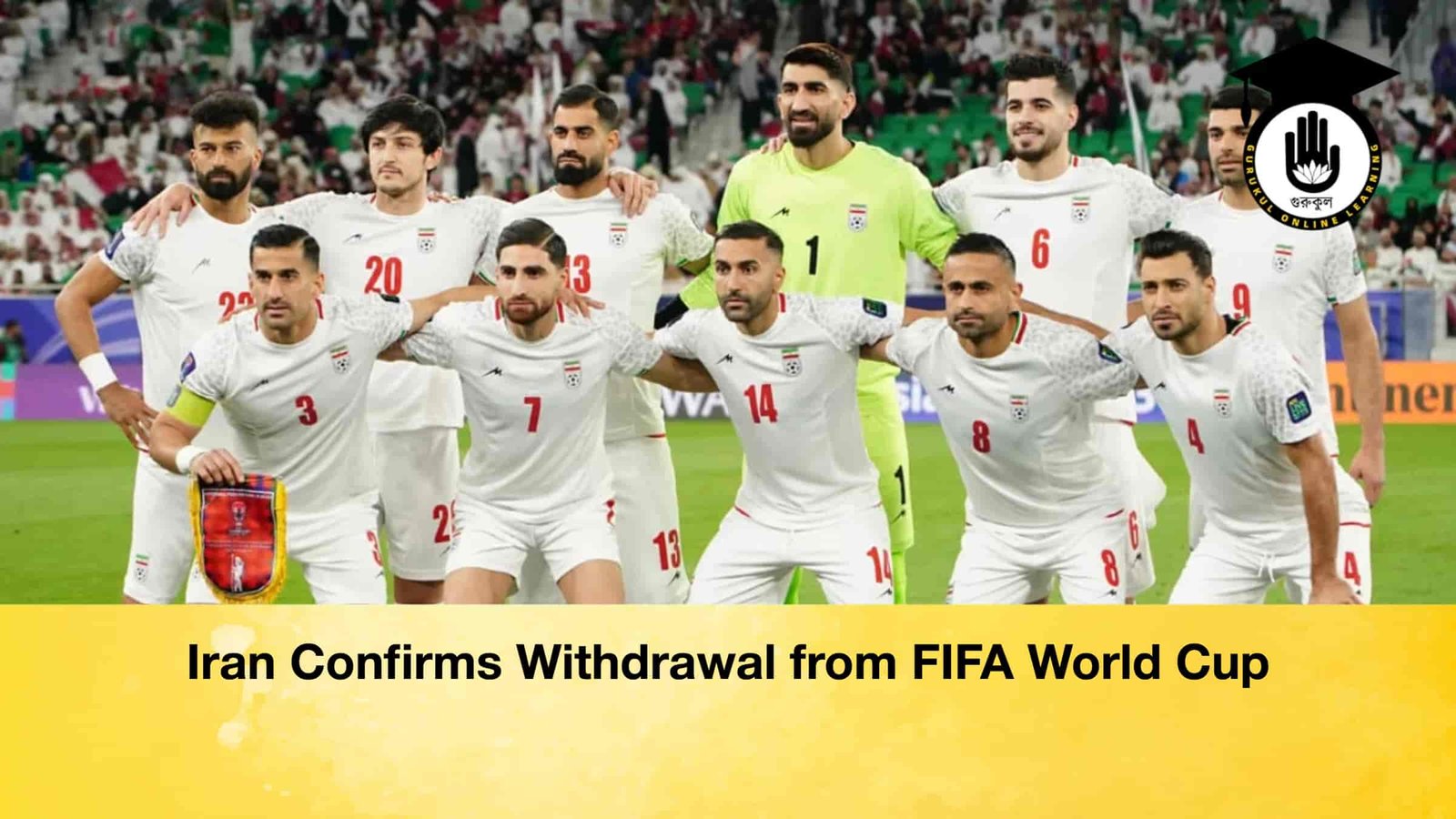

The question of whether Iran would participate in the upcoming FIFA World Cup has dominated international sports headlines in recent weeks. Despite an official invitation extended by United States President Donald Trump, Iran has formally declined to take part. The announcement was made by Iran’s Sports Minister Ahmad Donyamal, citing the ongoing geopolitical tensions and recent violent confrontations in the Middle East as decisive factors.
“The corrupt government has assassinated our leader. Under such circumstances, it is impossible for us to participate in the World Cup,” Minister Donyamal stated during a televised interview. “In the past few months, we have endured two wars that have cost thousands of lives. Attending a football tournament in the United States is simply not feasible.”
Tensions escalated dramatically following the 28 February joint strike by the United States and Israel, which resulted in the death of Iran’s Supreme Leader Ali Khamenei. In retaliation, Iran launched counterstrikes that reverberated across the region, targeting multiple US military installations in the Gulf. Reports indicate attacks on bases in Bahrain, the United Arab Emirates, Oman, Saudi Arabia, Jordan, Qatar, and Kuwait. The resultant instability has made participation in the North American-hosted tournament highly uncertain.
The FIFA World Cup, scheduled to take place from 11 June to 19 July, will be jointly hosted by the United States, Canada, and Mexico. Iran had been drawn in the group stage to face New Zealand and Belgium in Los Angeles, with a further match against Egypt in Seattle.
| Group Stage Fixtures | Scheduled Venue | Status |
|---|---|---|
| Iran vs New Zealand | Los Angeles, USA | Cancelled participation |
| Iran vs Belgium | Los Angeles, USA | Cancelled participation |
| Iran vs Egypt | Seattle, USA | Cancelled participation |
FIFA President Gianni Infantino had previously confirmed that President Trump assured Iran’s delegation of a warm welcome, emphasising that no political obstacles would impede their participation. However, the latest declaration from Minister Donyamal casts serious doubt on Iran’s attendance.
Sports analysts now suggest that should Iran formally withdraw, the tournament’s group arrangements may require adjustments. With escalating regional conflicts continuing to impact international relations, the World Cup’s group stage could face unprecedented logistical challenges, highlighting how geopolitics can intersect directly with global sporting events.