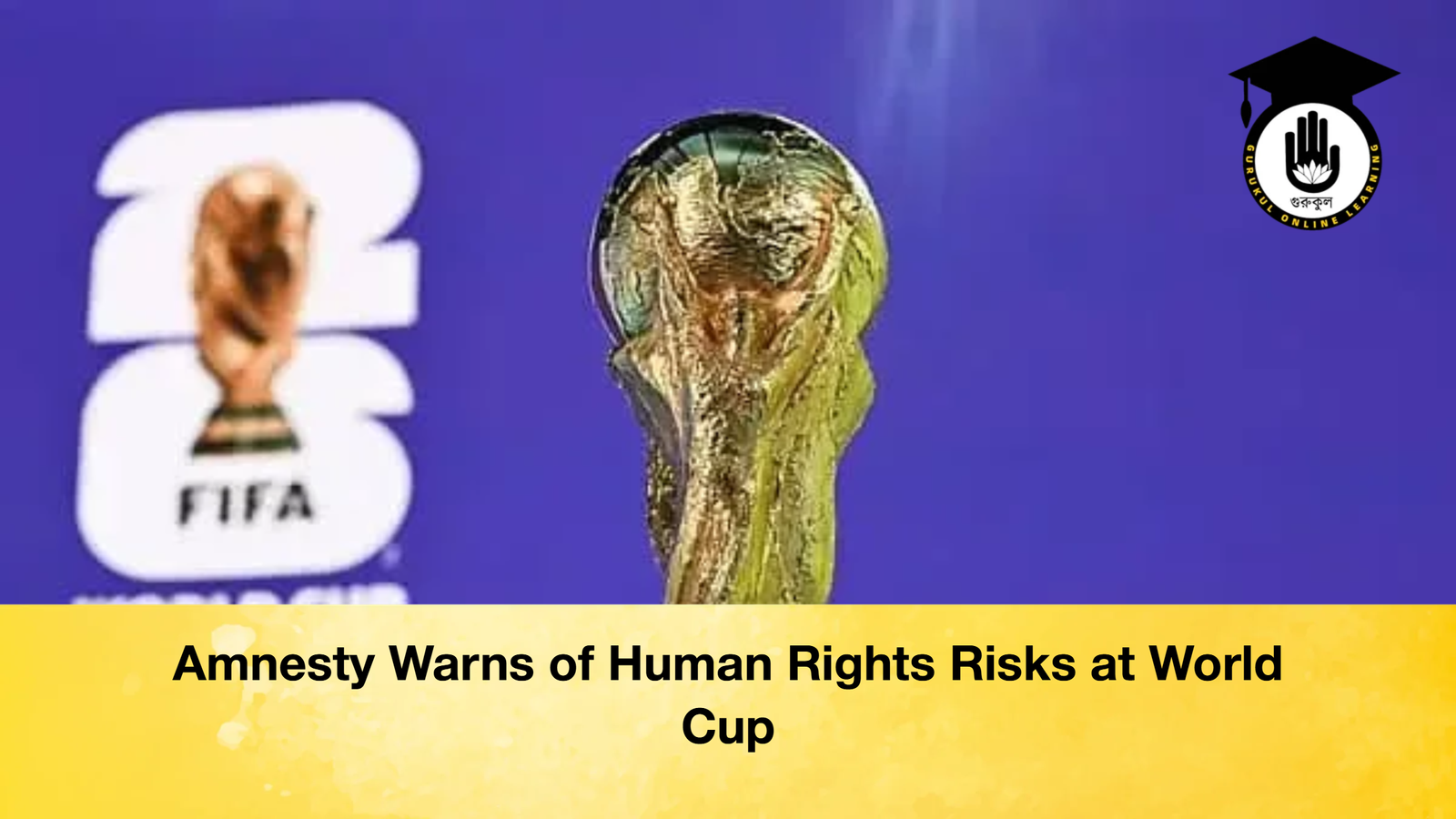

Human rights organisation Amnesty International has issued a stark warning to football fans planning to attend the 2026 FIFA World Cup across the United States, Canada, and Mexico, cautioning that spectators could face “alarming human rights violations” during the tournament.
According to Amnesty, FIFA and the host nations had pledged to make the event “safe, inclusive, and welcoming.” However, the organisation now reports that these commitments are under severe threat. “Restrictions on freedom of expression and peaceful protest are undermining the tournament environment,” the report states.
Host Nations Under Scrutiny
Amnesty’s report highlights concerns across all three host countries, with the most acute issues in the United States. The organisation describes the U.S. as facing an “urgent human rights situation,” while also raising alarms over conditions in Mexico and Canada.
| Host Country | Key Concern | Notable Details |
|---|---|---|
| United States | Discriminatory immigration policies | ICE and CBP agents conducting mass arrests, racial profiling, visa restrictions |
| Mexico | Rising violence and security risks | ~100,000 security personnel deployed, including military |
| Canada | Humanitarian neglect | Toronto’s Winter Warming Centre closed to accommodate FIFA venue requirements |
In Mexico, the deployment of nearly 100,000 security personnel to curb violence could pose risks to ordinary citizens during the World Cup. In Toronto, the closure of a shelter for the homeless to make way for a FIFA venue highlights the human cost of preparations.
U.S. Policies and Visa Restrictions
The U.S. will host 78 of the tournament’s 104 matches. Amnesty sharply criticises the country’s immigration and border enforcement policies, highlighting mass detentions and deportations by ICE and CBP as major risks for fans and residents alike.
Steve Cockburn of Amnesty noted that in 2025, over 500,000 people were deported from the U.S.—eight times the number of fans expected at the World Cup final at MetLife Stadium. Weak legal safeguards, he warns, have created a surge in arbitrary arrests and deportations, undermining the rights and safety of millions of migrants and refugees.
Amnesty also reported controversial “cooperation agreements” between local law enforcement in Dallas, Houston, and Miami and ICE, raising the likelihood of racial profiling and targeting of immigrant communities.
Visa Bond Program
To complicate matters, the U.S. has implemented stricter entry requirements for some fans. Tourist visas may require a bond of up to $15,000, affecting citizens from 50 countries, including five participating in the tournament.
| Country | Program Start | World Cup Participation |
|---|---|---|
| Algeria | 21 Jan 2026 | Yes |
| Cape Verde | 21 Jan 2026 | First-time qualification |
| Senegal | 21 Jan 2026 | Yes |
| Ivory Coast | 21 Jan 2026 | Yes |
| Tunisia | 2 Apr 2026 | Yes |
Cockburn highlighted that these measures have created a climate of fear for fans, who may also face intrusive monitoring of social media accounts and personal communications.
Responses from Authorities
A U.S. State Department spokesperson told The Athletic that “every effort is being made to ensure the World Cup is safe and successful” and that a special White House task force has prioritised security. FIFA has not yet issued an official response to Amnesty’s allegations.
Amnesty concludes that while FIFA may generate record revenues from the 2026 World Cup, the human cost—impacting fans, players, journalists, and local communities—must not be ignored. Of the 16 host cities, only four have published human rights plans, none addressing immigration-related protection measures, leaving a significant gap in safeguarding fundamental rights.
The 2026 World Cup, therefore, stands not only as a global sporting spectacle but also as a crucial test of human rights accountability.