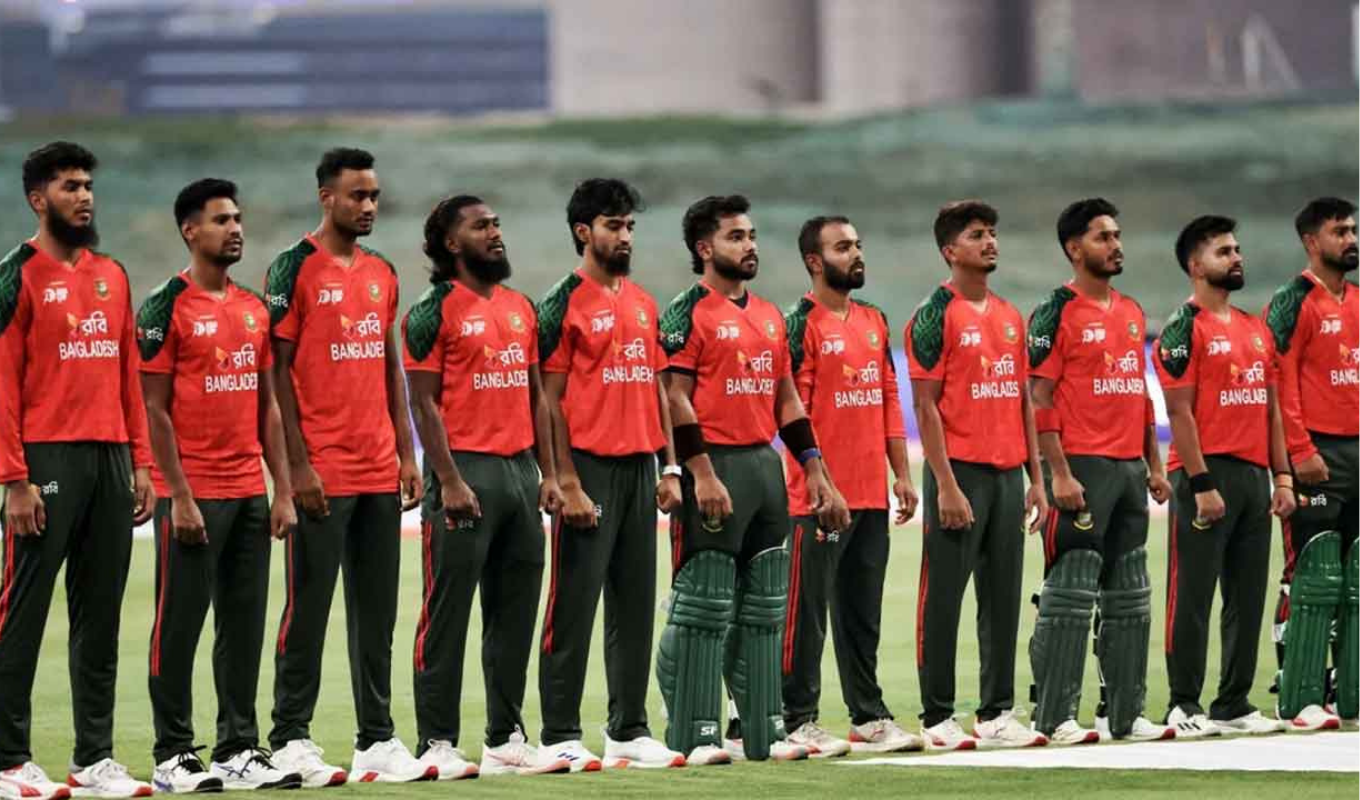
The Bangladesh Cricket Board (BCB) has decided to place the national team’s recent performances and key decisions under close scrutiny. From the Afghanistan T20 series in Sharjah to the latest ODI series against the West Indies, the board is now reviewing every controversial call made on and off the field. According to multiple BCB sources, this review will include discussions with coaches, captains, and selectors to seek direct explanations regarding questionable decisions.
The Wicketkeeping Controversy
“Nurul Hasan (Sohan) is the team’s best wicketkeeper. He was in the squad, wasn’t injured, yet he didn’t keep wickets. Whose decision was that? We deserve to know,” remarked a BCB director, who is expected to play a major role in future national team matters.
The query refers to last month’s T20 series against Afghanistan, where Nurul Hasan, though fully fit, was not assigned wicketkeeping duties in any of the three matches. Allegations had surfaced that senior assistant coach Mohammad Salahuddin was behind the call to let Zakir Ali do the keeping, but BCB insiders have clarified that the decision was actually Zakir’s own.
With regular skipper Liton Das injured, Zakir captained the side during the series and reportedly believed that keeping wickets would help him manage the team better from behind the stumps. Salahuddin, however, disagreed and recommended that Nurul continue in his role. When Zakir refused, Salahuddin appealed to head coach Phil Simmons to intervene, but Simmons, adhering to his principle of non-interference in a captain’s decisions, chose not to overrule him.
Questions Over Tactical Choices
Although Bangladesh won the series against Afghanistan, Zakir’s decision to keep wickets himself raised eyebrows among senior BCB officials. The same scrutiny has now extended to Mehidy Hasan Miraz’s leadership in the ODI series against the West Indies.
In the second ODI, which was ultimately decided by a Super Over, Bangladesh’s bowling strategy in the final over came under heavy criticism. With five runs needed by the West Indies to win, part-time spinner Saif Hasan was handed the ball — even though four specialist spinners had already bowled out their quotas by the 48th over. The rationale behind using Saif in such a decisive moment is now being questioned by the board.
Ironically, Saif had earlier bowled brilliantly against Afghanistan in Abu Dhabi, taking three wickets for just six runs from four overs in the third ODI. Yet, despite that performance, he wasn’t given the ball again after the 38th over.
Another talking point was the decision to send young leg-spinner Rishad Hossain in at number nine during the tied match against the West Indies in Mirpur. Rishad smashed a quickfire 39 off 14 balls, proving that he could have made a bigger impact had he been promoted up the order. Many in the BCB now believe that replacing Nasum Ahmed (who scored 14 off 26 balls) with Rishad at number seven might have helped Bangladesh push beyond the tie.
BCB’s New Oversight Approach
In response to these recurring controversies, the BCB has informally agreed that four former cricketers on the board will now directly monitor national team matters. These include BCB President Aminul Islam, Vice President Faruk Ahmed, and directors Khaled Mashud and Abdur Razzak.
One unnamed BCB director commented:
“Given the current disorganised state of the national team, urgent evaluation is needed. Often, we don’t understand the reasoning behind certain decisions. We need to speak directly with the management, coaches, and captains to hear their side. If necessary, we’ll even review the selectors’ recent performance.”
While Bangladesh’s recent results have been mixed, it is clear that the board’s microscope is now firmly focused on the decision-making culture within the team. Whether this investigation will bring clarity or deepen existing rifts remains to be seen, but one thing is certain — the era of unquestioned decisions in Bangladesh cricket is over.