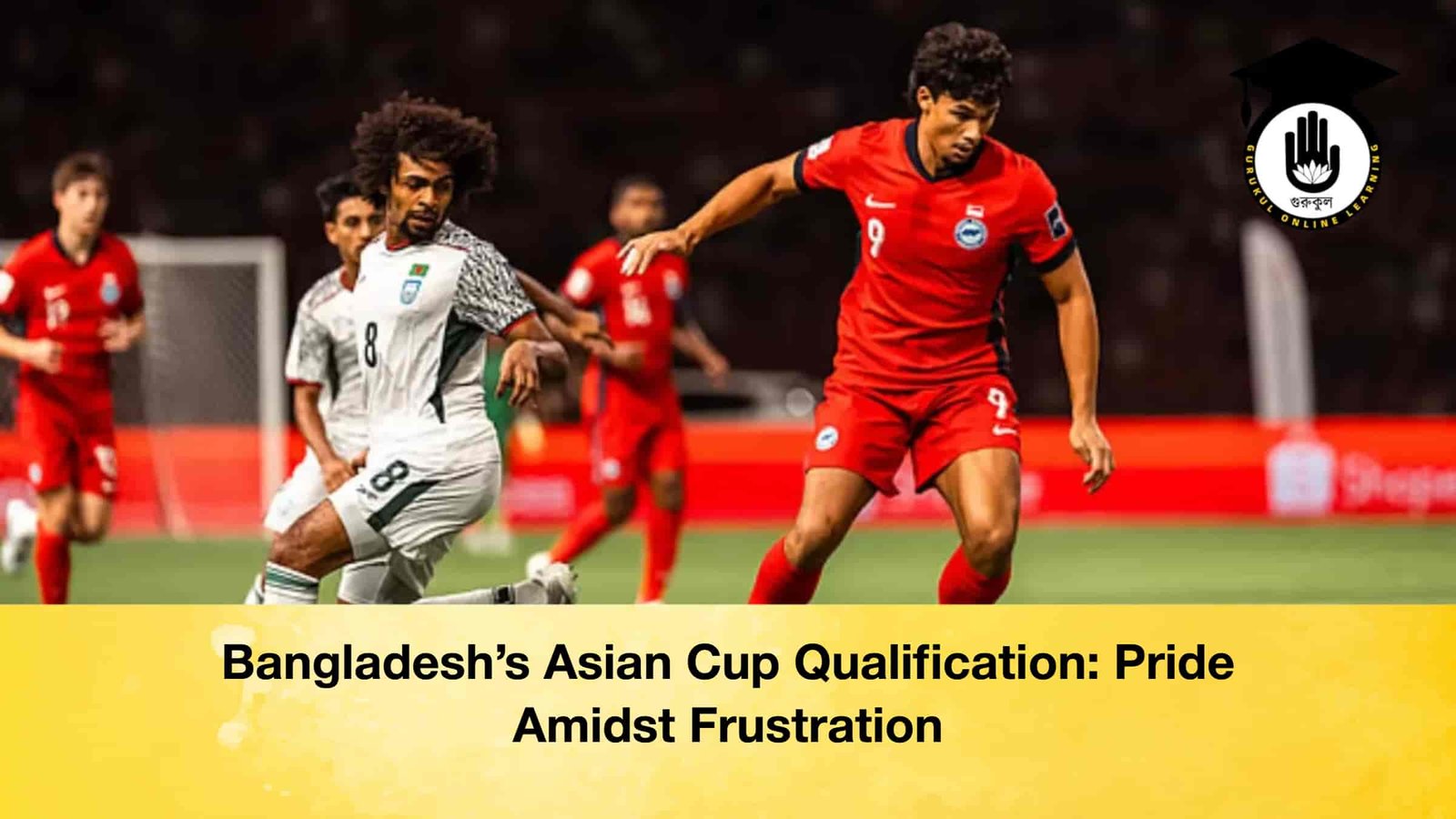
The curtain has fallen on Bangladesh’s campaign in the 2027 Asian Cup qualifiers, leaving a mixture of pride and anguish in its wake. In their final match, Bangladesh suffered a narrow 1–0 defeat to Singapore on foreign soil. Yet, despite the loss, the story of the team’s performance is far richer than the scoreboard suggests.
Throughout the qualifiers, Bangladesh often dominated possession, dictated the tempo, and launched promising attacks. The team created opportunities aplenty but repeatedly failed to convert them into goals—a recurring theme that ultimately prevented progression to the tournament proper.
Performance Overview
Many observers had high expectations for this squad, featuring standout talents such as Hamza Chowdhury, Shomit Som, Fahamidul Islam, and Zayan Ahmed. With their presence, some hailed this as the strongest national team in Bangladesh’s history. Despite earning only five points across six matches, the team’s attacking style and resilience set a new standard for the country’s football.
| Matchday | Opponent | Venue | Result | Points Earned |
|---|---|---|---|---|
| 1 | India | Away | 1–1 | 1 |
| 2 | Hong Kong | Home | 3–3 | 1 |
| 3 | Singapore | Away | 0–1 | 0 |
| 4 | India | Home | 0–0 | 1 |
| 5 | Hong Kong | Away | 0–0 | 1 |
| 6 | Singapore | Home | 1–2 | 1 |
Despite competitive displays, crucial lapses in defence and missed opportunities in attack proved costly. Against Hong Kong at home, Bangladesh came from behind to equalise 3–3 but conceded a dramatic fourth goal shortly after. Similarly, in Singapore, the team dominated play yet failed to find the decisive breakthrough.
Expert Perspectives
Former national coach Shafiqul Islam Manik commented that while the squad’s skill level is comparable with teams like Singapore and Hong Kong, the shortfall lies in converting performance into tangible results. “If results are the final measure, then the coach has not delivered. Javier Cabrera’s tactics have yet to fully materialise into victories,” he said.
Mohammedan Sporting Club coach Alfaz Ahmed identified inconsistent player selection and a lack of a clinical striker as key reasons for the failure to qualify. “Cabrera couldn’t build a consistent team; each match featured different players. The lack of alternatives was a major setback,” he noted.
Former striker Zahid Hasan Emily echoed this sentiment, recognising growth in team strength and competitiveness but highlighting the gap between potential and results. “Given the improvement, Bangladesh should have at least finished second. The performance deserves praise, but the outcomes do not reflect the team’s capabilities. A change in coaching is now imperative,” he said.
Looking Ahead
Bangladesh’s qualifiers have left the nation with mixed emotions: pride in the team’s evolution, but frustration at missed opportunities. The consensus among former players and coaches is clear—while the squad’s potential is undeniable, tactical refinement and a new coaching direction are necessary if Bangladesh hopes to convert future promise into Asian Cup success.