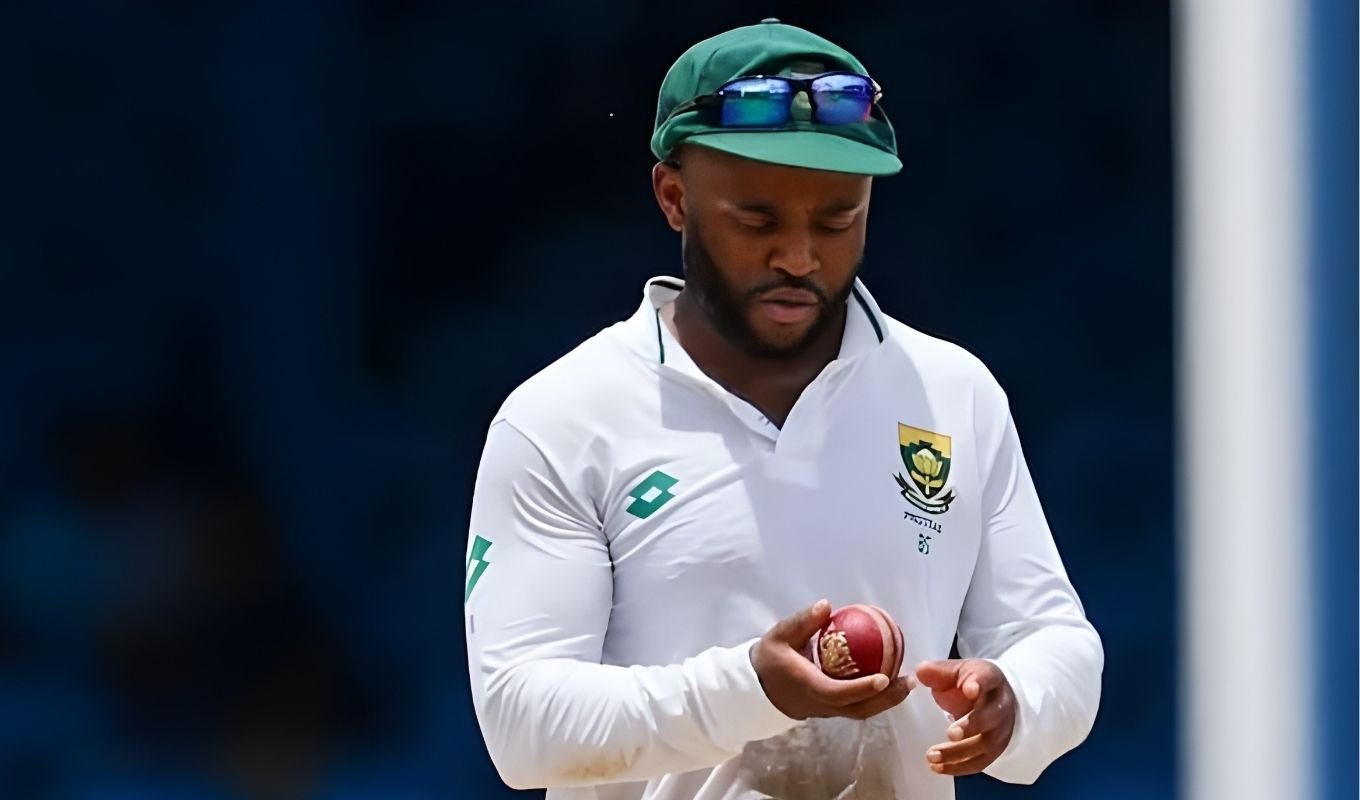
South African cricket legend AB de Villiers has showered praise on national Test captain Temba Bavuma, saying his calm approach, silent authority and composed behaviour remind him of India’s iconic leader MS Dhoni. De Villiers believes Bavuma has transformed South Africa’s Test cricket with a leadership style that is gentle on the outside but razor-sharp within.
During a conversation on R Ashwin’s YouTube show, de Villiers said, “Dhoni hardly spoke on the field, but when he did, people stopped and listened. He had this incredible calmness about him. I see a similar quality in Temba. He doesn’t need to raise his voice to command respect; he earns it naturally. His success has genuinely taken me by surprise.”
De Villiers revealed that he himself was not fully convinced during the early stages of Bavuma’s leadership. “For the first couple of years, I wasn’t confident enough to say the captaincy decision was the right one. I even discussed it with my friends. But the longer he led, the more I realised we were judging him by appearances. As the saying goes, you cannot judge a book by its cover.”
He added that Bavuma’s soft-spoken nature has become one of the most powerful tools in his leadership arsenal. “Unlike Graeme Smith, who had a large personality, a dominating frame and a booming voice, Temba is the opposite. Small in size, extremely polite, and barely ever raises his voice. Yet he carries an inner strength that wins players over.”
Under Bavuma’s captaincy, South Africa have recorded 11 wins in 12 Test matches—one of the best streaks in modern cricket. They have also clinched the World Test Championship title, a historic achievement for the country. Perhaps the most remarkable feat was their 2–0 Test series victory in India, their first such triumph in 25 years.
De Villiers emphasised that Bavuma has changed the atmosphere within the South African dressing room. “Leadership is not about shouting orders; it’s about sending the right message at the right time. Temba understands that perfectly. He has restored belief and unity in the team.”
Bavuma’s rise, quiet yet powerful, serves as a reminder that true leadership often comes from those who speak the least—but deliver the most.