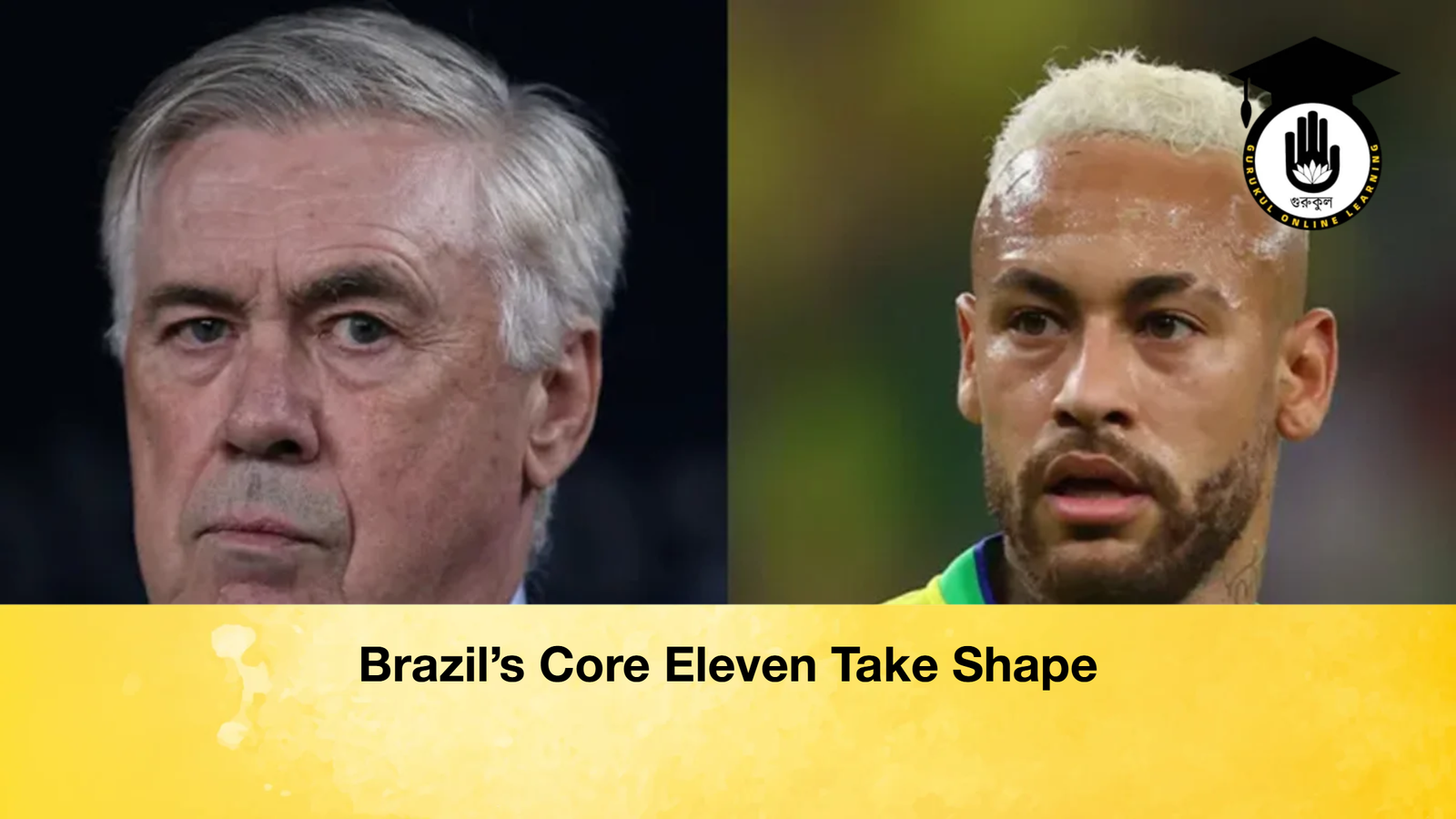
As Brazil begin to shape their long-term plans for the 2026 World Cup, the imprint of Italian coach Carlo Ancelotti is becoming increasingly visible. While the results from the early phase of his tenure have been respectable rather than spectacular, the broader direction of travel suggests a methodical attempt to rebuild continuity and clarity of roles. According to reports in the Brazilian sporting press, Ancelotti has already identified a core group of 11 players who, on current form and fitness, are regarded as close to automatic selections. The most striking detail is the absence of Neymar from this provisional inner circle.
Brazil have played eight matches under Ancelotti to date, a period marked by tactical experimentation and gradual consolidation. Rather than chasing short-term acclaim, the coaching staff have prioritised building a dependable first XI capable of sustaining intensity across tournament football. With the finals to be staged in the United States, Mexico and Canada, Brazil’s planning is deliberately structured around adaptability to varied climates, travel demands and high-tempo opposition. The approach reflects Ancelotti’s preference for balance: a secure defensive base, a controlling midfield, and a fluid attacking line capable of interchanging positions.
In goal, Alisson Becker remains the undisputed first choice, valued for his command of the penalty area and composure in build-up play. The central defensive partnership of Marquinhos and Gabriel has provided leadership and aerial authority, while the full-back positions are expected to be filled by Wesley on the right and Douglas Santos on the left, offering width and recovery pace. In midfield, Casemiro’s experience and positional discipline continue to anchor the side, complemented by the progressive passing and tempo-setting of Bruno Guimarães.
The attacking unit reflects Ancelotti’s desire for speed, verticality and positional rotation. Vinícius Júnior’s acceleration and one-on-one threat stretch defences, while Raphinha supplies width and delivery from the right. Rodrygo’s versatility allows him to operate between the lines or from the flank, and the emerging Estêvão has impressed with creativity and direct running. Gabriel Martinelli and Matheus Cunha are viewed primarily as rotation options, with João Pedro offering tactical flexibility as a mobile forward.
Neymar’s status remains uncertain. Although his influence on Brazilian football is unquestioned, recent fitness concerns and limited match rhythm have left his World Cup prospects dependent on sustained availability and form. The coaching staff have signalled that reputation alone will not secure selection, underscoring a broader commitment to performance-based continuity.
Provisional Core XI Under Ancelotti
| Position | Player |
|---|---|
| Goalkeeper | Alisson Becker |
| Right-back | Wesley |
| Centre-back | Marquinhos |
| Centre-back | Gabriel |
| Left-back | Douglas Santos |
| Defensive midfield | Casemiro |
| Central midfield | Bruno Guimarães |
| Right wing | Raphinha |
| Attacking midfielder | Rodrygo |
| Left wing | Vinícius Júnior |
| Forward | Estêvão |
With further qualifiers and friendlies to come, this framework remains provisional. However, the emerging structure suggests Brazil are prioritising cohesion and fitness over star power alone, a strategy intended to restore consistency and reinforce their credentials as genuine contenders in 2026.