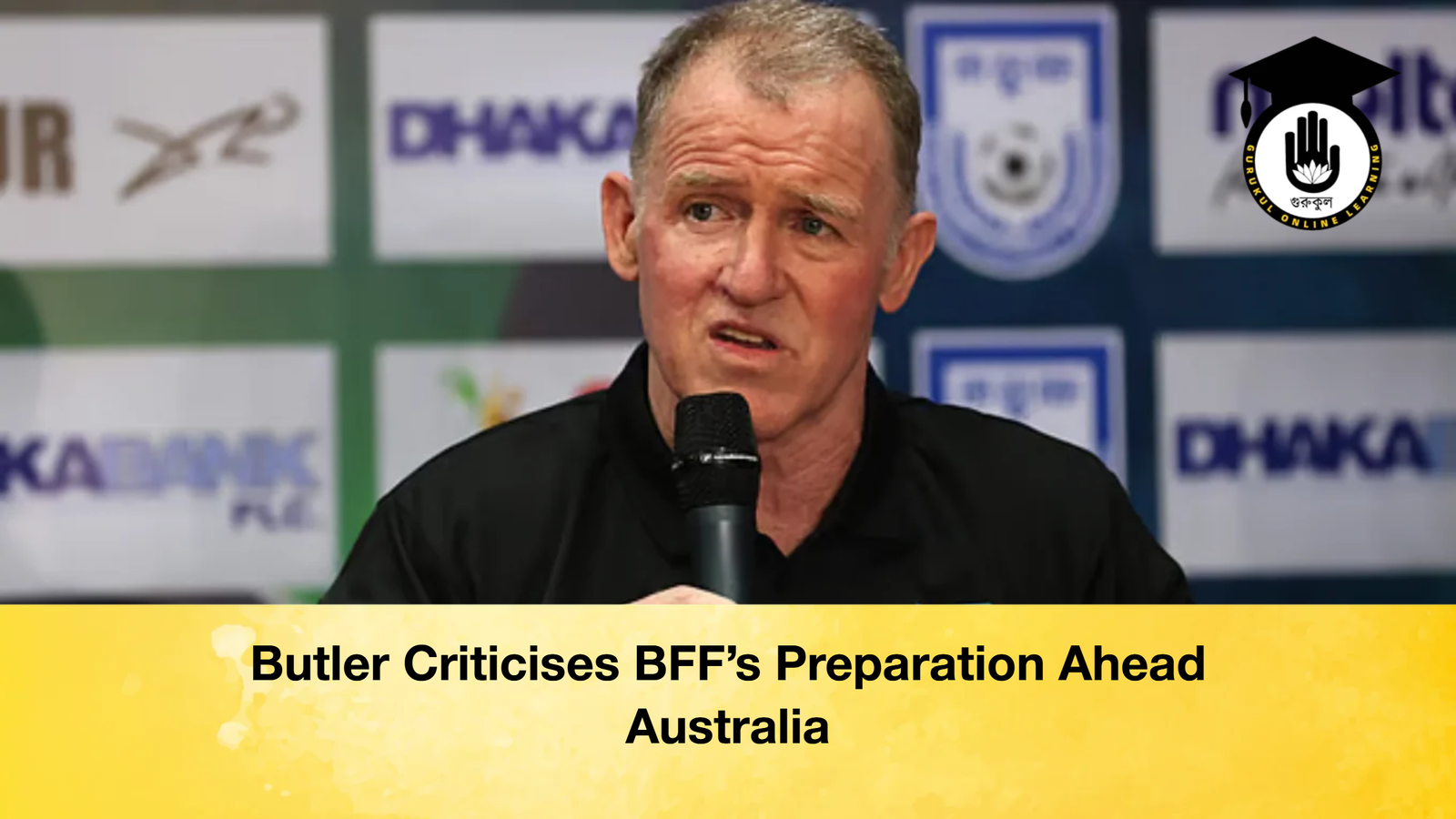
Bangladesh’s women’s football team is set to depart for Australia at 2:00 a.m. tonight to participate in the AFC Asian Cup final round for the first time. Ahead of departure, English coach Peter Butler delivered an unusually candid and critical address at a press conference held at the Bangladesh Football Federation (BFF) headquarters earlier today, highlighting both internal unrest and severe preparation shortcomings within the team.
Criticism of BFF’s Management
Butler openly expressed frustration over the federation’s internal management and the team’s preparation, questioning the technical understanding of BFF officials. “Perhaps not everyone at the BFF fully comprehends football at the level required. Life is like football: sometimes results cover cracks temporarily, but winning the first two goals in ten minutes or another two in the next twenty is not enough. The aim is to build performances that are credible, consistent, and sustainable for future development,” Butler stated.
The issue of excessive pressure was evident in Bangladesh’s 4–0 defeat to India in the SAFF U-19 final in Pokhara on 7 February. Sources within the team claim that BFF’s women’s wing chief, Mahfuza Akhter, instructed players to score within the first ten minutes and again within the next ten, putting the players under undue stress that contributed to the heavy loss.
At the press conference, Butler cited his mother’s advice, saying, “My mother used to say, ‘Less talk, less trouble.’ But sometimes truth must be spoken. Much has been misrepresented regarding our preparations. I’m not blaming anyone, but our plans have not been executed properly.”
Butler further added, “I’ve coached in Liberia, Botswana, England, and Malaysia. I am no one’s puppet. When things go wrong, people quickly blame ‘Butler’s fault’ or ‘Butler’s plan.’ I am willing to take responsibility for this team, but first, people must stop spreading falsehoods in the media.”
Preparation Shortcomings
Since December, Bangladesh has not played any preparatory matches, as domestic league fixtures were prioritised over international readiness. Butler noted that scheduled matches against the Philippines on 19 February were impossible due to league games on 10 and 13 February, leaving insufficient time for recovery. Similar scheduling conflicts occurred with proposed matches against Malaysia and Thailand. “I live in the real world, not a fairy-tale. Prioritising domestic leagues over preparation is far from ideal,” Butler said.
| Date | Match | Result | Notes |
|---|---|---|---|
| 7 February | Bangladesh vs India (SAFF U-19 Final) | 0–4 | Excessive early-match pressure led to heavy defeat |
| 10 February | Domestic League Match | – | Reduced recovery time for internationals |
| 13 February | Domestic League Match | – | Insufficient preparation window for international fixtures |
Encouraging Signs and Cautions
Despite organisational challenges, Butler expressed satisfaction with the performance of younger players such as Alpi, Preeti, and Umela, particularly noting Preeti’s return to “formidable strength.” He emphasised, however, that mistakes against stronger opponents like Uzbekistan, China, or North Korea could be costly.
Mahfuza Akhter also admitted that preparations could have been better. “I wouldn’t call myself disappointed, but sending players abroad for additional training or friendly matches would have enhanced readiness. However, I don’t make decisions alone; top officials are involved,” she said.
Plans for a training camp and a friendly in Thailand were cancelled, and proposed alternatives in the Philippines did not materialise. Consequently, the team will enter the AFC Asian Cup with less-than-ideal preparation, highlighting the challenges Bangladesh faces at the continental stage.
This frank assessment underlines the tension between organisational shortcomings and on-field aspirations, setting the stage for a testing campaign in Australia.