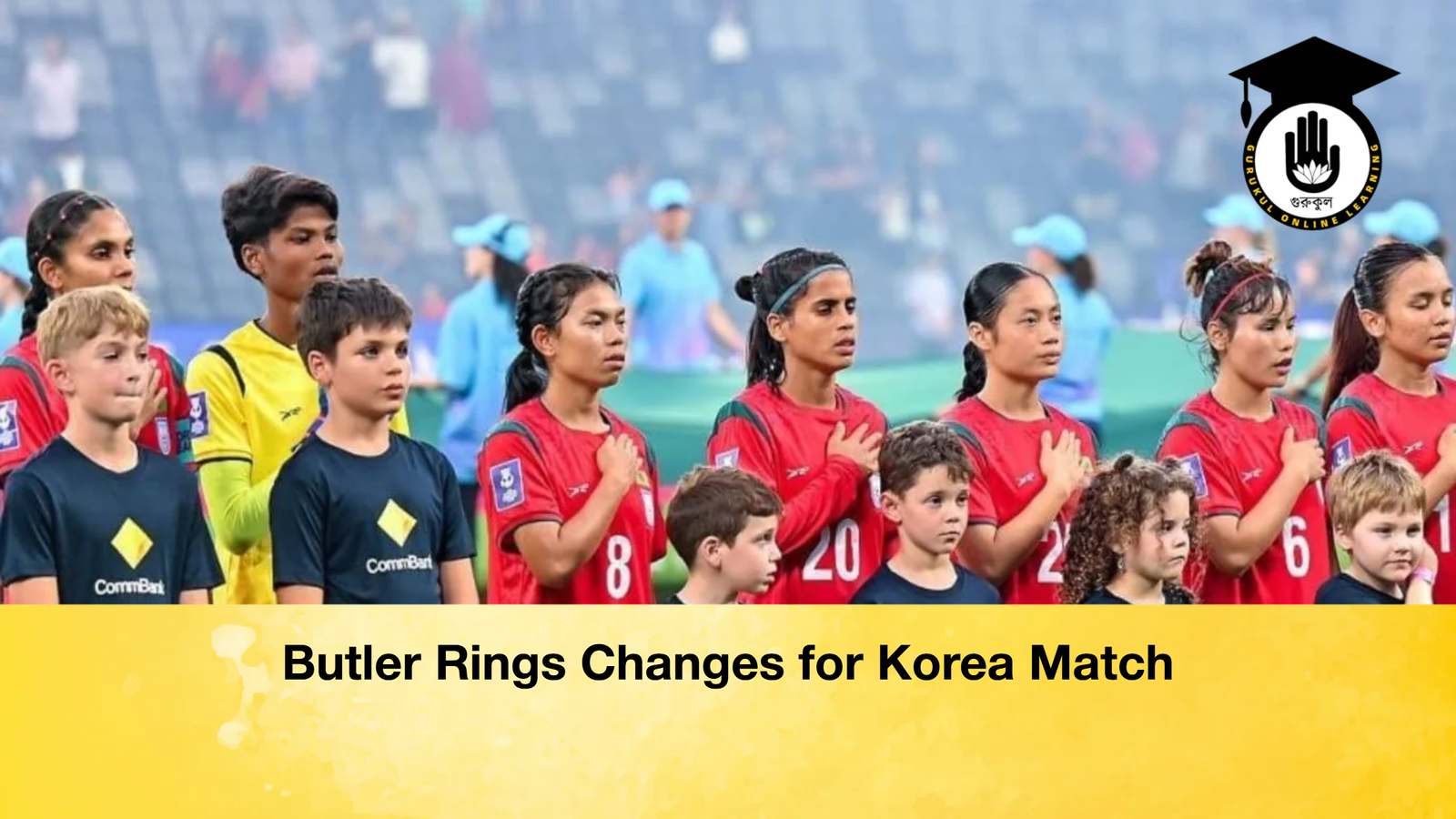
Head coach Peter Butler has once again made bold tactical adjustments to the Bangladesh women’s football team ahead of their second match in the Women’s Asia Cup. After surprising supporters with an unexpected selection in the opening fixture, Butler has reshuffled the starting line-up once more, signalling a shift in both formation and game strategy as Bangladesh prepare to face South Korea.
In the team’s first match of the tournament, Butler generated considerable discussion by leaving out regular first-choice goalkeeper Rupna Chakma and handing the starting role to Mili Akter. Rupna Chakma has been a long-standing and dependable figure in the national squad, and her omission from the starting eleven drew attention from fans and analysts alike. The decision to select Mili Akter was widely interpreted as an attempt by the coaching staff to evaluate alternative options in goal while testing squad depth during the competition.
For the crucial second match against South Korea, Butler has continued his approach of tactical experimentation. Bangladesh have abandoned the five-defender formation used previously and are expected to adopt a more balanced structure, designed to strengthen midfield control while offering additional support in attack.
Two players from the previous line-up have been dropped as part of this tactical reshuffle. Defender Shiuli Azim and midfielder Umehla Marma have both been omitted from the starting eleven. Their absence reflects the coach’s decision to modify the defensive system and create greater flexibility in midfield.
Midfielder Irin Khatun has returned to the starting line-up, while forward Tahura Khatun has been included to bolster the attacking unit. Tahura Khatun is known for her pace and finishing ability, qualities that could help Bangladesh pose a greater threat in the opposition penalty area. Meanwhile, Irin Khatun’s presence in midfield is expected to improve ball distribution and provide better balance between defensive duties and attacking transitions.
Football analysts suggest the adjustments underline Butler’s intention to make Bangladesh more competitive against technically stronger opponents. South Korea’s women’s team is widely regarded as one of Asia’s most formidable sides, characterised by disciplined organisation, high technical standards, and swift attacking movement. By moving away from a heavily defensive setup, Bangladesh may be seeking to contest possession more effectively in midfield while maintaining a structured defensive line.
Bangladesh Starting Line-up
| Position | Player |
|---|---|
| Goalkeeper | Mili Akter |
| Defenders | Shamsunnahar Senior, Afida Khandakar, Kohati Kisku, Nabiron Khatun |
| Midfielders | Maria Manda, Monika Chakma, Rituparna Chakma, Irin Khatun |
| Forwards | Shamsunnahar Junior, Tahura Khatun |
The squad features a mixture of experienced internationals and promising young talents who have played key roles in Bangladesh’s recent rise in women’s football. Midfielders Monika Chakma and Rituparna Chakma are expected to be central to the team’s ability to control possession and link defensive play with attacking moves.
Up front, Shamsunnahar Junior and Tahura Khatun will carry the responsibility of converting scoring opportunities and applying pressure on the South Korean defence. Their speed and movement could prove crucial if Bangladesh are to create chances against a well-organised opponent.
The Women’s Asia Cup provides an important stage for Bangladesh to demonstrate its progress in the regional football arena. The outcome of this match will play a significant role in determining the team’s standing in the tournament and may also offer further insight into Butler’s evolving tactical plans as he continues to shape the national side for higher levels of international competition.