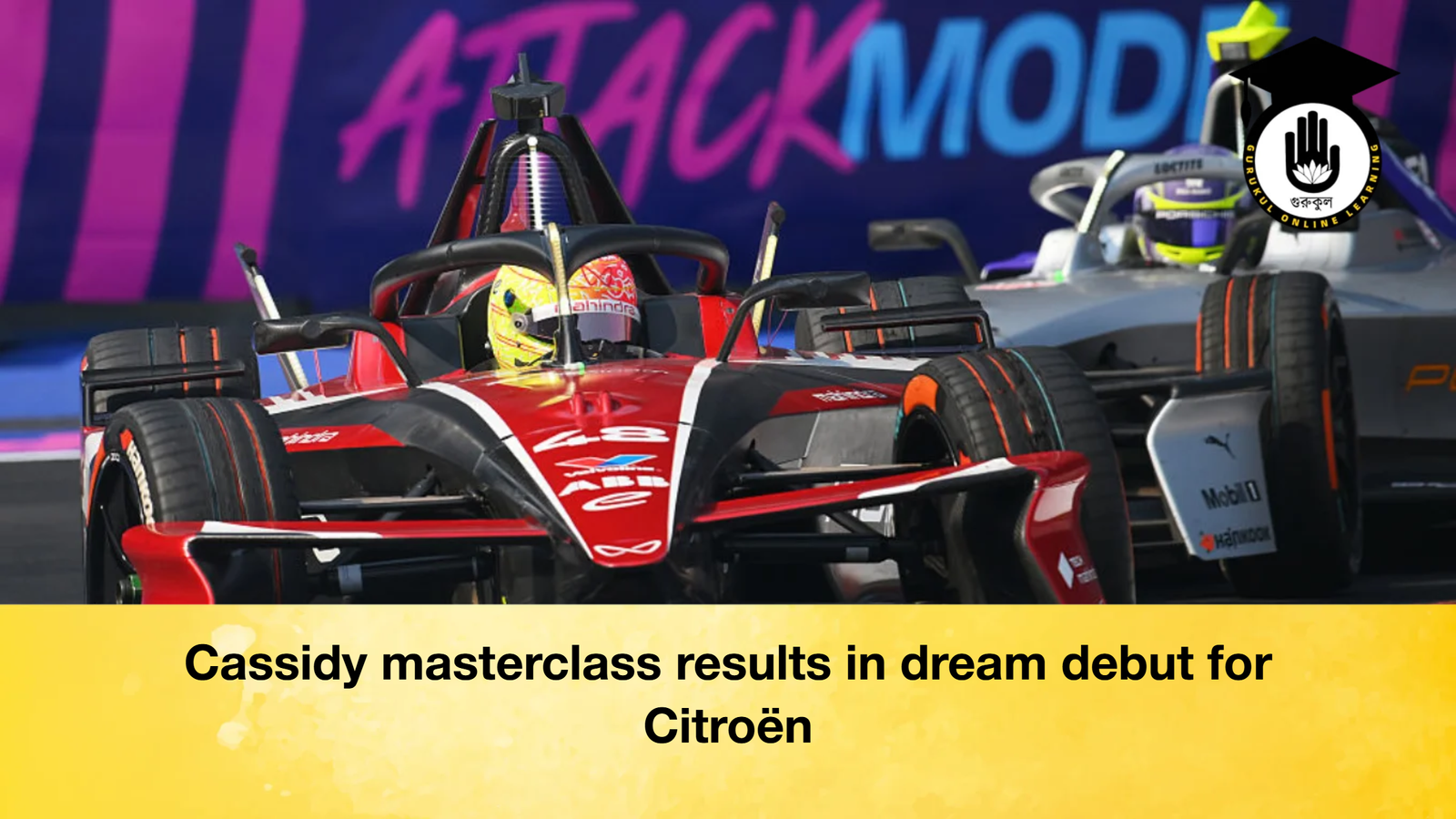
Nick Cassidy produced one of the most accomplished drives of the modern Formula E era to claim victory in the Mexico City E-Prix, charging from 13th on the grid to give Citroën its first win in only its second race in the all-electric championship. The result underlined both the New Zealander’s strategic acumen and the rapid progress of the French manufacturer since its debut at the start of the 2025/26 season.
Citroën arrived in Mexico buoyed by Cassidy’s third place in the São Paulo season opener, but few would have predicted such a swift escalation to the top step of the podium. At the Autódromo Hermanos Rodríguez, Cassidy combined meticulous energy management with an unconventional use of Attack Mode to outmanoeuvre rivals who appeared better placed on raw pace.
Qualifying had already set the tone for a dramatic day at Formula E’s 150th championship race. Taylor Barnard was initially fastest, only for a track limits infringement at the final corner in the duel phase to see his lap deleted. That handed pole position to Sébastien Buemi, but the Envision Racing driver’s afternoon unravelled almost immediately when he misjudged the braking zone at Turn 1 and escaped through the run-off.
Barnard inherited the lead, yet it quickly became clear that track position was secondary to strategy. Positions fluctuated constantly as drivers debated when to deploy Attack Mode and how aggressively to save energy. Pascal Wehrlein was among the first to commit, surging from eighth to the lead by lap five. However, once his four-minute Attack Mode expired, the reigning Porsche champion slipped back, exposing the flaw in a front-loaded approach.
Cassidy, by contrast, played the long game. A mid-race safety car, triggered by Nyck de Vries stopping at Turn 1 with a suspected mechanical issue, compressed the field and rewarded those with energy in reserve. Further disruption followed when António Félix da Costa tangled with Maximilian Günther and Dan Ticktum, creating another yellow flag that reshuffled the order.
The decisive phase came in the final 13 laps. Cassidy unleashed his full eight minutes of Attack Mode—split unusually into a six-minute burst followed by a shorter two-minute stint—to slice through the pack. Although Edoardo Mortara had more Attack Mode remaining and applied relentless pressure in the closing laps, Cassidy’s superior energy efficiency allowed him to defend impeccably and seal his 12th Formula E victory.
Mortara finished second for Mahindra, while reigning world champion Oliver Rowland completed the podium after capitalising on a late scrap ahead, which saw him pass Barnard and Jake Dennis. Wehrlein recovered to sixth, while rookie Pepe Martí impressed with seventh after conserving energy for a late charge.
Top 10 – Mexico City E-Prix
| Position | Driver | Team |
|---|---|---|
| 1 | Nick Cassidy | Citroën |
| 2 | Edoardo Mortara | Mahindra |
| 3 | Oliver Rowland | Nissan |
| 4 | Taylor Barnard | McLaren |
| 5 | Jake Dennis | Andretti |
| 6 | Pascal Wehrlein | Porsche |
| 7 | Pepe Martí | Kiro |
| 8 | Jean-Éric Vergne | Citroën |
| 9 | Nico Müller | ABT Cupra |
| 10 | Norman Nato | Andretti |
Post-race, Cassidy admitted uncertainty in the final laps but praised the strategy that underpinned the win. History may now be on his side: the last three winners in Mexico City have gone on to claim the Formula E world title. While Cassidy played down championship talk, he highlighted the remarkable development rate at Citroën since pre-season testing in Valencia—progress that now positions both driver and team as genuine title contenders.