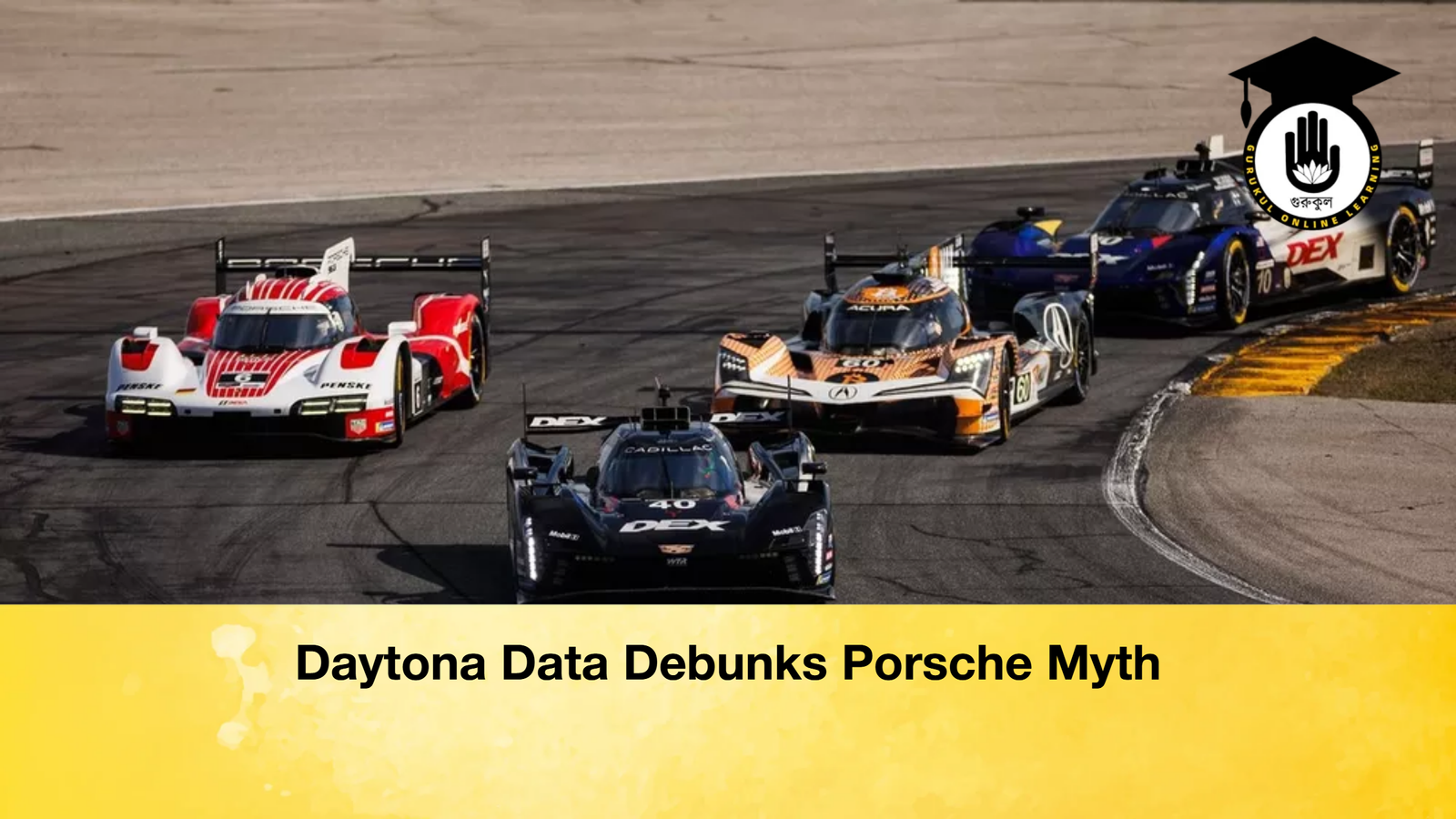
The 64th running of the Rolex 24 at Daytona delivered one of the most absorbing endurance contests of recent years, yet it also sparked an immediate and heated debate: was Porsche truly as dominant as it appeared? On-track frustration from rivals suggested as much, but a closer examination of the data paints a more nuanced picture.
“They’re just playing with us,” lamented Renger van der Zande as early as Saturday evening, his words echoing a widespread belief in the paddock that Porsche Penske Motorsport had the field covered. Yet Porsche’s LMDh chief Urs Kuratle was keen to downplay that perception after the chequered flag, arguing that the apparent superiority was exaggerated by circumstance rather than raw pace.
On paper, the factory Porsche 963s did look formidable. Despite repeated neutralisations compressing the field, the No. 6 and No. 7 cars consistently fought their way back to the front. When analysing the fastest 60 per cent of race laps, Porsche topped the charts convincingly, while the picture was similar when focusing solely on the top 10 per cent of laps — a strong indicator of peak performance.
Fastest Average Lap Times (Race Data)
| Car | Top 60% Laps | Top 10% Laps |
|---|---|---|
| Penske Porsche #7 | 1:38.104 | 1:37.275 |
| Penske Porsche #6 | 1:38.265 | 1:37.272 |
| AXR Cadillac #31 | 1:38.283 | 1:37.320 |
| WRT BMW #24 | 1:38.379 | 1:37.428 |
| MSR Acura #93 | 1:38.386 | 1:37.384 |
However, the margins were slimmer than first impressions suggested. Notably, the No. 6 Porsche was relatively stronger in peak laps than in traffic-heavy averages, hinting that early contact with an LMP2 car may have compromised consistency rather than outright speed.
BMW emerged as the quiet success story. Written off after pre-event testing and early practice, the WRT-run BMW M Hybrid V8s came alive following late set-up changes. That turnaround was so unexpected that even the drivers were taken aback, with Kelvin van der Linde describing the podium as “one of the most surprising of my career”. Far from sandbagging, BMW appeared to have simply unlocked performance at the eleventh hour, aided by extensive support from its WEC personnel.
By contrast, Acura’s concerns over tyre wear were borne out. The ARX-06 showed flashes of speed in cooler night conditions but faded as temperatures rose. Aston Martin’s Valkyrie struggled throughout, its difficulties on Daytona’s high-speed layout leaving it off the pace and eventually laps down.
Crucially, the final two-hour sprint told a different story. Action Express Racing’s Cadillac No. 31 was marginally the fastest car on track after the last restart, with Porsche no longer leading the pace metrics.
Final Sprint: Performance Gain vs Race Average
| Car | Lap Time Gain |
|---|---|
| AXR Cadillac #31 | 0.399s |
| WRT BMW #24 | 0.372s |
| Penske Porsche #7 | 0.202s |
| Penske Porsche #6 | 0.084s |
Porsche’s comparatively modest improvement suggests it may have been running closer to its limits earlier in the race, or that the warmer conditions dulled the 963’s advantage. Ultimately, track position — aided by penalties and misfortune for the Cadillac — proved decisive.
In truth, both camps were partly right. Porsche was unquestionably strong, particularly against Acura, but the data confirms that its victory owed as much to execution and circumstance as to outright dominance.