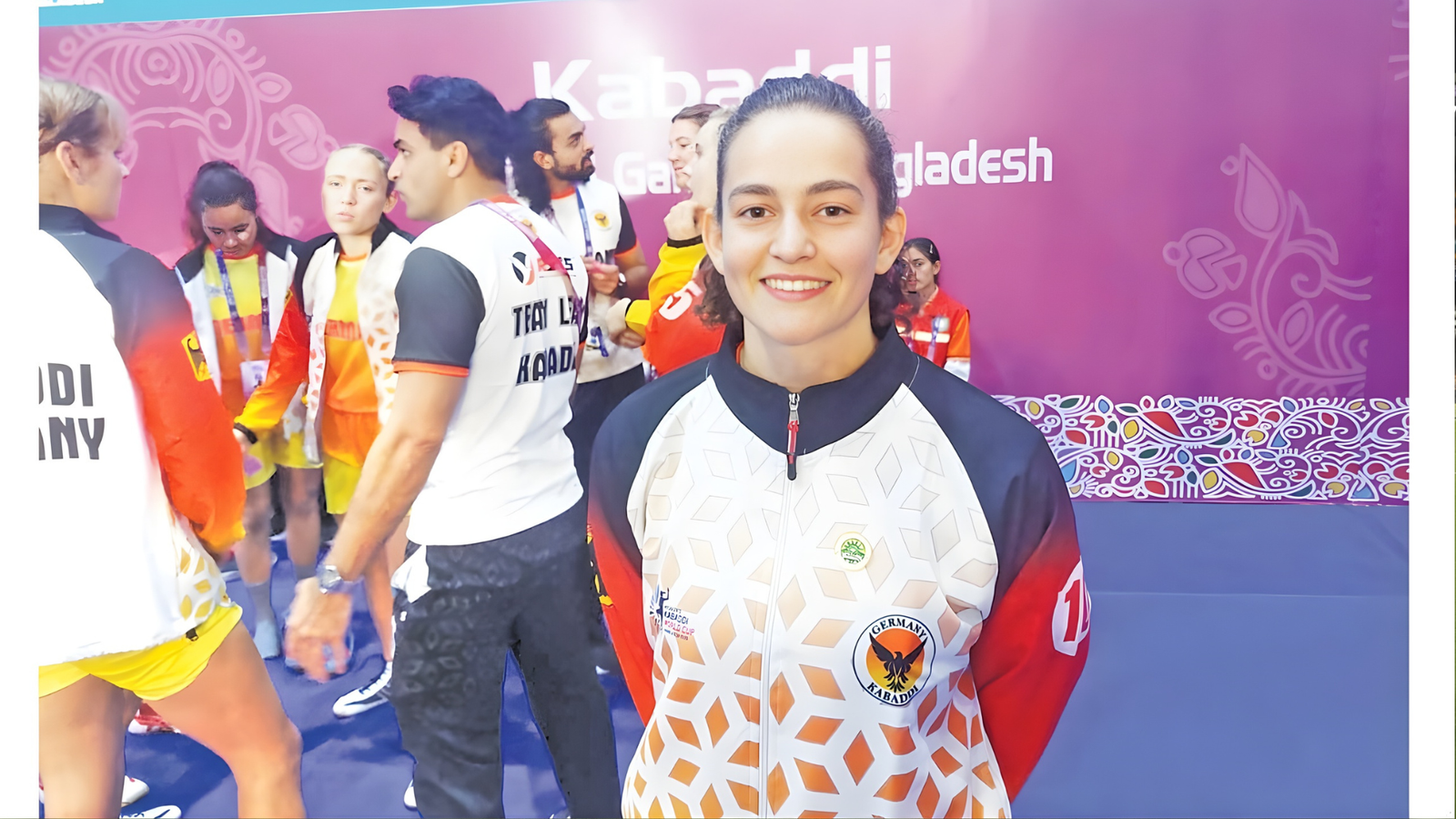
Germany’s women’s kabaddi team has suffered three heavy defeats in their debut World Cup campaign, but their spirit remains remarkably upbeat. Scorelines may show one-sided contests, yet the German players continue to smile, laugh and embrace every moment of this unique experience. For them, participation in this tournament is not merely about results; it is about discovery, learning and stepping into an entirely new sporting culture.
Emma Ettl, one of the key members of the squad, captures this sentiment perfectly. A sports management student at the University of Stuttgart, Emma says the team came to Bangladesh not with the goal of winning, but with the intention of learning and understanding the sport at a deeper level.
Ordinarily, kabaddi squads consist of 14 players. However, due to a last-minute change in the tournament schedule, Germany could not travel with a full squad. Several players withdrew late, forcing the team to arrive with only 10 members. The squad includes a doctor, university students and working professionals—none of them full-time athletes. In Germany, kabaddi remains a developing sport, practised primarily in Stuttgart and Nuremberg, with only 30 to 40 women currently engaged in it.
Germany’s women’s kabaddi project is less than a year old. Training typically takes place at weekends, squeezed between academic and professional commitments. Many players are multi-sport athletes, with experience in boxing, rugby and football—sports that initially attracted them to the physicality of kabaddi.
Given their limited preparation, Germany entered the World Cup with realistic expectations. Emma admits, “We knew it would be difficult to win matches in Dhaka. But we also knew this would be a valuable learning experience, and that is exactly what we are enjoying.”
Throughout their matches, the German players have brought a refreshing innocence to the competition. Some have smiled while attempting raids, others have watched opponents with pure amazement, trying to understand advanced tactical moves. On several occasions, players even sought clarification on rules during the match. As Emma puts it, “We are still learning the basics. It has not even been a full year since we started practising kabaddi. We are learning the rules here, learning by playing. To be honest, we came to Bangladesh to enjoy kabaddi.”
Kabaddi is not their source of income. It is a hobby, a passion and a cultural experiment. Yet the long-term vision is far more ambitious. Emma believes that one day Germany will have its own professional kabaddi league. “We may only have 30 to 40 players today, but the game will grow. Maybe soon we will see kabaddi across many cities in Germany. One day we hope to organise a pro kabaddi league of our own.”
The team has also praised Bangladesh’s hospitality. Their experience in Dhaka, they believe, will help them shape kabaddi’s development back home, inspiring more women to take up the sport.