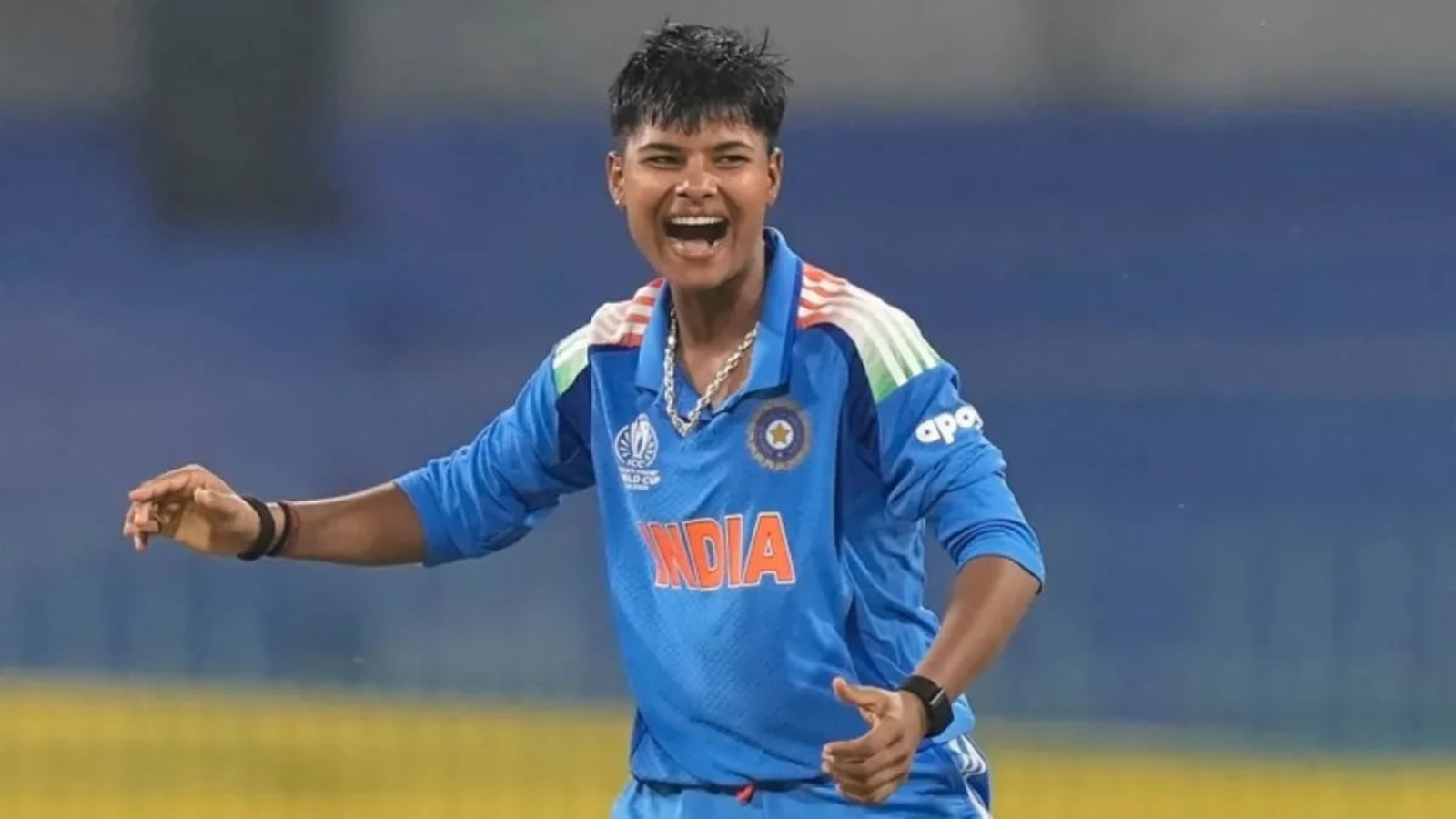
India’s women’s cricket team has made history by winning the Women’s One Day International (ODI) World Cup for the first time. Their victory over South Africa in the final not only brought national pride but also had a profound impact beyond the cricket field. One of the most notable stories emerging from this historic win is that of 22-year-old cricketer Kranti Gaur.
Kranti delivered an outstanding performance during the match against Pakistan earlier in the tournament. In a post-match interview, she expressed her personal motivation, saying, “I want to restore the honour my father lost.” Her statement reflected the deep personal significance of her sporting achievements.
On Friday, at a felicitation ceremony held in Bhopal, the Chief Minister of Madhya Pradesh, Mohan Yadav, honoured Kranti for her remarkable contribution to Indian cricket. During the event, he also assured that Kranti’s father would be reinstated to his former position, a promise that brought immense relief and joy to the family.
Kranti’s father, Munna Lal Gaur, had been suspended from his role as a police constable in 2012 due to lapses in duty during an election period. Since then, the family has faced significant financial hardship. Kranti’s grandfather works as a bus conductor to support their eight-member household.
The state government’s felicitation ceremony recognised Kranti’s World Cup contribution, and both her parents attended the event. Hearing the assurance that her father’s job would be restored, Kranti was visibly emotional. This event has become emblematic not just of cricketing success but also of a personal triumph for the family.
Kranti’s story highlights how sporting achievements can resonate far beyond the game itself, inspiring personal and familial redemption alongside national celebration. Her performance and the subsequent recognition underscore the deep social and emotional impact of sporting excellence in India.