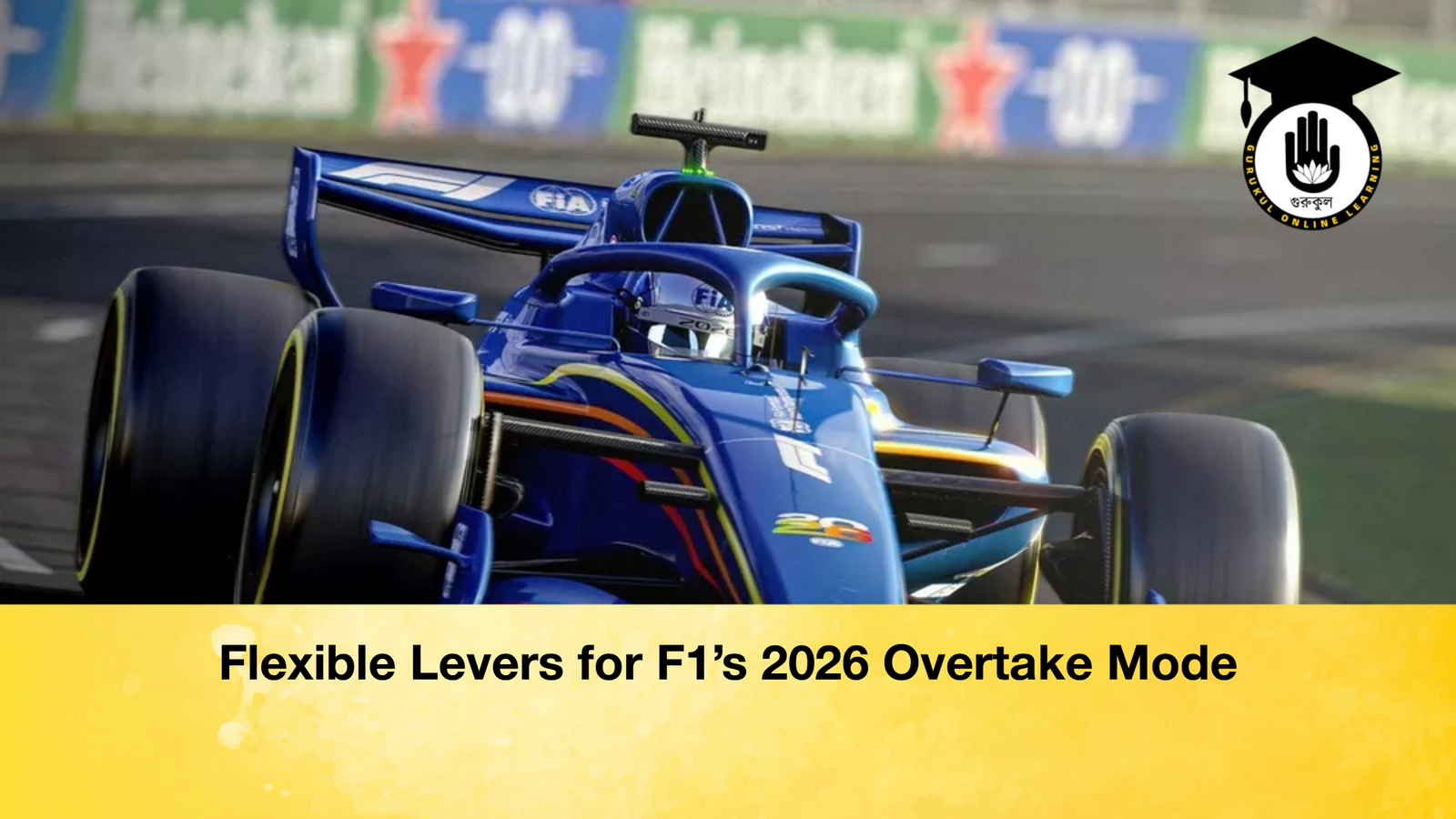
Formula 1’s sweeping 2026 technical overhaul will usher in a new era of energy management, and the FIA believes it retains ample scope to fine-tune the system as the season unfolds. According to FIA single-seater director Nikolas Tombazis, the governing body has “quite a lot of flexibility” to adjust how energy is deployed — particularly via the new Overtake Mode — once real-world data from the new cars becomes available.
From 2026, Formula 1 power units will operate on an almost 50:50 split between internal combustion and electrical power. This represents a fundamental shift from the 2014–2025 hybrid formula and elevates energy deployment from a supporting role to a decisive competitive factor. In parallel, the Drag Reduction System (DRS), a mainstay of the sport since 2011, will be retired.
In its place comes Overtake Mode: a performance boost available to a driver who is within one second of the car ahead in a designated zone. While conceptually similar to DRS in its aim to promote overtaking, its execution is markedly different, relying on electrical energy rather than aerodynamic reduction.
Crucially, Overtake Mode will not be the only tactical tool at a driver’s disposal. A separate Boost Mode will allow drivers to deploy additional electrical energy anywhere on the circuit, irrespective of proximity to another car. This can be used offensively, defensively, or strategically during qualifying and race stints. However, both modes are constrained by overall energy limits, meaning drivers may face scenarios in which available deployment runs out before the end of a long straight.
Speaking to Motorsport.com at the Autosport Business Exchange in London, Tombazis acknowledged that the FIA’s current modelling is necessarily provisional. With eleven teams introducing entirely new cars under unfamiliar regulations, the performance spread remains theoretical until the machines run in anger.
“We haven’t yet seen the precise performance envelopes of all the cars,” Tombazis explained. “We have a reasonably good estimate, but not the final data. Once we see how they behave on track, we can react and adjust these parameters.”
The FIA anticipates a steep learning curve and rapid development rates across the grid. Nevertheless, Tombazis expressed confidence that race-by-race calibration — with appropriate notice to teams — will ensure competitive balance without regulatory instability.
Comparison of Overtaking Tools
| Feature | DRS (2011–2025) | Overtake Mode (2026–) | Boost Mode (2026–) |
|---|---|---|---|
| Activation condition | Within 1s in DRS zone | Within 1s in defined zone | Anytime |
| Performance gain | Reduced drag | Increased electrical power | Increased electrical power |
| Defensive use | No | No | Yes |
| Energy management impact | Minimal | High | High |
With simulation tools improving and data accumulating rapidly, the FIA believes it can strike the right balance between spectacle, fairness and technical integrity — ensuring that Formula 1’s next chapter remains both unpredictable and compelling.