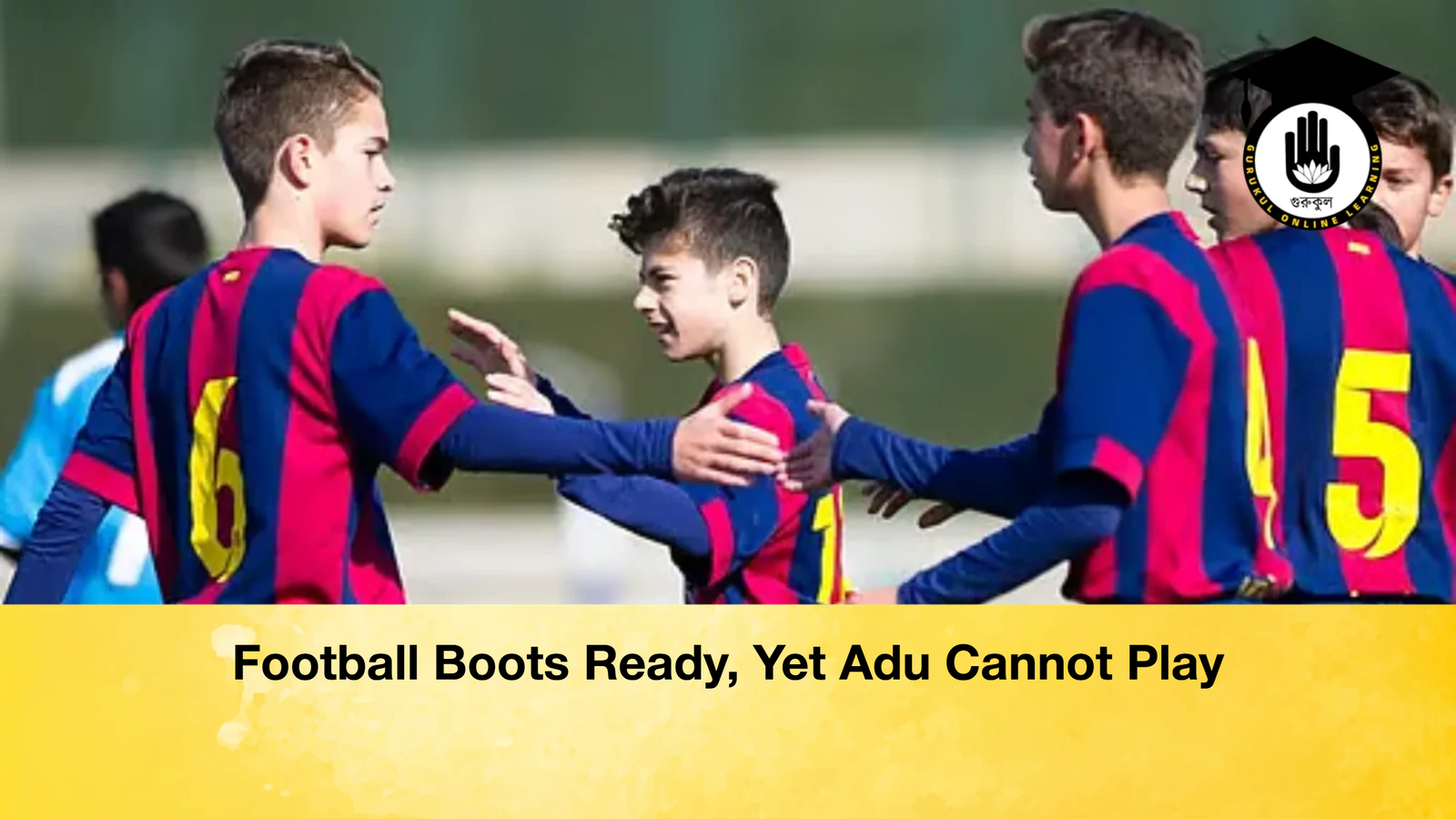
Every week, the same scene repeats.Twelve-year-old Adu ties his football boots, steps onto the pitch, and trains like any other child. He runs, passes, and scores goals—blending seamlessly with his teammates during practice.
But come Sunday, everything changes.
On match days, Adu is not allowed onto the field. He sits in the stands, watching his peers play—a tormenting experience that has recently led him to remain at home instead.
Adu, originally from Cameroon, has been under the care of his foster parents, Ana and Eduardo, in Tenerife, part of Spain’s Canary Islands, for nearly two years. The family describes football as “an inseparable part of Adu’s life.” Whether he has ten minutes or two hours, he will find a ball to play with; if not, he watches football videos. Even during school breaks, he finds a moment to kick a ball. Yet, match days remain a painful reminder of his exclusion.
Initially, Adu attended matches to support his teammates. Over time, however, he stopped going. “He attends every training session but cannot play in matches. Now he prefers to stay at home and find out the results later,” Ana and Eduardo told EFE.
The FIFA Regulation Behind Adu’s Exclusion
The root cause is FIFA’s “Regulations on the Status and Transfer of Players,” Article 19, which prohibits international transfers of players under 18. This rule was introduced to prevent the exploitation of minors, following past abuses where European clubs recruited young children from Africa and South America. Many of these children, if unsuccessful, were abandoned—a practice widely criticised as human trafficking.
While intended to protect children, the regulation has created unintended hurdles for young players in local clubs, including Adu. Even for small clubs in Spain, children like Adu are treated as international transfers, requiring extensive documentation.
Documentation Challenges
| Requirement | Purpose | Challenge |
|---|---|---|
| Parents’ residency | Verify child moved with family, not solely for football | Many children live with foster families; original parental consent is hard to obtain |
| Residential distance | Child’s home within 100 km of club | Some foster placements exceed this distance |
| Legal guardianship | Verify legal responsibility | FIFA often does not recognise local foster care as sufficient |
Many children arrive in Spain via perilous journeys, such as small boats (“kayak”) to escape danger—not to play football. FIFA still classifies them under international transfers, complicating registration further.
Adu has personally written to FIFA:
“I am a 12-year-old African boy. I have been living with my foster family for two years. I love football, never miss training, but because I am from another country, I am not allowed to play. I just want to play like other children.”
Despite submitting all requested documents, each step reveals a new condition, leaving Adu’s registration pending. Over three years, he has played only three friendly matches but trained nearly 250 times.
Wider Implications
This issue affects many African children in the Canary Islands. Local clubs have players ready for matches but cannot field them due to bureaucratic restrictions, sometimes forcing the promotion of younger players to fill gaps.
For Adu, football is more than a game; it is his emotional anchor in a new country and a difficult life. Ana and Eduardo refrain from promising him a date for participation, awaiting the day Adu can finally play officially—a day that will be a celebration, not for results, but for inclusion.
Adu’s story highlights the tension between child protection and the unintended obstacles regulations can create for young, aspiring footballers.