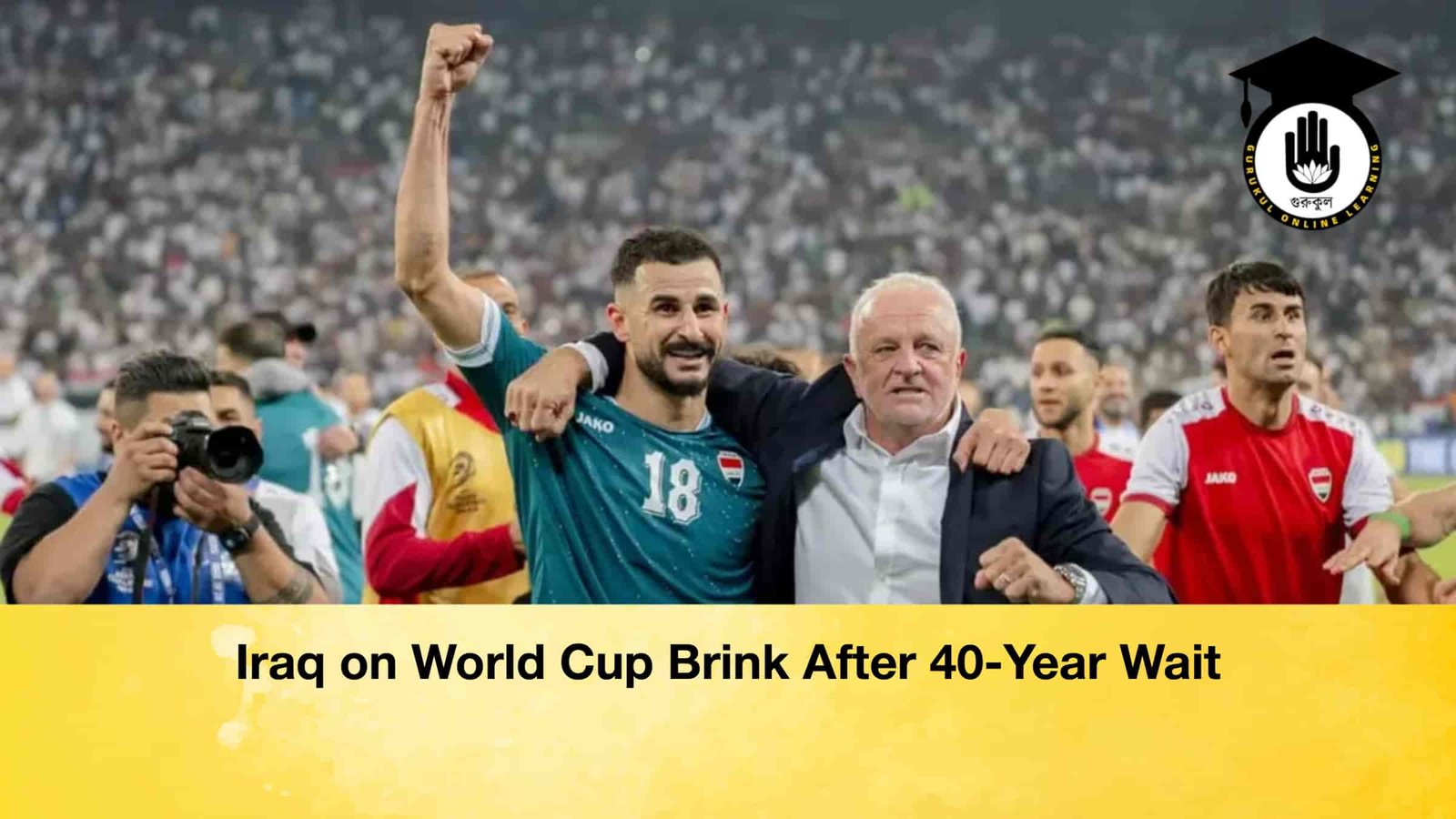
Iraq, a nation long plagued by political instability, armed conflicts, fragile economic conditions, widespread corruption, and severe climate challenges, is now witnessing a footballing fervour that has even surprised its coach. Australian Graham Arnold, who took charge of the Iraqi national team amid doubts over the nation’s ability to reach the World Cup, described the scene as “utterly astonishing.”
When Arnold assumed the role, critics argued that guiding Iraq to the World Cup would be one of the toughest tasks in world football. Yet, the team now stands just one match away from the sport’s pinnacle event, ready to end a 40-year hiatus since their last appearance in 1986.
Iraq has already secured a place in the intercontinental play-off final, and their opponent has been confirmed: Bolivia. A victory over the South American side in Monterrey, Mexico, on 31 March will guarantee Iraq a historic return to the World Cup. Should they succeed, Arnold would become the first Australian coach to lead two different nations to the tournament, having previously qualified his homeland, Australia.
“Before taking this job, I was told it might be one of the hardest assignments in football,” Arnold said. “Iraq hasn’t qualified in 40 years, and managing the immense pressure, particularly with a population of 46 million passionate fans, is a huge challenge.”
Iraq’s World Cup Journey
| Year | Event | Result / Note |
|---|---|---|
| 1986 | World Cup in Mexico | Iraq’s last appearance before 2026 qualifying campaign |
| 2007 | AFC Asian Cup | Champions, highlighting resilience amid turmoil |
| 2025 | World Cup Qualifiers | Defeated UAE with a stoppage-time goal to reach intercontinental play-off |
| 2026 | Intercontinental Play-off | Scheduled vs Bolivia, 31 March, Monterrey, Mexico |
Arnold recalls his own experience in 2005 when he led Australia to the World Cup, noting the nationwide impact and emotional intensity. “The blood running through Iraq is just as passionate, and football evokes deep emotions here,” he observed. “I have long faced Iraqi teams as tough opponents, so imagining them missing the World Cup for 40 years highlights the magnitude of this achievement in the making.”
Political instability has repeatedly obstructed Iraq’s footballing ambitions. The U.S. intervention, the execution of former President Saddam Hussein, and ongoing domestic turmoil hindered the team’s progress for decades. Even after their 2007 Asian Cup triumph, the nation struggled to maintain footballing momentum.
To shield players from external pressures, Arnold has kept the team away from social media and controlled public interactions. “Much of my first ten months here—seven spent in Baghdad—has been about understanding the culture. I cannot go anywhere without being swarmed by fans,” he explained.
After Iraq’s dramatic qualifier victory over the United Arab Emirates last November, the streets of Baghdad erupted with celebrations. “They took to the streets waving flags, celebrating with unrestrained joy. Even after that victory, I reminded them that we are not qualified yet. The dedication these players have for their country is extraordinary,” Arnold added.
With a single match remaining, Iraq stands on the threshold of a historic footballing moment, one that could unite a nation long accustomed to struggle and instability.