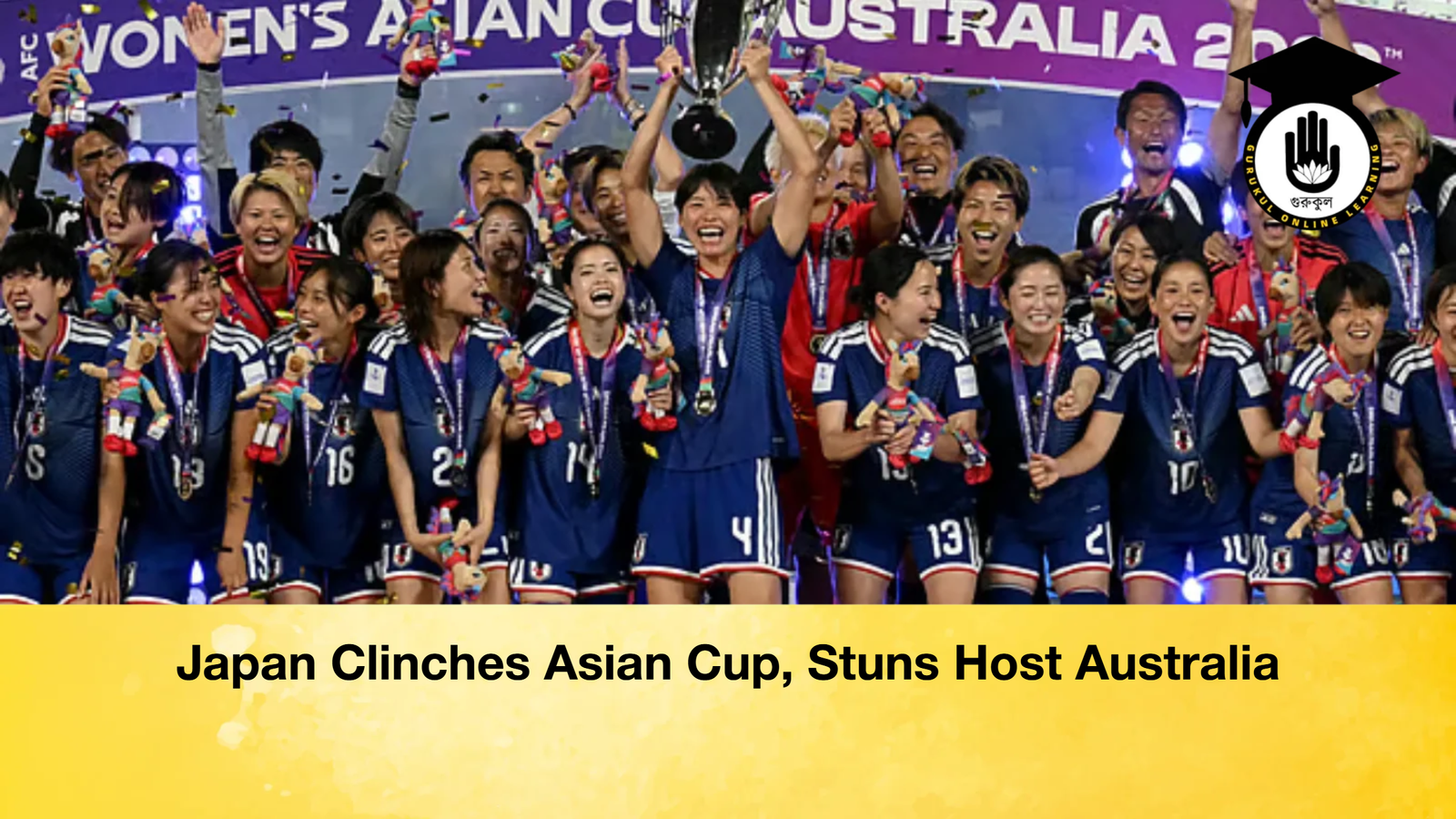
Sydney’s Olympic Park was awash with excitement as the city came alive for the 21st AFC Women’s Asian Cup final. The historic stadium, which hosted the 2000 Sydney Olympics, once again brimmed with anticipation, as fans from across the city converged to witness continental supremacy in women’s football. Yet, despite the deafening roar of Australia’s home crowd, it was Japan who emerged triumphant, securing a 1–0 victory over the hosts.
The 80,000-seat stadium was packed to capacity. From the early afternoon, supporters streamed in from suburbs such as Minto and Glenfield, boarding trains that quickly became a sea of yellow jerseys. Families, including parents with young children, made their way through the city, their excitement palpable. By the time fans arrived at the Olympic Park via Lidcombe Station, the atmosphere suggested more than just a football match—it was a full-scale festival. While roughly 95% of spectators were Australian, a determined cluster of Japanese fans in blue jerseys made their presence felt. Cultural performances preceding kickoff added to the sense of occasion, creating a spectacle that would be remembered long after the final whistle.
Historically, Japan entered the final as one of the most decorated teams in women’s football: 2011 World Cup champions, 2015 runners-up, and winners of the 2014 and 2018 Women’s Asian Cup. Australia, the “Matildas,” came in as 2023 World Cup semi-finalists and 2010 Asian Cup champions. On paper, Japan held the edge, but on the pitch, the contest was fiercely balanced. Japan’s precise passing met Australia’s power and pace in a gripping tactical duel.
Australia’s captain Sam Kerr, a 32-year-old Chelsea forward with over 135 caps, led the attack, supported by veteran defender Alanna Kennedy. Both teams exchanged relentless pressure in the opening half, yet it was Japan who struck in the 17th minute. Forward Mika Hamano unleashed a spectacular long-range strike, sending the ball over the goalkeeper into the far post. Hamano, who currently plays for Tottenham Hotspur, sparked wild celebration among the Japanese contingent, while the stadium fell momentarily silent in disbelief.
That solitary goal proved decisive. Japan lifted the Asian Cup for a third time, repeating the 1–0 scoreline that had defeated Australia in both the 2014 and 2018 finals. Despite Australia hosting the tournament for the first time in 20 years, their hopes of avenging previous defeats were thwarted.
Australia had notable chances, including Caitlin Foord receiving a defensive error with an open goal, and Arsenal’s forward missing another attempt. Japan, however, remained resolute throughout, with goalkeeper Ayaka Yamashita exemplifying steadfast defence.
| Team | Previous Achievements | Road to Final | Goals Scored / Conceded |
|---|---|---|---|
| Japan | 2011 WC winners, 2014 & 2018 Asian Cup winners | Group stage: India 11–0; Semifinal: S. Korea 4–1 | 17 / 2 |
| Australia | 2010 Asian Cup winners, 2023 WC semi-finalist | Quarterfinal: N. Korea 2–1; Semifinal: China 2–1 | 6 / 3 |
Under Danish coach Nils Nielsen, the first foreign coach to win the tournament with Japan, the team remained unbeaten throughout. Their combination of discipline, tactical control, and technical excellence—especially the midfield mastery of Yui Hasegawa and attacking prowess of Hamano—proved unstoppable.
As South Korean referee Kim Your blew the final whistle, Australia’s players collapsed in disappointment, while Japan’s side erupted in celebration. The evening in Sydney underscored a simple truth: though the trophy goes to one team, football belongs to all who love the game.
For expatriate Bangladeshis in Sydney, the match coincided with Eid celebrations, adding a festive backdrop. Though the Bangladesh national team had exited in the group stage, witnessing Asia’s finest women compete offered both inspiration and a valuable learning experience.