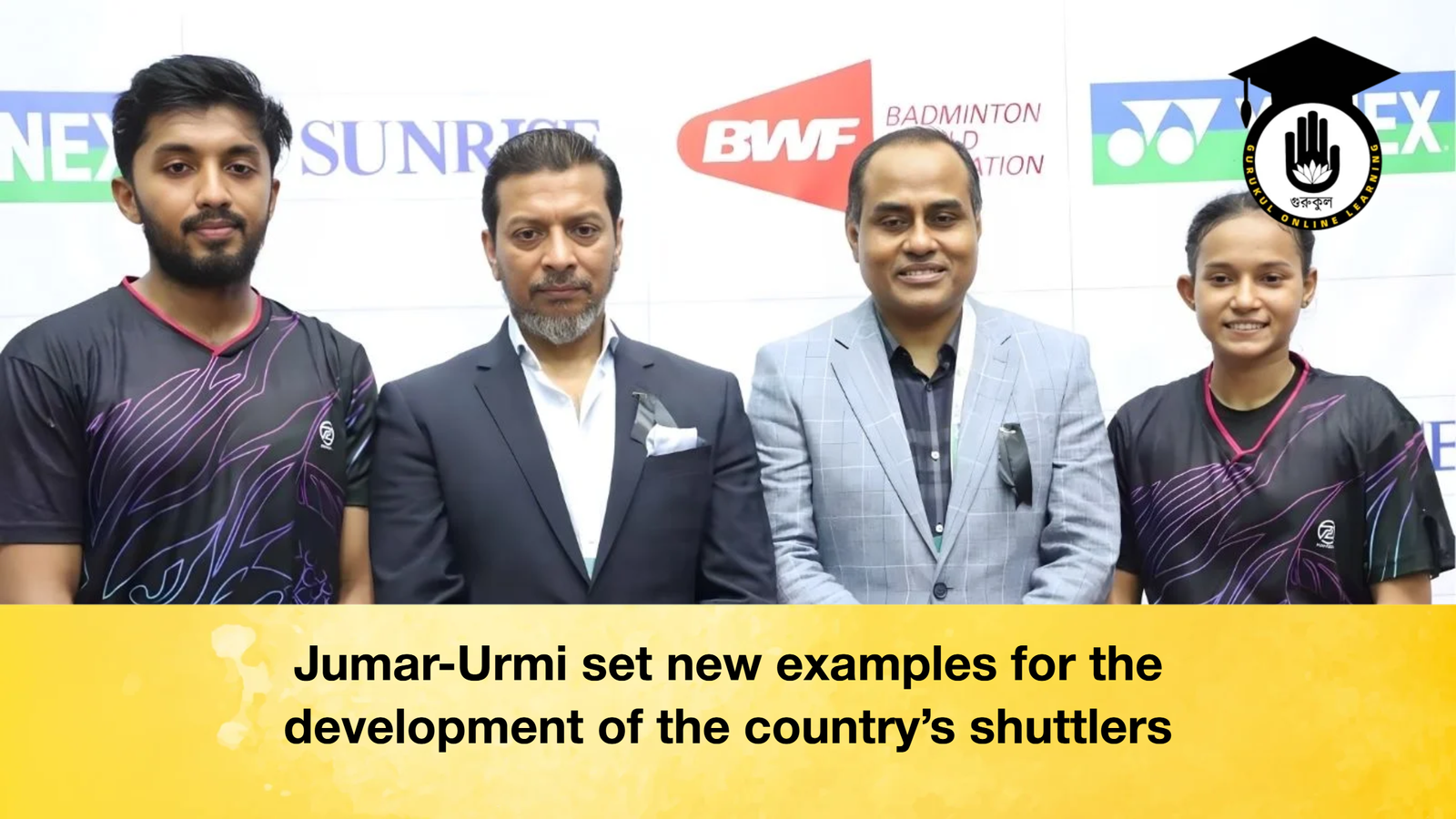
The badminton scene in Dhaka is heating up once again as a new international series commences following a brief pause. The previous UNEX-Sunrise International Challenge saw 17 nations compete, with Al Amin Jumar and Urmi Akter Rupa securing a decisive victory in the mixed doubles category. This achievement has reignited conversations about the potential of Bangladeshi badminton on the global stage.
While winning titles brings immediate fame, the bigger challenge lies in sustaining excellence. Jumar and Urmi are now focused on a longer-term mission: to secure structured training and continuous opportunities for the nation’s shuttlers. They hope that these efforts will extend beyond individual tournaments, ensuring Bangladesh remains competitive internationally.
The Bangladesh Badminton Federation has responded positively, outlining plans for extended practice schedules, high-quality facilities, and hiring elite coaches. Such strategic initiatives aim to provide players with consistent training and professional guidance—elements crucial for long-term success.
Previously, preparations for the South Asian Games included intensive camps, though the Games were postponed. However, the players benefited from this groundwork, showcasing their skills in the subsequent challenge tournaments held in Dhaka. Nonetheless, questions persist about the lasting impact of overseas training. Players sent to countries like Australia, Canada, and Thailand face highly professional opponents who train year-round, while Bangladeshi players typically receive short-term exposure only during tournaments.
Urmi Akter, reflecting on the recent loss to Malaysian competitors in the mixed doubles final, noted, “They train continuously under the best coaches and have far superior support, sponsorship, and facilities.” Jumar echoed her sentiment, stressing that annual long-term camps are essential to maintain performance momentum despite uncertainties in schedules.
Financial constraints also pose challenges. The cost of essential equipment such as shuttlecocks is substantial, limiting practice duration for players without support. Jumar emphasised that badminton, being a highly technical and expensive sport, cannot be mastered through individual effort alone, making institutional backing indispensable.
Russell Kabir Sumon, Secretary-General of the Federation, highlighted the importance of expanding structured training, noting, “Short-term camps are beneficial, but regular, long-term training, combined with international competition, will naturally improve performance.” The federation is also actively seeking a long-term coach who can bring global expertise to guide the national team.
Today, the UNEX-Sunrise Series Tournament begins at Shaheed Tajuddin Indoor Stadium, Paltan, with a prize pool of USD 5,000. Returning competitors are joined by new players from Kazakhstan, while some Indian participants have rotated in and out, ensuring a dynamic and competitive environment.