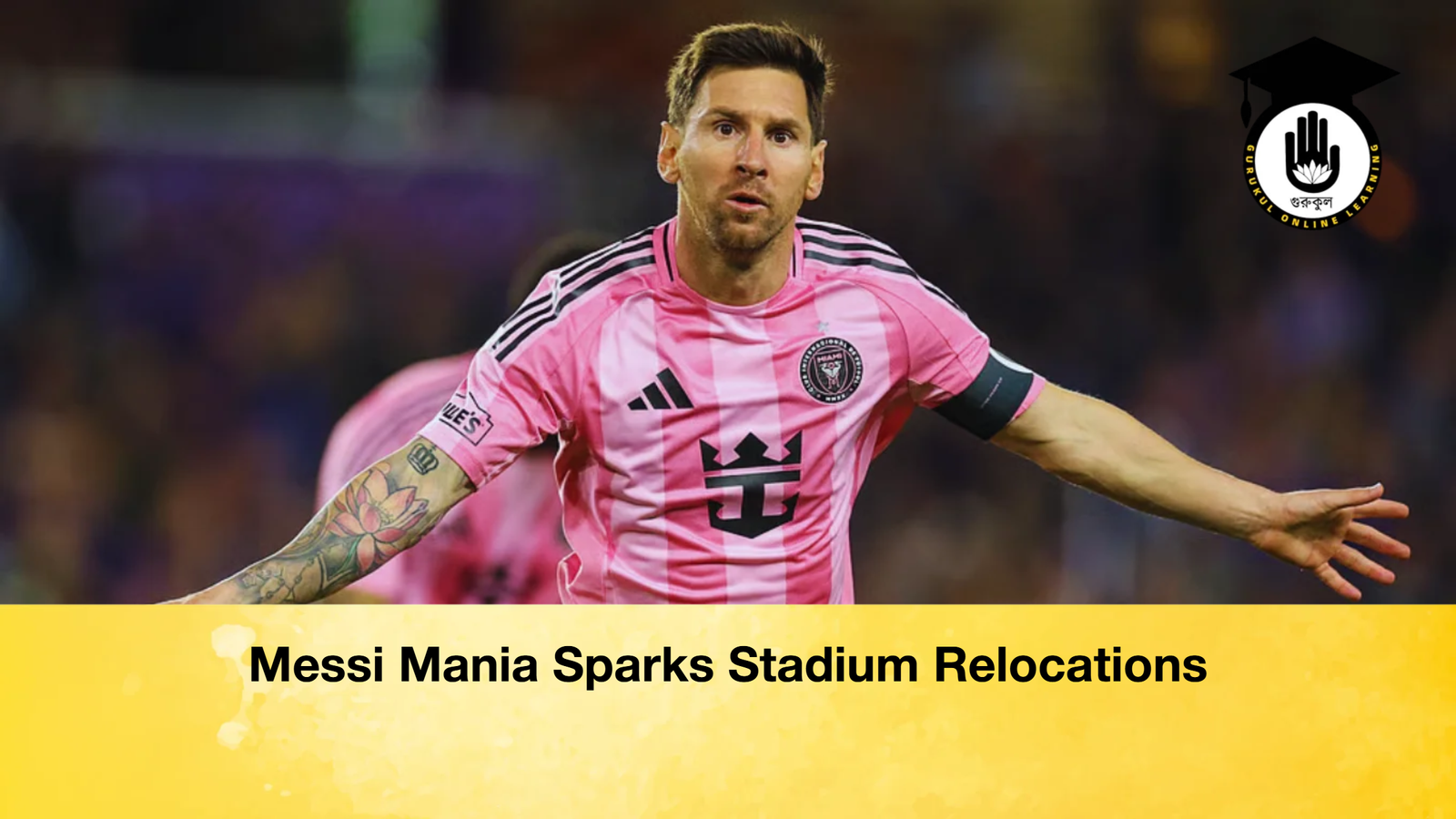
Lionel Messi’s arrival at Inter Miami CF has caused more than just a stir on the pitch—it has transformed stadium logistics across Major League Soccer. Bangladesh time 3:30 AM tonight, Messi is set to play against D.C. United at Baltimore’s M&T Bank Stadium. Typically the fortress of NFL giants Baltimore Ravens, the venue is temporarily hosting DC United to accommodate the surge in fans drawn by Messi’s presence. The team has moved 40 miles from their regular 20,000-seat home, Audi Field, to the 71,000-capacity stadium.
The rationale is clear: professional strategy and commercial opportunity. Last year, Columbus Crew executed the same approach, relocating 140 miles from Ohio’s capital to Cleveland’s Huntington Bank Field to host a Messi-featured match. The motive was identical—Messi-mania.
Hardcore MLS supporters may grumble, viewing such moves as a break from tradition. Yet from a business standpoint, the strategy is compelling: expose the league’s biggest star to new audiences while maximising revenue. Columbus Crew usually fill their 20,000-seat stadium, but in Cleveland, attendance soared to roughly 60,000—tripling the audience without hiking ticket prices.
Playing in NFL venues also inflates ticket values. For the Baltimore clash, resale tickets start at $71, while prime seats for a direct view of Messi exceed $500. For football fans, seeing the 39-year-old Argentine magician live remains a bucket-list experience, and time is fleeting, making this opportunity highly sought after.
| Club | Original Stadium Capacity | Temporary Stadium | Approx. Attendance | Distance Moved (miles) | Objective |
|---|---|---|---|---|---|
| Inter Miami CF | 20,000 | 71,000 (M&T Bank Stadium) | ~60,000 | 40 | Messi-mania, revenue boost |
| Columbus Crew | 20,000 | 68,000 (Huntington Bank Field) | ~60,000 | 140 | Audience expansion, commercial gain |
The benefits extend beyond club profits. Stadium relocations introduce professional football to untapped markets. Baltimore, a city without a major soccer team, now experiences top-tier MLS action. Fans may even subscribe to MLS streaming services after witnessing Messi live, expanding the league’s reach.
While some attend purely for Messi, others out of curiosity, even a fraction developing a love for football signals MLS’s long-term success. League owners know such moments are rare. Messi’s appearances in NFL stadiums may continue as long as his presence continues to attract fans, generate revenue, and grow the league’s footprint across America.
In essence, Messi’s matches now reshape venues, ticket markets, and fan engagement—combining spectacle, strategy, and commerce in a single phenomenon.