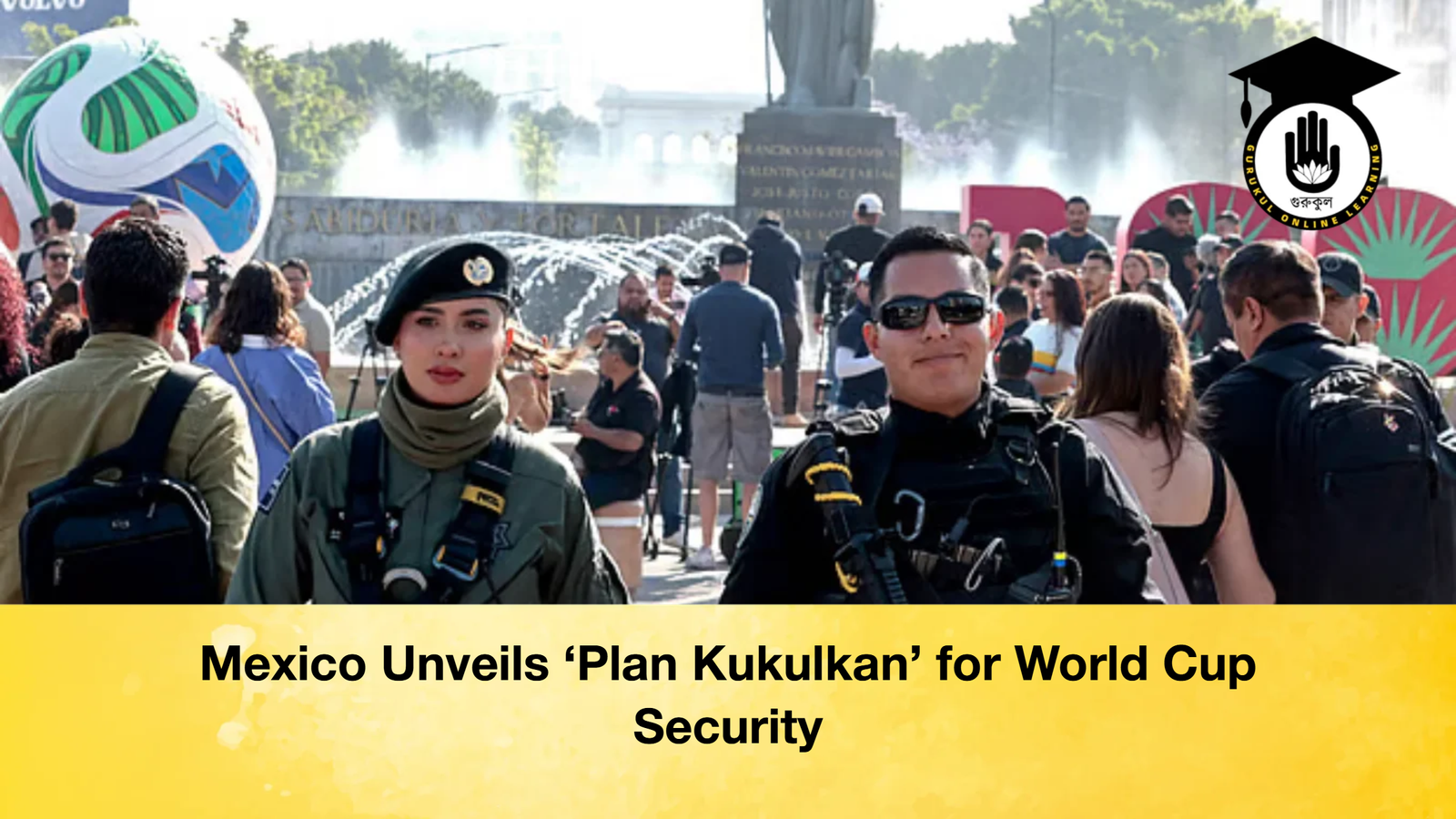
As Mexico prepares to co-host the 2026 FIFA World Cup alongside the United States and Canada, the country faces a formidable security challenge. Widespread violence from drug cartels continues to plague several regions, prompting authorities to announce an unprecedented mobilisation of nearly 100,000 security personnel to safeguard players, fans, and officials during the tournament. This comprehensive operation has been officially named “Plan Kukulkan”, inspired by the serpent deity of the ancient Maya civilisation.
The Mexican leg of the World Cup will take place in three major cities: Guadalajara, Monterrey, and Mexico City. Of these, Guadalajara, the capital of Jalisco state, has recently experienced heightened cartel-related violence, with reports suggesting over 12,000 individuals have gone missing in the area. Monterrey and Mexico City have remained relatively stable, though security measures will be stringent across all locations. The tournament is scheduled to begin on 11 June and conclude on 19 July 2026.
One of Mexico’s most notorious criminal organisations, the Jalisco New Generation Cartel (CJNG), has been a key source of recent unrest. Their leader, Nemesio “El Mencho” Oseguera Cervantes, was killed during a military operation, after which the cartel engaged in clashes with Mexican forces. El Mencho, once listed as Mexico’s most wanted man, was also pursued by the United States, which offered a $150 million reward for information leading to his capture. He was recently buried near a military base in the city of Zapopan.
On Friday, Mexican President Claudia Sheinbaum presented the government’s security strategy for the World Cup, assuring that the tournament will proceed safely despite ongoing violence. Both President Sheinbaum and FIFA officials have affirmed that the events will not be disrupted, with millions of fans expected to travel to Mexico from around the world.
Security Deployment Overview: Plan Kukulkan
| Security Component | Quantity / Details |
|---|---|
| Military personnel | 20,000 |
| Police officers | 55,000 |
| Private security staff | ~24,000 |
| Military & civil vehicles | 2,500 |
| Aircraft and drones | 24 |
| Explosives detection dogs | Specially trained for hazardous material identification |
According to Roman Villalvazo, head of Mexico’s World Cup Coordination Centre, the security operation will not only cover stadiums but also tourist areas and city centres in the host cities. Specialised units will monitor for drones, explosives, and other potential threats, ensuring a controlled and secure environment for the event.
The tournament’s opening match will be held in Mexico City, featuring a clash between Mexico and South Africa. FIFA President Gianni Infantino expressed confidence in Mexico’s ability to host the matches successfully, stating that he felt “very reassured” by the country’s preparations.
In summary, Plan Kukulkan represents a historic security initiative, combining military, police, and private resources to safeguard the global spectacle of the FIFA World Cup while highlighting Mexico’s commitment to a safe and successful tournament.