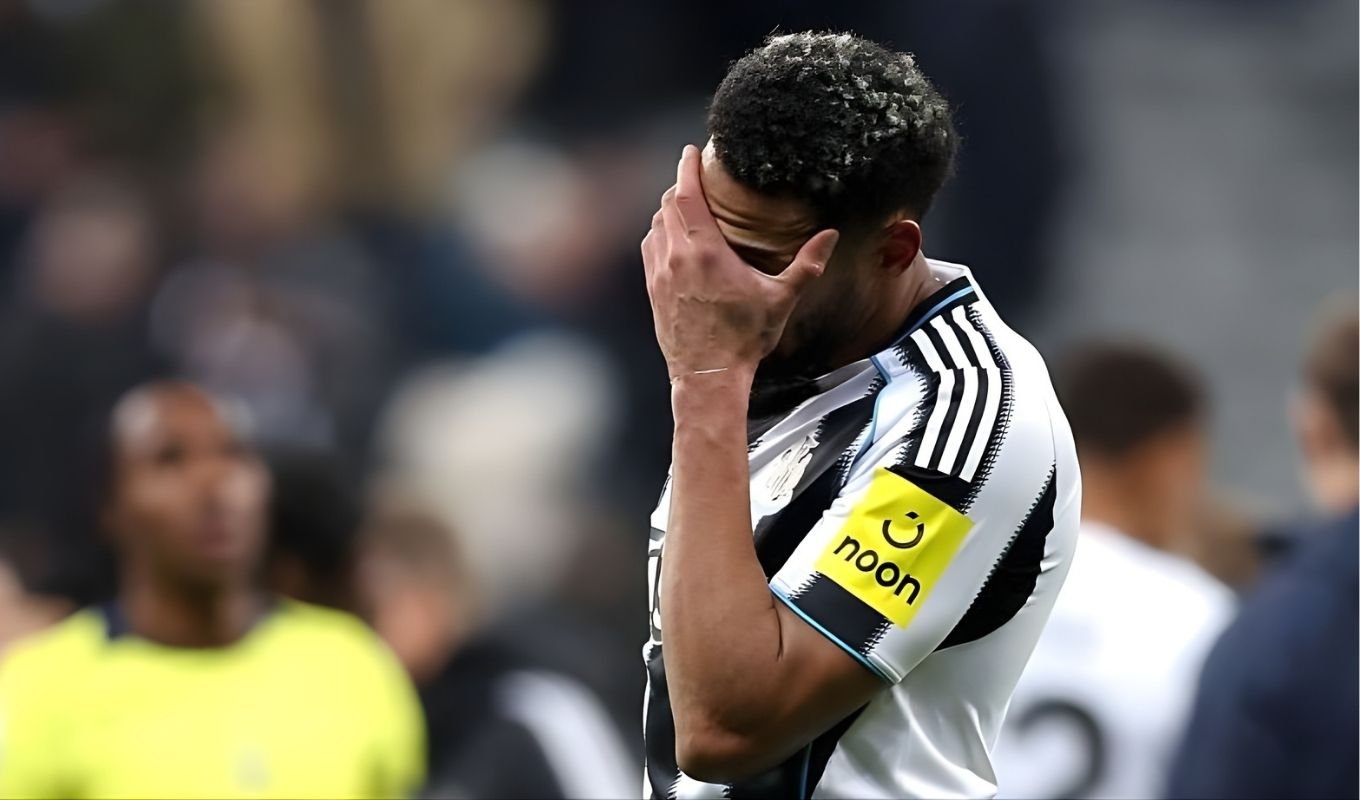
Newcastle United were left ruing yet another self-inflicted wound after a dramatic stoppage-time equaliser denied them what would have been a crucial Premier League victory over Tottenham Hotspur at St James’ Park on Tuesday night. What initially looked like a long-awaited moment of triumph for Eddie Howe’s side turned into a painful repeat of a familiar pattern: surrendering a hard-earned lead in the dying moments.
For a significant portion of the evening, the atmosphere inside St James’ Park carried the energy of a fanbase desperate to believe its club was turning the corner. When Anthony Gordon struck late in the second half to restore Newcastle’s lead at 2-1, the crowd erupted with both relief and bravado. Mocking chants of “It’s happening again!” echoed around the stadium, aimed directly at Tottenham’s history of painful defeats on Tyneside.
But it was Newcastle, not Spurs, who would once again face their own haunting sense of déjà vu.
In the 95th minute, as Newcastle dug deeper into defensive survival mode, Spurs captain Cristian Romero produced a moment of world-class improvisation. Rising above a melee in the box, he executed an acrobatic overhead kick that flew beyond Martin Dúbravka, silencing the home support and prompting wild celebrations from the travelling fans. It was the sort of goal that instantly changes the tone of a match, transforms analysis, and deepens frustration.
For Newcastle, it was not an isolated incident. Their late-game collapses have become a defining theme of their season. Having already conceded stoppage-time heartbreakers against Liverpool and Arsenal earlier in the campaign, this latest setback highlighted a troubling trend: Newcastle have dropped more points from winning positions—eleven in total—than any other team in the Premier League this season.
If football were a simple mathematical exercise, Eddie Howe’s side would not be languishing in 13th place. Had they held on in this match, and in the matches they led against Brentford, West Ham, Arsenal and now Spurs, the Magpies would be sitting at the top of the Premier League table. Instead, they find themselves eleven points behind leaders Arsenal—three of which were handed to the Gunners courtesy of another late capitulation.
Speaking after the match, Howe struggled to articulate why such collapses continue to plague his team. “It’s a really strange one,” he admitted. “Sometimes these things come in cycles, and you can’t quite figure them out—like our away form earlier in the season. Historically, we’ve been very strong at closing games out. Right now, we’re losing that ability, and it’s costing us vital points.”
The manager’s frustration is understandable. Newcastle’s defensive organisation, which was once their greatest strength, has looked increasingly fragile in high-pressure moments. The midfield, often praised for its intensity, has struggled to maintain control late in matches. And even the attacking players, despite scoring enough goals, find themselves overshadowed by the team’s inability to protect leads.
For the players, the psychological weight of these repeated collapses cannot be ignored. Each time they concede late, the pressure grows, and the fear of another last-minute blow becomes harder to shake. The supporters, too, are caught in a complex emotional cycle—hope rising with every lead taken, only to be crushed moments before full-time.
With the Premier League season intensifying and the table tightening, Newcastle cannot afford for this pattern to continue. The foundations of a strong campaign remain in place, but unless Howe’s side rediscover the composure, concentration and ruthlessness that characterised their rise last season, they risk drifting further into mid-table obscurity.