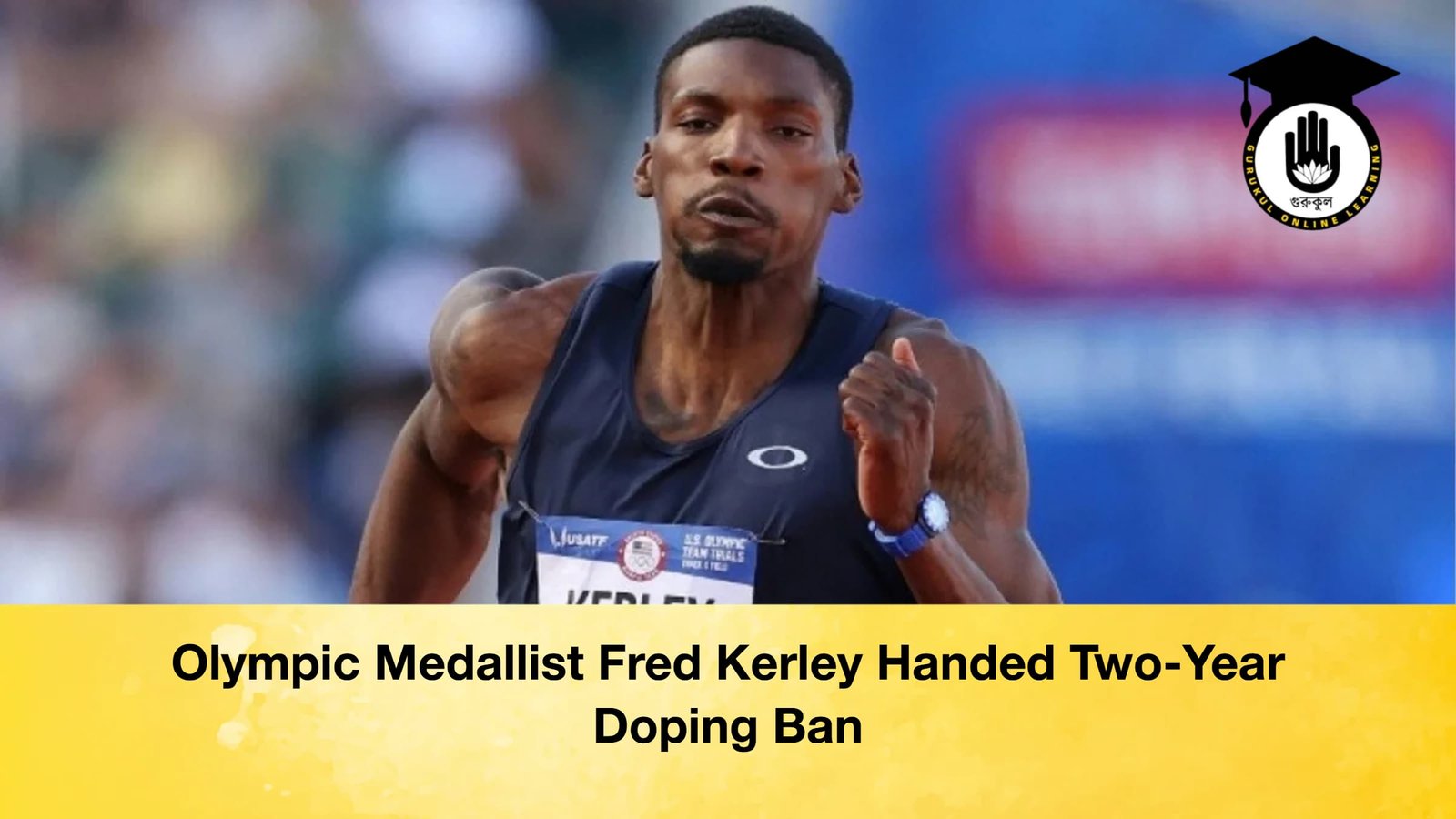
In a staggering blow to the world of international athletics, the Athletics Integrity Unit (AIU) has officially imposed a two-year suspension on American sprinting star Fred Kerley. The decision comes after the Olympic medallist failed to make himself available for drug testing on three separate occasions within a single calendar year, a violation commonly referred to as a “whereabouts failure.”
The Nature of the Violation
Under the stringent anti-doping protocols governed by the World Anti-Doping Agency (WADA), elite athletes must provide detailed information regarding their daily location to allow for unannounced, out-of-competition testing. This system ensures the integrity of the sport by maintaining a “anytime, anywhere” testing regime.
Kerley, 30, was found to have breached these regulations by failing to update his whereabouts information, leading to three “missed tests.” According to the AIU, missing three tests within a rolling 12-month period is treated as an anti-doping rule violation (ADRV) equivalent to a positive test result. The two-year ban is the maximum penalty for such a technical infraction.
A Career Interrupted
The suspension marks a dramatic fall for one of the most versatile sprinters in modern history. Kerley’s transition from the 400-metre dash to the 100-metre sprint was a rare feat that yielded significant silverware on the world stage.
| Competition | Event | Medal |
| 2020 Tokyo Olympics | 100m Sprint | Silver |
| 2022 World Championships | 100m Sprint | Gold |
| 2024 Paris Olympics | 100m Sprint | Bronze |
His absence will be keenly felt in the upcoming athletic season, as he was widely considered a podium contender for the upcoming World Championships. The ban effectively sidelines him during what many experts consider to be the twilight of his peak physical years.
Implications for American Athletics
The United States Track and Field (USATF) community has expressed disappointment following the announcement. While Kerley has the right to appeal the decision through the Court of Arbitration for Sport (CAS), the AIU’s findings are typically robust.
This incident serves as a stern reminder to athletes worldwide that administrative diligence is just as crucial as physical training. For Kerley, the road back to the track will be long, as he will not be eligible to compete in any sanctioned events until his ban expires in 2028.