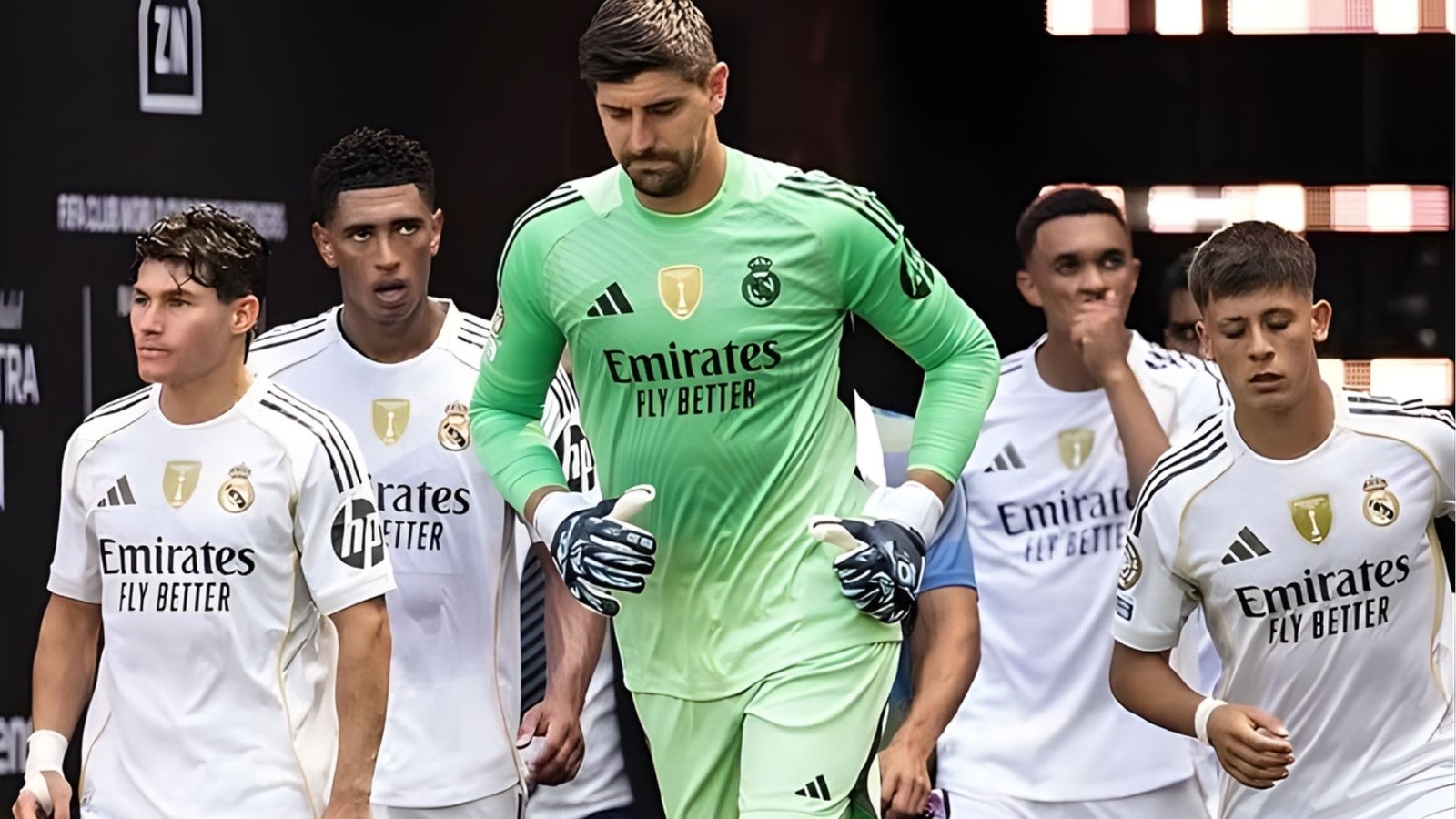
Real Madrid’s recent performances have sparked widespread concern among supporters and analysts alike. With only two victories in their last seven matches, questions are mounting about the deeper issues that are dragging the team down. This is not merely a tactical slump or a temporary loss of form; for many, it reflects the erosion of the very identity that once defined Real Madrid.
In previous eras, the club boasted figures such as Cristiano Ronaldo, Sergio Ramos, Luka Modrić, Karim Benzema, Marcelo, and Toni Kroos—players who were not just technically brilliant but possessed extraordinary mental resilience. Their ability to turn matches around, to refuse defeat until the final whistle, shaped Real Madrid’s DNA. The legendary comeback at Anfield in 2023, when Madrid overturned a 0–2 deficit to win 5–2, symbolised that spirit. Leadership came naturally to that generation.
Today, the pressing question is: who is the leader in this Real Madrid team? When the club fell behind 1–0 to Celta Vigo at the Santiago Bernabéu recently, fans looked for someone to step up, rally the squad, and ignite belief. But no one did. Instead, Madrid slipped to a 2–0 defeat—one that leaves them four points behind Barcelona after 16 league matches.
Real Madrid’s squad is undeniably talented, yet frighteningly fragile. Injuries continue to plague the team, especially in defence, where half the backline is often unavailable. Suspensions have further weakened the full-back positions. But these problems alone do not explain the crisis. The heart of the problem lies in mentality. This team lacks leaders. When they fall behind, panic spreads. Heads drop early. Disorder replaces discipline. The pattern is disturbingly similar to the latter stages of Carlo Ancelotti’s tenure.
Xabi Alonso arrived with high expectations and initially brought fresh energy and structural improvements. But as weeks have passed, he too seems to have lost his grip. His team selections, substitutions, and tactical decisions have increasingly been called into question. Some accuse him of overthinking; others argue that he is simply unable to instil belief into a squad drowning in self-doubt.
Managing Real Madrid is notoriously difficult. The club’s hierarchy has little tolerance for prolonged underperformance. Inevitably, whispers have begun: if Alonso goes, who replaces him? Zinedine Zidane? Jürgen Klopp? Both demand discipline, unity, and unwavering trust in their methods. But if players stop adhering to those methods after a handful of poor results, would Madrid simply repeat the same cycle of managerial changes?
And would Zidane or Klopp even want the job in this fragile environment? Zidane is rumoured to be a strong candidate for the France national team after the World Cup. Klopp’s philosophy requires supreme fitness, commitment, and mentality. If Alonso’s high-pressing approach is failing, how could Klopp’s flourish overnight?
On the pitch, Real Madrid resemble a puzzle with missing pieces. Rodrigo has gone 31 matches without scoring yet continues to start. The midfield is constantly outrun by opponents. Crosses and set pieces create panic in the defence. Issues exist at every level.
Alonso’s reluctance to experiment has also been costly. Endrick, for example, offers pace and unpredictability on the right wing but has barely been used. Against Celta, Asensio was fielded as a right-back—a position where he struggled greatly—while Endrick remained benched. The one time the young forward played this season, an 11-minute cameo against Valencia, he impressed.
Real Madrid cannot continue with outdated hierarchies or blind loyalty to struggling stars. Dropping players in long-term goal droughts is not betrayal; it is necessity. The much-hyped trio of Mbappé, Gonzalo, and Endrick has never even been tested together. Smaller matches could have provided opportunities.
Ultimately, the decision rests with Alonso. He must choose whether he wants to please everyone or win. At Real Madrid, one cannot do both. Without bold decisions and renewed psychological strength, the club risks sinking into a pattern of sporadic wins and recurring defeats—while teams like Celta could once again leave the Bernabéu victorious for the first time in decades.