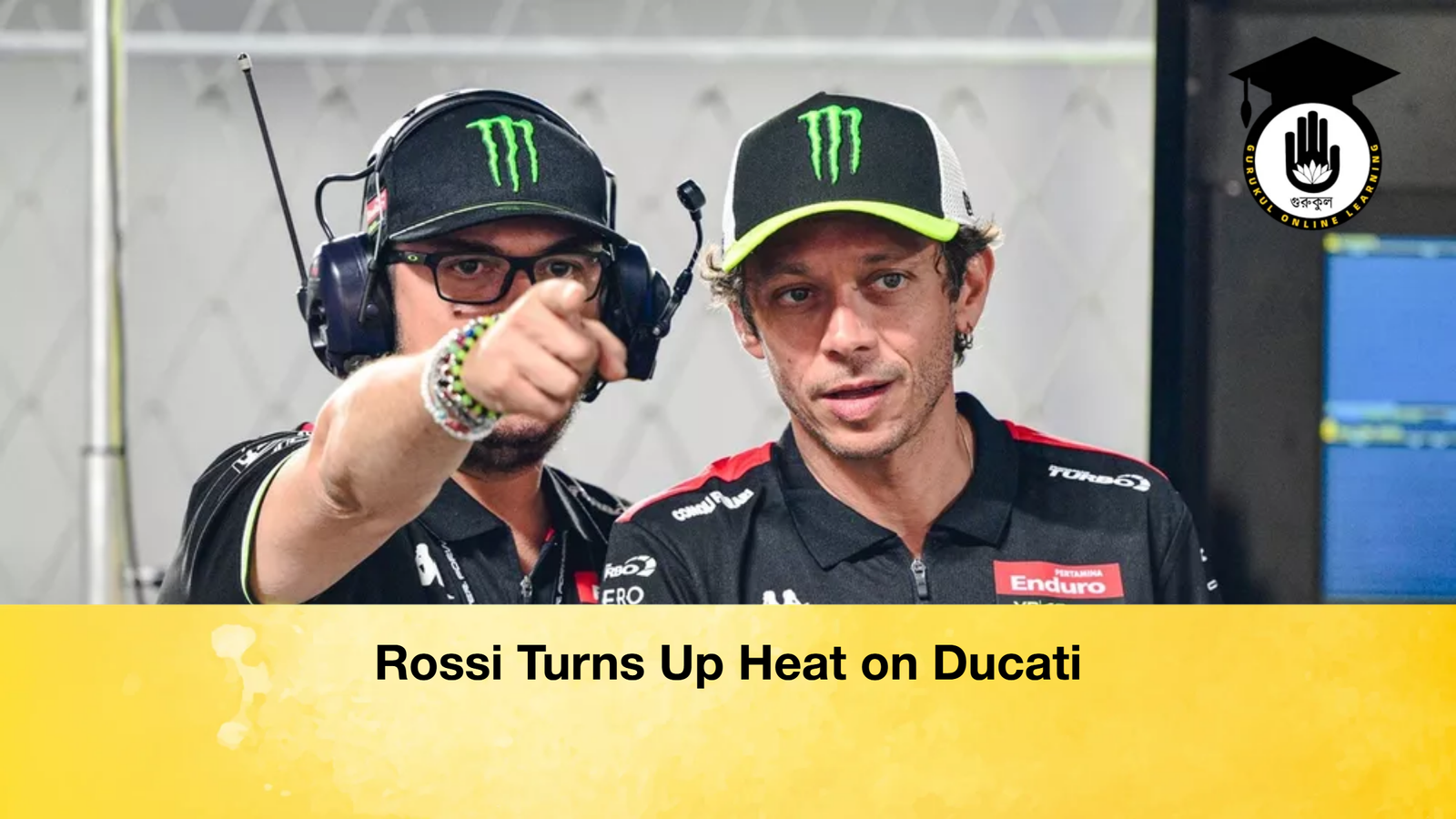
Valentino Rossi’s carefully chosen words at VR46’s 2026 season launch were anything but casual. By openly stating that he already knows who he wants to ride for his team in 2027 — while refusing to name names — the nine-time world champion has sent a pointed message to Ducati, intensifying the pressure on the Bologna manufacturer as the next major rider market battle begins to take shape.
Although not yet officially confirmed, 2026 is widely expected to be the final season at VR46 for its current pairing of Fabio Di Giannantonio and Franco Morbidelli. That looming change leaves Rossi with two seats to fill for 2027, at the same time as he must reaffirm VR46’s technical future amid MotoGP’s sweeping regulation overhaul.
VR46 currently operates under a multi-year agreement with Ducati that began in 2025, granting the team factory-supported status. While that partnership is broadly expected to continue, the contract contains an exit clause at the end of 2026 — a strategic lever Rossi is clearly willing to use as negotiations intensify.
A calculated bid to restore competitiveness
Rossi’s objective is straightforward: to return VR46 to the sharp end of the grid. The team has not tasted victory since Marco Bezzecchi’s triple triumph in Argentina, France and India during the 2023 season. With no immediately obvious Italian successor ready to lead the project, Rossi is seeking a line-up that can reignite results and energise his global fanbase.
His statement — “I know, but I can’t say yet” — when asked about 2027 riders is widely interpreted as an invitation for Ducati to help facilitate access to elite talent. Ducati executives, however, have publicly downplayed the suggestion of urgency. Their focus, they insist, remains on finalising Marc Márquez’s long-term future, then addressing Francesco Bagnaia’s contract before turning to satellite arrangements.
Acosta dream clashes with Ducati’s plans
At the top of Rossi’s wish list sits Pedro Acosta. Yet this ambition appears increasingly unrealistic. Ducati’s own priority is to secure Acosta as Márquez’s factory team-mate for 2027–28, a move strongly supported by technical director Gigi Dall’Igna. Should that deal materialise, it would trigger a chain reaction across the grid: Bagnaia likely departing for Yamaha, KTM scrambling to replace Acosta, and Honda renewing its pursuit of Fabio Quartararo.
Acosta’s manager, Albert Valera, has already hinted that VR46 would only be considered if no factory seat were available — a scenario that currently looks unlikely.
Youth-focused alternatives emerge
With Acosta slipping out of reach, Rossi has turned his attention to two Ducati-backed prospects: Fermín Aldeguer and David Alonso. Aldeguer, under contract until the end of 2027, is viewed by Ducati as a future satellite team leader, while Alonso — the 2024 Moto3 champion — has already impressed in Moto2 and is expected to graduate to MotoGP in 2027.
The upcoming regulation reset further complicates matters. In 2027, Ducati will field a unified GP27 specification across all teams, erasing mechanical disparities and making satellite seats more attractive than ever. That reality strengthens Ducati’s hand — but also gives Rossi leverage, particularly after Pramac’s unexpected defection to Yamaha.
Key Figures in Ducati–VR46 Equation
| Rider / Stakeholder | Current Status | 2027 Outlook |
|---|---|---|
| Pedro Acosta | KTM factory rider | Ducati factory target |
| Fermín Aldeguer | Ducati-contracted | Satellite team leader candidate |
| David Alonso | Ducati junior | MotoGP debut expected |
| VR46 Racing Team | Ducati satellite | Continuity “90% sure” |
| Ducati | Losing Pramac | Keen to retain VR46 |
Both Rossi and team principal Alessio “Uccio” Salucci have stressed that continuity with Ducati beyond 2026 is highly likely. Yet by publicly signalling his ambitions, Rossi has ensured Ducati knows that VR46’s loyalty is not unconditional. As MotoGP braces for its biggest technical reset in a decade, this subtle power play may prove decisive in shaping the 2027 grid.