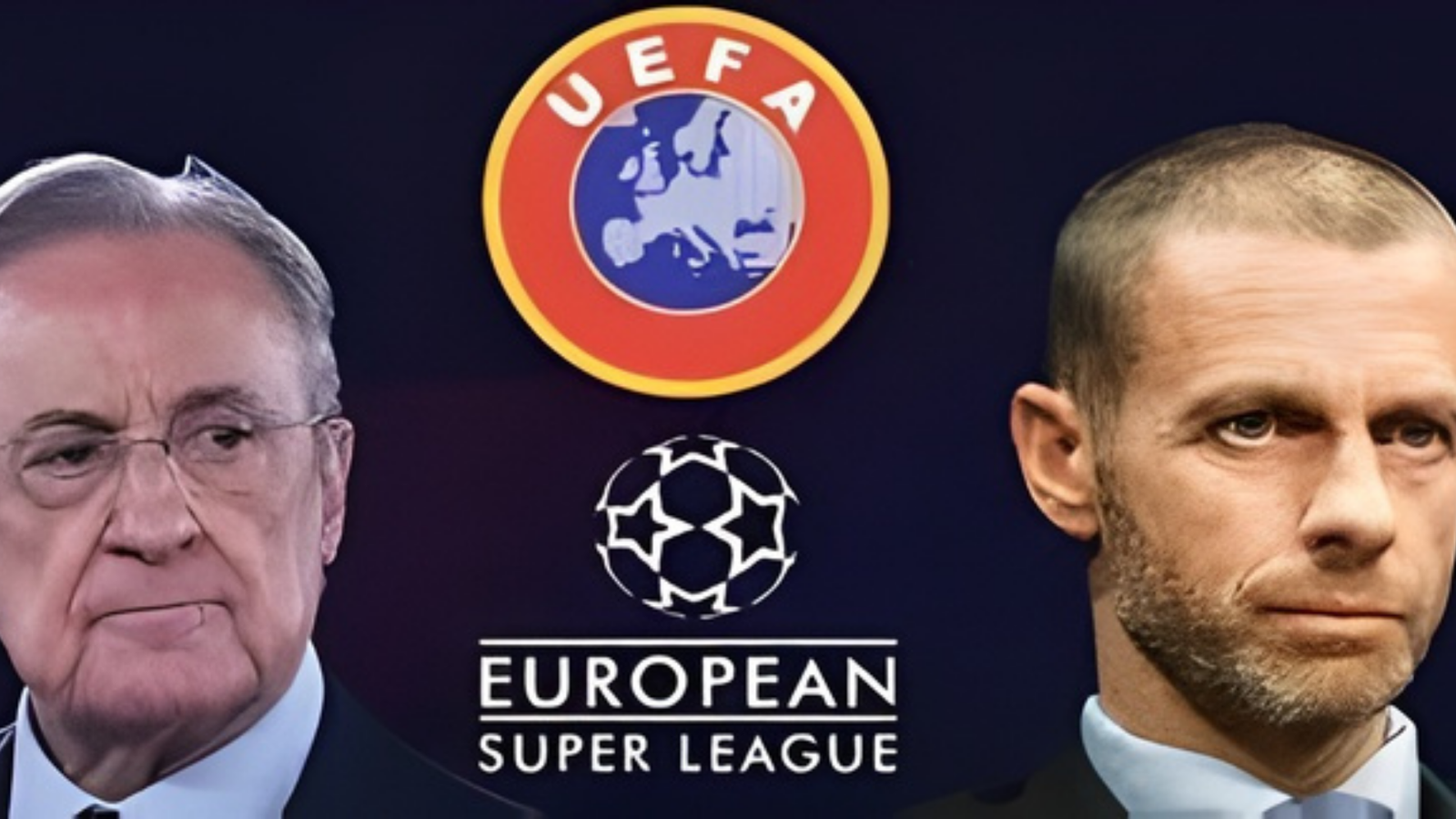
European club football has entered uncharted territory, as a battle over power and control moves to the courtroom. A22 Sports Management, the organisation behind the European Super League, has formally filed a claim against UEFA, seeking €4–5 billion in damages — approximately £3.8–4.7 billion, or 56–70 thousand crore Bangladeshi Taka. This was confirmed by Florentino Pérez, President of Real Madrid, who has been a vocal supporter of the Super League initiative.
In 2023, the Court of Justice of the European Union (CJEU) ruled that UEFA was abusing its monopoly over European club competitions, engaging in anti-competitive behaviour. The ruling stated that new leagues and organisers should be allowed fair access. However, A22 argues that UEFA has ignored this decision, retaining old rules while also introducing new regulations in 2024 — measures that directly contravene the court’s mandate.
As a result, A22 claims that UEFA’s continued dominance has caused financial losses to clubs. The Super League faction now seeks compensation not merely for lost revenue, but as a challenge to UEFA’s structural monopoly.
Between March and September 2025, UEFA and A22 engaged in negotiations, during which A22 proposed the ‘Unified League’, featuring a modern format, independent governance, and a digital streaming platform called ‘Unify’. Despite these efforts, UEFA’s intransigence brought the talks to a halt. Legal action became the only viable option.
Financial and Organisational Impact
If successful, this lawsuit could spark the most significant organisational and financial shift in European football history. The balance of power between clubs, revenue distribution, and competition structures could all be altered. Analysts warn that this is not just a monetary dispute; it is a battle over the future governance of European football.
A22 representatives have emphasised: “This lawsuit is not just about money. It is about ensuring that football’s structure is fair and competitive for all clubs.” UEFA supporters argue that a Super League victory could destabilise established competitions and historic traditions, creating uncertainty for broadcasters, sponsors, and fans.
This legal confrontation, therefore, marks more than another high-profile lawsuit — it could define the next era of European football, affecting clubs, organisers, and millions of supporters worldwide.