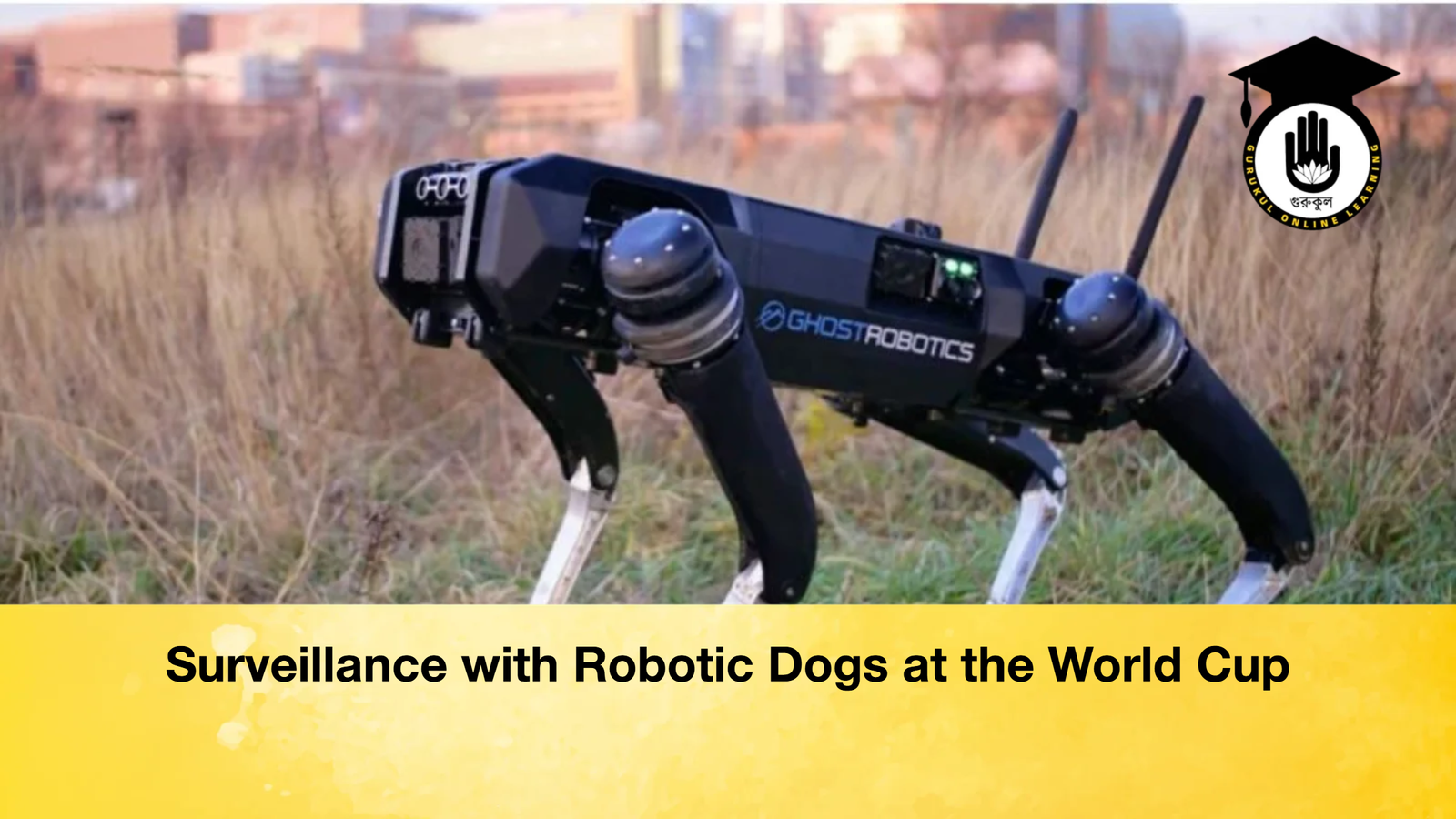
With the 2026 FIFA World Cup drawing closer, Mexico has unveiled an eye-catching technological addition to its public-security toolkit: four-legged robotic units designed to assist police operations around tournament venues and high-risk areas. The initiative, confirmed by local authorities on Monday, forms part of a broader effort by the co-hosts—Mexico, the United States and Canada—to strengthen safety and crowd management ahead of one of the largest sporting events in the world.
The robotic “dogs” are engineered to traverse hazardous or hard-to-access environments that may place officers at risk. Equipped with high-resolution cameras, stabilisation systems and remote-control capability, the machines can enter derelict buildings, narrow corridors and poorly lit spaces, transmitting live video back to command centres. Police commanders can assess conditions in real time before deciding whether and how to deploy personnel, reducing exposure to ambushes, booby traps or concealed weapons.
The project is being piloted in Guadalupe, a municipality near Monterrey that will host World Cup fixtures. The Guadalupe City Council has invested approximately 2.5 million Mexican pesos in acquiring the robotic units. Local officials say the technology will be used not only around the stadium perimeter but also for pre-event sweeps, response to suspicious activity, and training simulations ahead of the tournament. Monterrey’s BBVA Stadium—renamed Estadio Monterrey for the competition—will stage four matches during the finals.
A promotional video released by the local government shows one of the robotic dogs moving through an abandoned building, climbing a flight of damaged stairs and transmitting live images as officers follow at a safe distance. In a staged scenario, the robot confronts an armed suspect and uses an onboard loudspeaker to issue instructions to put the weapon down. While such demonstrations are carefully controlled, officials argue they illustrate how the machines could help de-escalate dangerous encounters by allowing officers to gather intelligence before making contact.
Guadalupe’s mayor, Héctor García, said the robots are intended to support initial police operations and enhance officer safety. According to municipal authorities, the devices will be deployed in situations involving potential armed resistance, searches of unsecured structures, and incidents where visibility is poor or access is limited. Security planners emphasise that the robots are tools for reconnaissance and communication rather than replacements for human judgement.
Beyond the immediate security benefits, the programme reflects a wider trend towards integrating robotics and remote-sensing technologies into urban policing, particularly for large international events with high crowd density and complex threat profiles. As millions of supporters travel across North America between 11 June and 19 July 2026, host cities face pressure to deliver seamless security without disrupting the fan experience. Mexican officials believe that carefully governed use of robotics can improve preparedness while limiting unnecessary risk to officers and the public alike.
Key Details of Mexico’s Robotic Security Initiative
| Item | Details |
|---|---|
| Tournament dates | 11 June – 19 July 2026 |
| Host countries | Mexico, United States, Canada |
| Monterrey venue | BBVA Stadium (tournament name: Estadio Monterrey) |
| Matches in Monterrey | Four |
| Municipality piloting robots | Guadalupe (near Monterrey) |
| Investment | Approximately 2.5 million Mexican pesos |
| Core functions | Live video reconnaissance, hazardous-area access, loudspeaker commands |
| Intended use cases | Pre-event sweeps, high-risk searches, incident response |