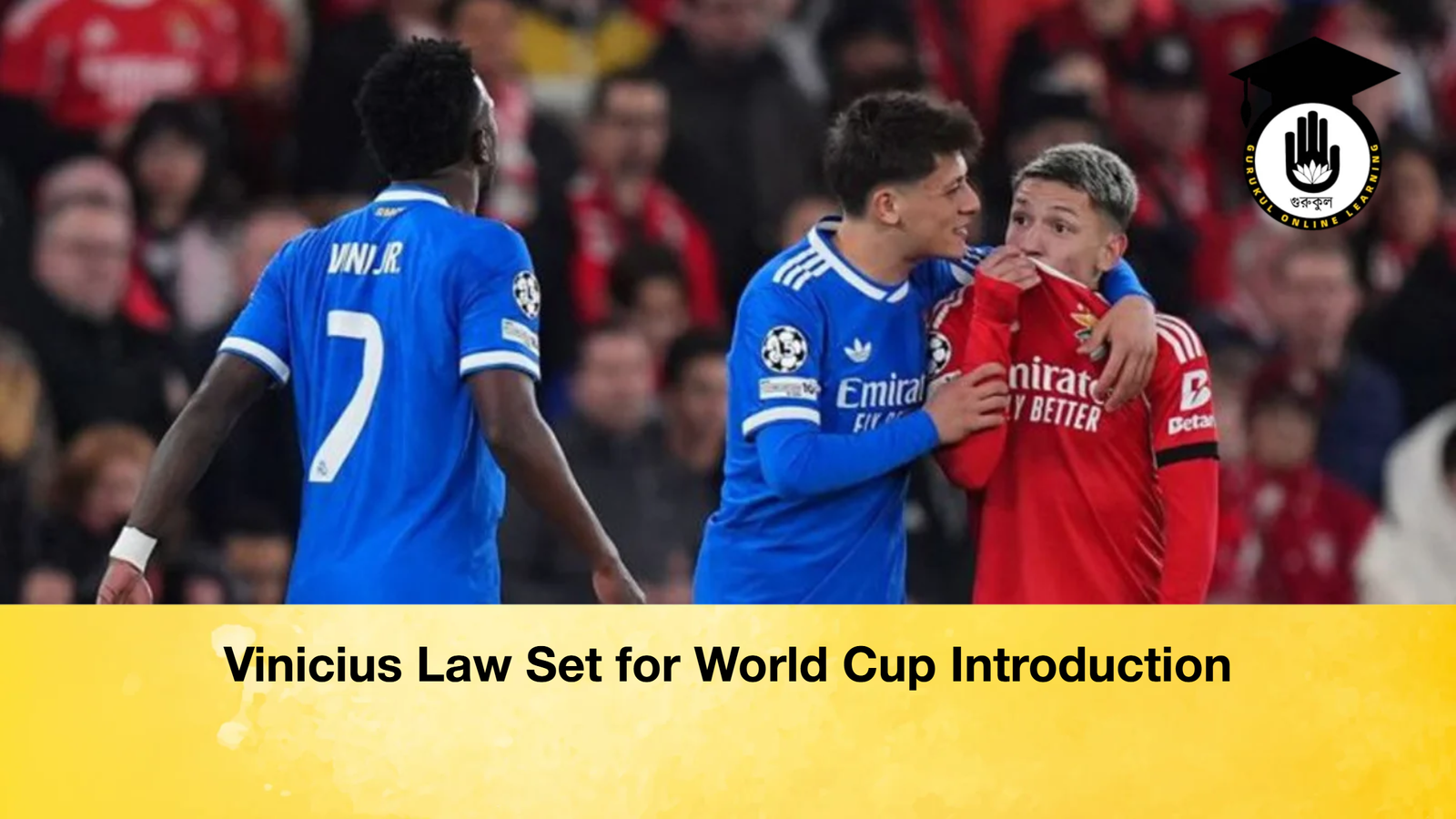
A significant change is coming to international football, with the introduction of a new regulation informally dubbed the “Vinicius Law”, set to take effect at the 2026 FIFA World Cup. The rule aims to combat discriminatory behaviour on the pitch by prohibiting players from covering their mouths while communicating with opponents, a practice that has recently come under intense scrutiny.
The move follows a high-profile controversy involving Real Madrid’s Brazilian forward Vinicius Júnior, who alleged he was subjected to racist remarks during a Champions League play-off match against Benfica. The accusations were directed at Benfica’s young player Gianluca Prestiani, who, along with his club, has denied any wrongdoing. The matter is currently under investigation by UEFA.
At the centre of the debate was the fact that Prestiani reportedly covered his mouth while speaking to Vinicius, making it impossible for audio recordings or lip-reading to provide definitive evidence. This loophole highlighted the need for regulatory intervention, prompting FIFA and the International Football Association Board (IFAB) to adopt stricter measures.
Under the new regulation, players will no longer be allowed to use hands, jerseys, or any other objects to obscure their mouths while communicating with opponents. The intention is to ensure transparency on the pitch and maintain the integrity of the game, while sending a strong message against racism in football.
The IFAB officially approved the proposal during its most recent meeting, and preparations are underway to ensure the law is implemented before the 2026 World Cup. Experts and officials view it as a symbolic yet practical step in the ongoing global effort to eradicate discriminatory behaviour from football.
Key elements of the Vinicius Law are summarised below:
| Aspect | Details |
|---|---|
| Rule Name | Vinicius Law (informal) |
| Implementation | 2026 FIFA World Cup |
| Objective | Prevent discriminatory conduct and maintain ethical communication |
| Prohibited Action | Covering the mouth with hands, jerseys, or other objects while speaking to opponents |
| Catalyst | Alleged racist remarks against Vinicius Júnior during Champions League match |
| Governing Bodies | FIFA and IFAB |
| Current Status | Approved by IFAB, pending formal implementation |
Football analysts argue that this law will not only enhance transparency on the pitch but also protect the dignity and safety of players. It emphasises accountability, making it clear that discriminatory behaviour—overt or subtle—will not be tolerated in professional football.
The Vinicius Law is thus more than a regulatory change; it represents a commitment to inclusivity, fair play, and the moral integrity of the global game. Match officials will be empowered to issue warnings for violations, with potential disciplinary action for repeated offences, ensuring the law has tangible impact.
By addressing subtle forms of misconduct, this rule reinforces football’s position as a sport committed to equality and mutual respect, while marking a historic step in the fight against racism worldwide.