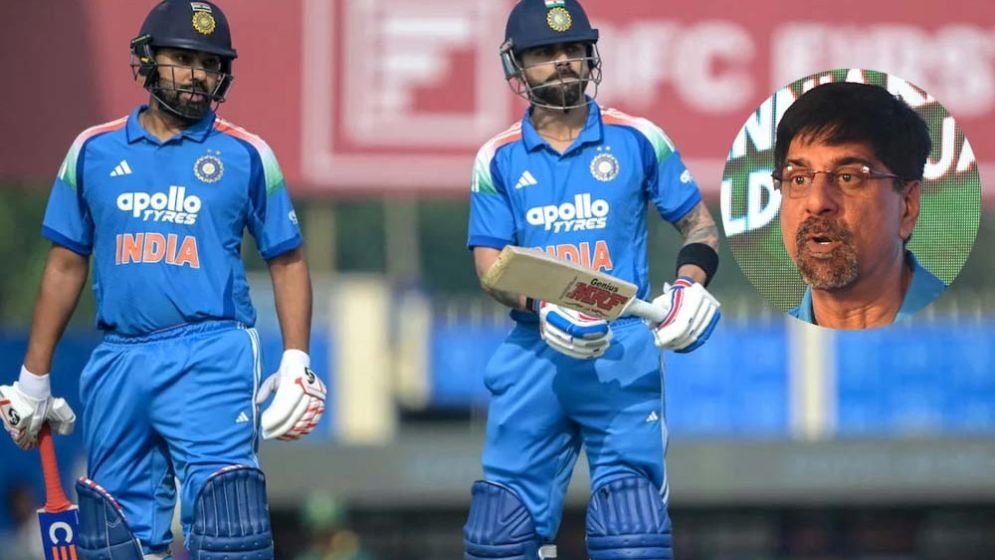
As India begin mapping their path towards the 2027 ICC ODI World Cup, one debate has grown increasingly complex: should ageing icons Rohit Sharma and Virat Kohli still be part of the blueprint? Rohit is 37; Kohli 38. Few players in cricketing history have remained central to their national sides beyond such ages. Yet, after watching them dismantle South Africa in the opening ODI in Ranchi, analysts are asking whether age should matter at all.
Among the strongest voices supporting their continued inclusion is Kris Srikkanth, former India captain and champion of the 1983 World Cup. His view is blunt, unequivocal and rooted in what he saw on the field: India cannot win the 2027 World Cup without them.
Rohit’s 57 from 51 balls was more than a fluent innings. It was symbolic. His third six not only cleared the ropes by a distance but also took him past Shahid Afridi to the top of ODI cricket’s all-time six-hitting list. It was an achievement that encapsulated a career defined by elegance, power and consistency.
Kohli’s knock, a majestic 135 off 120, was a different kind of masterpiece—measured, commanding and technically flawless. It marked his 52nd ODI century and demonstrated once again why he remains one of the most complete batsmen of the modern era. Together, the pair’s 136-run partnership dismantled South Africa’s attack with ruthless efficiency.
Srikkanth’s admiration was evident as he dissected the performance: “These two are on another plane. For the 2027 World Cup, India need Rohit opening and Kohli at No. 3. Without them, the entire plan collapses.” His words may sound dramatic, but the statistics back him. When the pair bat deep into an innings, India’s win percentage soars, and their dominance becomes overwhelming.
But Srikkanth’s argument goes beyond mere numbers. It touches on intangible elements: temperament, big-match experience, and the ability to handle pressure. Both Rohit and Kohli have captained India, carried expectations for over a decade and shaped countless victories. Younger players may emerge, but none yet possess the aura or tactical intelligence these two bring.
There is also the question of conditions. The 2027 World Cup will be held across South Africa, Zimbabwe and Namibia—regions known for pace, bounce and lateral movement. In such environments, technical proficiency and experience can often outweigh youthful exuberance. Few in world cricket negotiate these conditions better than Kohli and Rohit.
Sceptics point to age, but Srikkanth counters that the pair have demonstrated remarkable fitness. Having stepped away from Tests and T20Is, they have dedicated themselves exclusively to ODIs—a rarity among modern cricketers. Maintaining elite conditioning while specialising in a single format requires discipline and mental resilience, something Srikkanth believes they possess in abundance.
“Give them the roles of No. 1 and No. 3, and India will remain contenders. Take them out of the equation, and we lose our edge,” he said with characteristic frankness.
Whether Indian selectors will heed this advice remains to be seen. But if the Ranchi ODI was a preview of what they can still offer, dismissing the veteran duo may be premature—and potentially costly.