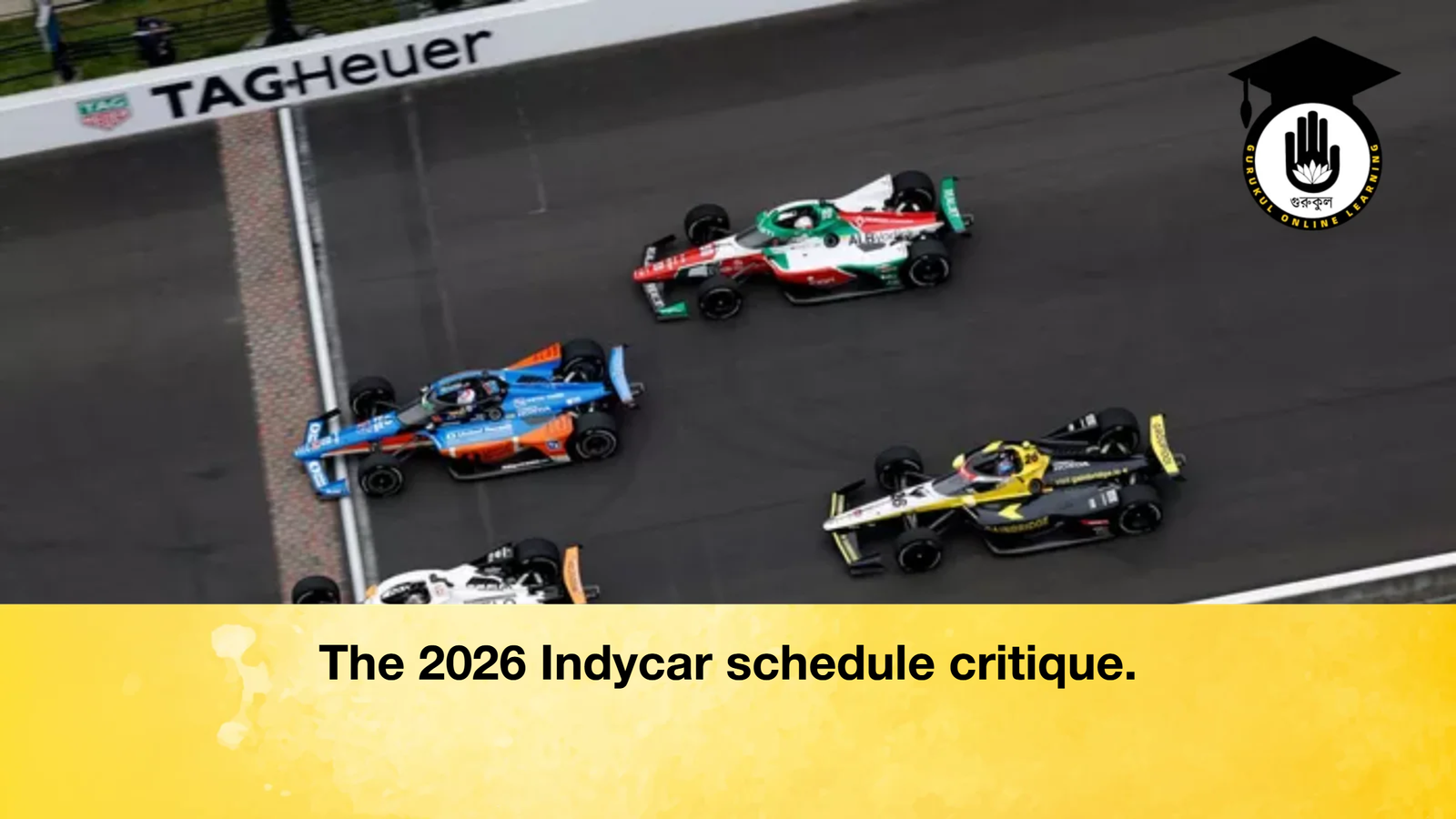
Assessing IndyCar’s 2026 Calendar Choices
IndyCar has confirmed its 2026 schedule, and as ever, the finalised calendar has prompted a lively mix of optimism, frustration and outright head-scratching. Featuring 17 races, the championship retains its familiar breadth of road courses, street circuits and ovals, but notable changes—ranging from a new season finale to joint events with NASCAR—ensure that the coming year will feel markedly different from what preceded it.
As with any schedule, the impact of these decisions will only be fully understood once engines fire in anger. Yet even at this stage, clear strengths, weaknesses and controversies are apparent.
Table of Contents
ToggleThe Good
Perhaps the most universally welcomed development is IndyCar’s increased collaboration with NASCAR. The 2026 season will open with consecutive doubleheader weekends alongside America’s premier stock car series. St Petersburg’s traditional opener will share the bill with the NASCAR Truck Series, followed by IndyCar’s long-awaited return to Phoenix Raceway, its first visit since 2018, as part of a NASCAR Cup weekend. From a promotional standpoint, the benefits are obvious: shared audiences, fuller grandstands and the potential for crossover interest. FOX Sports’ involvement was pivotal, and the prospect of drivers sampling the other discipline only adds intrigue.
Dropping Thermal and Iowa also represents a pragmatic reset. Thermal’s experiment was ambitious but flawed, offering little in the way of racing spectacle and pricing out many traditional fans. Iowa’s removal is more bittersweet, yet dwindling attendance and minimal promotion left little alternative. In contrast, Milwaukee’s elevation to a doubleheader feels like a vote of confidence in a venue with genuine heritage and fan appeal.
IndyCar has also corrected one of its more puzzling recent missteps by smoothing the start of the season. Four races in the first five weeks—three of them consecutively—restore momentum that was badly lacking in 2025, when a three-week gap after St Petersburg dulled early-season excitement.
The addition of a new Arlington street race is another positive. While it is not a return to Texas Motor Speedway, IndyCar will once again race in the Lone Star State on a 2.7-mile layout backed by the Dallas Cowboys and Texas Rangers. Early reaction to the circuit, including its vast back straight, has been encouraging.
The Bad
Geographically, the calendar remains lopsided. Despite the East Coast housing more than a third of the US population, the Northeast is entirely absent, leaving St Petersburg—on Florida’s Gulf Coast—as the sole eastern outpost. With multiple viable ovals, road courses and potential street circuits available, this represents a significant missed opportunity.
There is also the continuing issue of oval diversity. Outside the Indianapolis Motor Speedway, IndyCar visits no large ovals, a curious reality for a series whose defining event remains the Indianapolis 500.
The Ugly
The decision to move the season finale from Nashville to Laguna Seca is the most contentious of all. While Laguna Seca is iconic, it lacks the atmosphere and unpredictability expected of a title decider. Previous attempts to elevate it to finale status failed to ignite fan enthusiasm, and there is little to suggest this time will be different.
Equally disappointing is the collapse of yet another proposed Mexico race. After years of near-misses—and fresh hope following NASCAR’s Mexico City venture—the failure to secure a 2026 event feels particularly deflating.
Key Changes in IndyCar’s 2026 Schedule
| Change | Outcome |
|---|---|
| Season opener | St Petersburg with NASCAR Trucks |
| Return venue | Phoenix Raceway |
| New street race | Arlington, Texas |
| Dropped events | Thermal, Iowa |
| Expanded event | Milwaukee doubleheader |
| Season finale | Laguna Seca |
Ultimately, IndyCar’s 2026 calendar is neither a triumph nor a disaster. It is a schedule defined by sensible progress in some areas and stubborn blind spots in others—a reminder that calendar building, much like racing itself, remains an exercise in compromise.