Ferrari Refines 499P for 2026

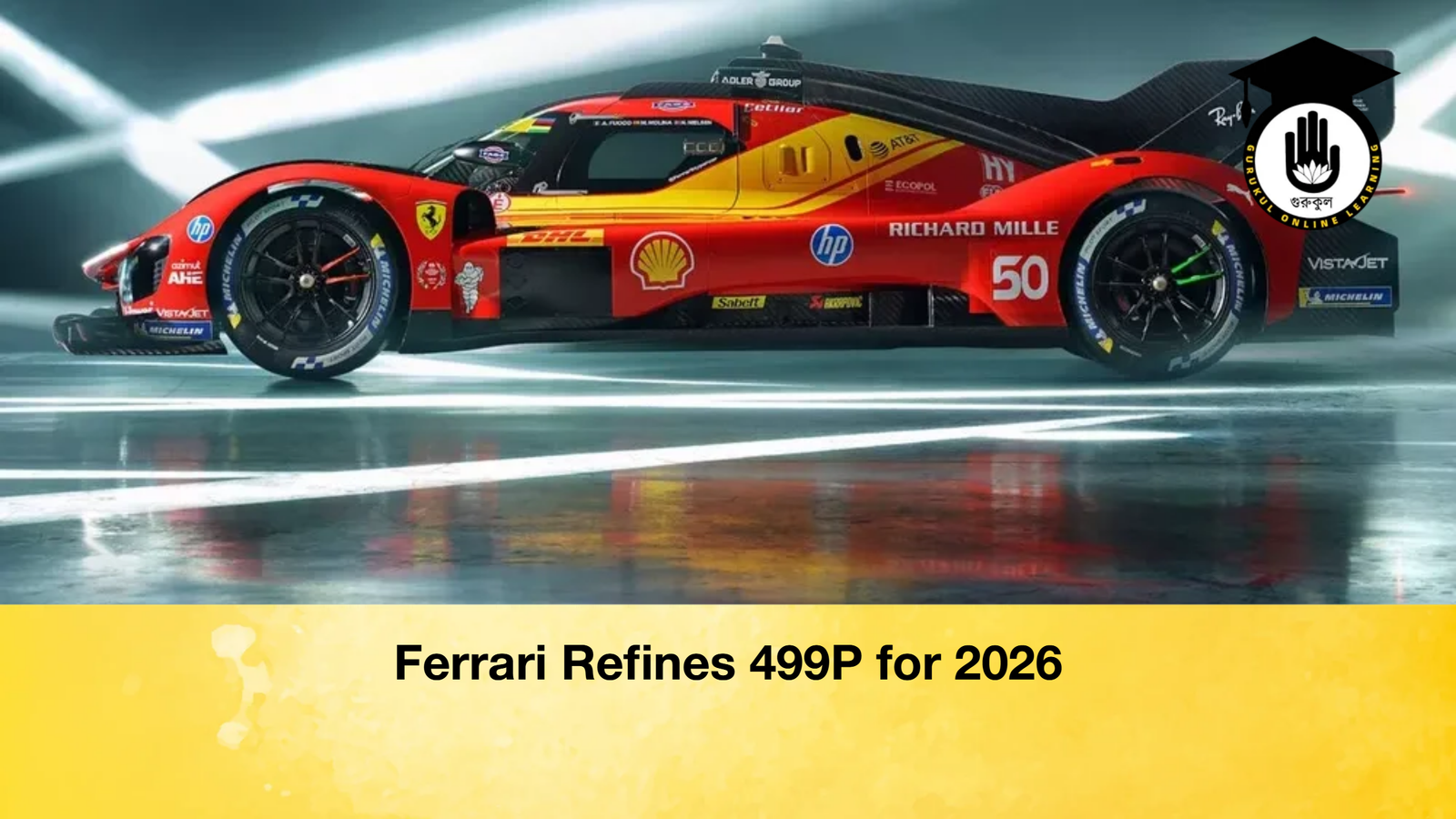
Ferrari has unveiled a subtly evolved version of its formidable 499P Hypercar ahead of the 2026 campaign in the FIA World Endurance Championship, opting for refinement over revolution as it seeks to defend its hard-earned dominance.
Presented at the Enzo Ferrari Museum, the updated machine reflects a philosophy rooted in continuity. Despite fierce competition from rivals, Ferrari has resisted deploying additional “evo jokers” — the limited upgrade tokens permitted under Hypercar regulations — instead focusing on optimising its existing package through meticulous aerodynamic and operational improvements.
At the heart of the changes lies a mandatory re-homologation process overseen by the Fédération Internationale de l’Automobile and the Automobile Club de l’Ouest. All LMH and LMDh contenders were required to undergo testing at the WindShear Wind Tunnel, replacing previous development facilities and introducing new data-gathering protocols aimed at refining the Balance of Performance (BoP) system.
Ferrari’s Head of Endurance Race Cars, Ferdinando Cannizzo, outlined three principal pillars of the update: a shift in wind tunnel testing location, enhanced data acquisition methods, and a recalibration of the car’s performance window. Crucially, these changes demanded a reassessment of aerodynamic balance without altering the fundamental architecture of the car.
Key Technical Adjustments
| Area of Car | Modification | Purpose |
|---|---|---|
| Front end | Revised aerodynamic appendages and airflow over wheel arches | Improve airflow efficiency and regulatory compliance |
| Floor | Adjusted fences and flow diverters | Fine-tune balance and stability |
| Sidepods | Modified radiator outlet design | Enhance cooling and airflow management |
| Engine cover | Redesigned profile | Optimise aerodynamic efficiency |
| Rear wing | Larger appendages and revised endplates | Increase downforce and stability |
| Rear wheel area | Updated side fences | Improve airflow consistency |
Cannizzo emphasised that these interventions are “minimal but effective”, ensuring the 499P remains within regulatory limits while maintaining competitiveness. Notably, some aerodynamic appendages were removed or simplified at the request of governing bodies, reflecting a broader push towards standardisation.
Despite Ferrari’s measured approach, the competitive landscape is intensifying. Manufacturers such as BMW, Cadillac, Toyota, and Alpine are introducing more extensive upgrades, potentially narrowing the gap to the reigning champions.
Cannizzo remains cautious but confident, noting that while no rival innovation has proven revolutionary, the cumulative effect of incremental gains across the field will elevate the overall level of competition. He stressed that success in 2026 will depend not only on the car itself, but also on operational excellence across strategy, execution, and reliability.
Looking further ahead, Ferrari is already engaged in discussions surrounding the next generation of Hypercar regulations, expected to shape endurance racing beyond 2030. As the margins for improvement under current homologation rules continue to shrink, the Scuderia recognises that more substantial evolution will eventually become unavoidable.
For now, however, Ferrari’s message is clear: the 499P remains a finely honed weapon, sharpened rather than reshaped, and ready to defend its crown in what promises to be one of the most competitive seasons in endurance racing history.