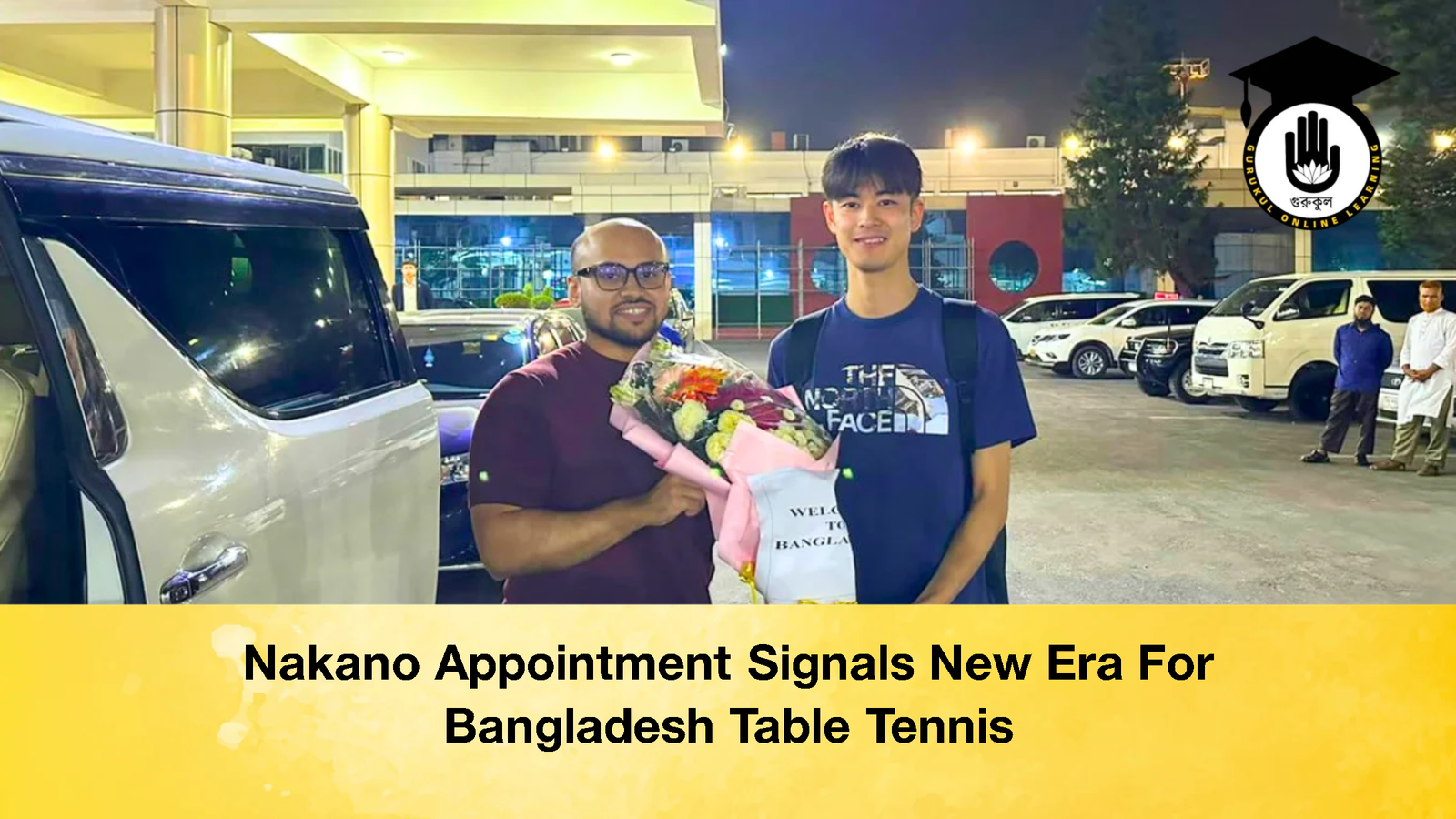

Bangladesh has embarked on an ambitious journey to elevate its standing in international table tennis with the appointment of seasoned Japanese coach Yutaka Nakano on a two-year contract. The move, spearheaded by the Bangladesh Table Tennis Federation, underscores a renewed determination to build a competitive and sustainable future for the sport.
Nakano arrived in Dhaka to assume his duties as head coach, marking his second professional engagement in the country. His return comes at a critical juncture, as the federation continues to function under an ad hoc committee. While such administrative arrangements can often lead to uncertainty, officials have opted to prioritise long-term development over short-term caution.
Table of Contents
ToggleStrategic Vision Despite Governance Challenges
The decision to appoint a foreign coach for a two-year tenure may appear bold amid an evolving administrative structure. However, federation officials maintain that sustained progress in international sport depends on continuity, expertise, and exposure to global best practices.
Nakano’s credentials align with these objectives. A former competitive player who transitioned into coaching, he has accumulated extensive international experience. Prior to this appointment, he worked at the Samson Dubina Table Tennis Academy, where he was involved in high-performance athlete development. His familiarity with Bangladesh’s table tennis environment stems from his earlier role in 2022 with Future Sporting Club, supported by LabAid, an organisation now closely linked to the federation’s leadership.
Busy International Calendar Accelerates Plans
The timing of Nakano’s recruitment is closely tied to a demanding calendar of international competitions in 2026. Events such as the Asian Games and the South Asian Games present valuable opportunities for Bangladesh to test its progress against stronger opposition. Additionally, youth-level championships will play a pivotal role in nurturing the next generation of players.
To ensure adequate preparation, the federation has scheduled a high-performance selection camp beginning on 18 April. The top 16 male and 16 female players from the national rankings will participate, forming a focused training pool under Nakano’s supervision. This initiative is expected to enhance technical proficiency, tactical awareness, and overall team cohesion.
Expanding the Scope of Coaching Excellence
Nakano’s responsibilities extend far beyond match-day strategy. He has been entrusted with modernising training methodologies for both senior and junior national teams, introducing structured development pathways, and identifying promising talent across the country.
A key component of his role involves implementing performance monitoring systems, including fitness assessments and technical evaluations. Regular reporting to the federation will ensure a data-driven approach to player development, aligning Bangladesh with international coaching standards.
Blending International Expertise with Local Experience
In tandem with Nakano’s appointment, the federation is reinforcing its coaching framework by integrating experienced local figures. Former national champion Saleha Setu has been appointed as coach of the women’s team for the upcoming Commonwealth Table Tennis Championships. This collaborative model is designed to combine global expertise with local insight, fostering a more holistic development environment.
Key Competitions and Strategic Objectives
| Event Name | Level | Strategic Objective |
|---|---|---|
| Commonwealth Table Tennis Championships | International | Enhance senior team performance |
| Asian Games | Continental | Gain elite competitive exposure |
| Asian Youth Championships | Continental | Develop emerging talent |
| South Asian Junior Championships | Regional | Identify future prospects |
| South Asian Games | Regional | Achieve podium finishes |
Positive Outlook with Measured Expectations
Captain A M Maksud Ahmed Sonet, General Secretary of the federation, expressed optimism regarding the impact of Nakano’s appointment. He highlighted that the coach’s international experience and technical acumen could significantly enhance Bangladesh’s competitiveness and global standing.
The broader table tennis community in Bangladesh has also responded with cautious optimism. While administrative uncertainties remain, the emphasis on structured training, international exposure, and long-term planning represents a meaningful shift in approach.
If executed effectively, this initiative could usher in a transformative phase for table tennis in Bangladesh—one characterised by professionalism, strategic clarity, and a sustained pursuit of excellence on the international stage.